One born every two seconds

img_0474
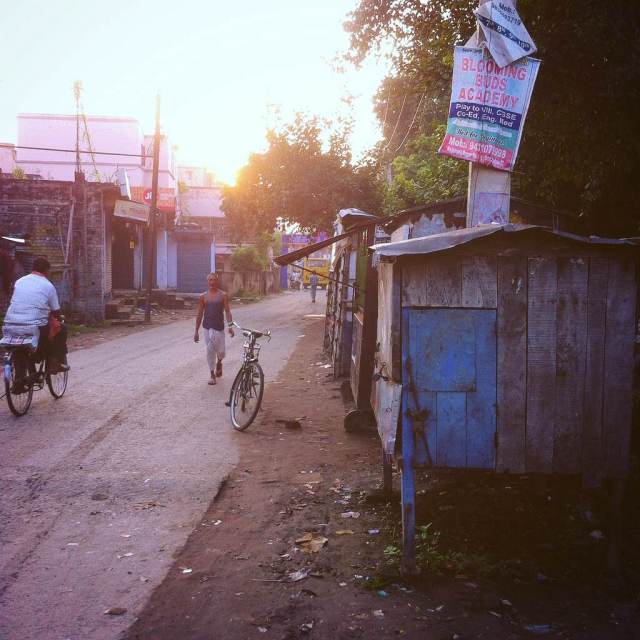
Dawn in Patna

Her first four children each died of asphyxiation during delivery. The 30 year old’s fifth – a baby girl – was born safely at home, and against all odds. However, when the same expectant mother entered Bihar’s district hospital last Friday, to deliver her sixth baby, she was praying for a boy. She entered the hospital carrying the hopes and dreams of the many family members waiting outside for the news and, as I bore witness to, her prayers were answered.

Through CARE International’s influence within the health sector of Bihar (one of India’s most populated states with 110 million citizens) this mother had been encouraged to deliver her sixth baby in hospital, rather than at home. A decision which instantly improved her and her baby’s chance of survival.

I was visiting the hospital with the local CARE team at the time, to learn more about how CARE is helping transform the state’s healthcare system, and improve the quality of the services available.
Continue reading “One born every two seconds”
Making change happen: Collaboration, and the power of Storytelling

Blog-Timor-Leste-580x386
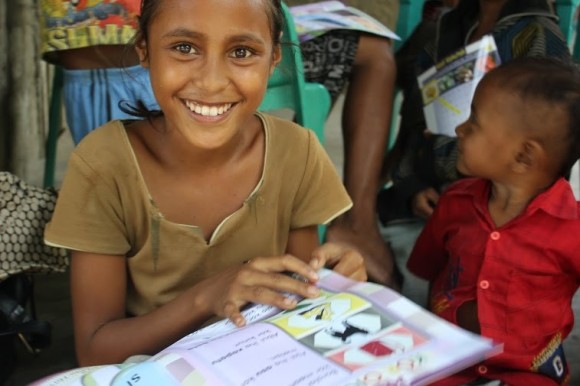
Children reading Lafaek Community Magazine. Photo Credit Sarah Rippin/CARE

I’ve been working in Dili, the capital of Timor-Leste (East Timor) this week, and it’s been a privilege as always to spend time in new surrounds. More so when stationed one hundred metres from the sea, with spectacular daily sunsets, and some of the tastiest coffee money can buy. 

Timor is an island, just a short hop north of Darwin, Australia, and up until quite recently, following 500 years of Portuguese occupation, was an Indonesian colony (between 1975 and 1999). The western side of the island is still governed by Indonesia. Timor-Leste claimed its independence in 2002.

Like so many other countries in 2016, Timor-Leste is experiencing the effects of the current El Nino droughts, disrupting the country’s wet season and ruining harvesting potential. A topic covered on this site back in March during my time in Ethiopia.

My assignment this week, however, has been to support CARE’s work to engage more with private sector companies in Timor-Leste (banks, retail, media and others) and examine ways in which, together, initiatives and relationships can be forged to tackle some of the social and economic challenges the country faces – poor infrastructure, lack of employment opportunities, issues around food security and nutrition, financial literacy, to name a few. Even without a more severe El Nino year, Timor-Leste is dealing with all of these mini crises combined.     Continue reading “Making change happen: Collaboration, and the power of Storytelling”

Resilient Markets in Ethiopia

DSC_0137
At home with Sindayo, a GRAD beneficiary in Tigray. Photo credit @ CARE Ethiopia.

Last month I visited Tigray, Northern Ethiopia, to interview farmers and livestock traders faced with the drought effects of one of the most devastating El Niños in 50 years, to learn about their coping strategies in the face of extreme weather patterns.

We wanted to find out how these coping strategies were linked to national and international market systems and how, through these systems, it might be possible to bring about a better deal for those in the supply chain typically made more vulnerable by drought: women.

CARE International, the global NGO and my employer for the last decade, has been operating in Ethiopia since 1984, and works alongside other international and national organisations to bring solutions to those whose livelihoods are invested in agriculture, and who by default are affected by regular market “shocks”.

After 70 years of operations around the world, CARE’s focus within any country programme is to bring about positive changes for women and girls. We do this because of the myriad of existing social and economic injustices faced by women and girls, all over the world, many of which have been described on this blog. At CARE, we talk a lot about “empowering” women and girls, and this encompasses many aspects, including improving access to economic resources for women and, crucially, increasing their control over those resources.       Continue reading “Resilient Markets in Ethiopia”

Lend Me Your Ears

image
Hoa Binh Province, rural Vietnam

Christmas is coming and there’s no stopping it. Even here in Saigon the Vietnamese have started to embrace what has become an indulgent festival of consumption, celebrating the birth of Jesus Christ.

And, at this time every year, people like me pen blogs like this one, instigated to push a perspective your way. People like me who (you’ll soon enough not be surprised to read) have just spent half my week up in rural Vietnam, meeting local communities.

So, what’s the perspective I’m peddling ? Well, no doubt by the end of this post I will have worked it out…    Continue reading “Lend Me Your Ears”

“Scale, impact and partnerships” – seeing through the buzz factor

conference
Cartoon credit – http://www.stillwaterhistorians.com

I’m back on the regional conference circuit at the moment, and it’s awash with talk about “scale” and “impact”.

Sound-bite central, indeed, with events I’ve attended recently also still obsessing with how to achieve scale and impact by working in “partnerships”. As suggested in my last post we need to look beyond semantics in the sustainability arena, and instead get real about what some of these terms actually mean as, all too often, our preoccupation with the vernacular distracts us from action.

The UN’s new Sustainable Development Goals (SDGs) have included “global partnerships” as their 17th Goal. The proof of authenticity around what the UN thinks can be achieved with this Goal will be revealed over time. However, right now, it seems to me that if you are not talking about “scaling your programmes”, or “measuring the impact” of your efforts (in terms of playing a positive role in society) then you are not “on message” – and that, for many, is a public relations cardinal sin.      Continue reading ““Scale, impact and partnerships” – seeing through the buzz factor”

Partnership musings at 33,000 ft

Photo credit @saigonsays

Over the last couple of months I’ve spent time at various “partnership” themed events. Bangkok, Singapore, Hanoi, even the leafy outskirts of Atlanta, Georgia, many thousands of miles away from the hustle bustle of Saigon. Different venues, but similar take-away recommendations about how, if we are truly to tackle social and environment issues and bring about change in the future, for the future, we must join forces with others.

In some cases, forming alliances which might seem oxymoronic: for example, big business in partnership with local communities; municipal governments working with large NGOs.

Previous case studies on this blog site (where CARE is partnering with companies in the region, including GSK and Diageo) are backed up by hundreds more out there, many of which are breaking new ground and offer hope for replicating models which others can adopt, adapt and improve. Continue reading “Partnership musings at 33,000 ft”

Women’s Empowerment in the Hospitality and Tourism sector

sl
Drawing in the tourists – a Sri Lankan sunset over the Indian Ocean

I have visited Sri Lanka in a work capacity every year for the past five – posting about it just recently on this site – however, this April, I’ll spend my 40th birthday there, as a tourist, on the country’s southern coast.

Post war Sri Lanka (since 2009) has much to offer the increasing number of tourists, flocking to experience white sand beaches, up-country tea plantations, and the joy of some spicy coconut sambol for breakfast.

The hospitality and tourism sector is one upon which Sri Lanka is heavily relying, not only in terms of driving up economic gains for the country, but also in making a positive ripple effect on related social factors – in particular, supporting the employment needs of what equates to several million young Sri Lankans on the look out to secure a job.

Within this context, as well as having the potential to positively tackle youth unemployment in the country, the hospitality and tourism sector is in a position to also address why it is that so many women in the sector are not being supported in their careers – and in some cases, why in the very first instance it is a challenge for women to even enter the workforce. Continue reading “Women’s Empowerment in the Hospitality and Tourism sector”

Myanmar: bringing about change in a frontier market

image
Shwedagon – one of Myanmar’s famous Pagodas

For some of the world’s “frontier” markets, such as in Myanmar (formerly Burma) the risks of accelerated growth are that many of the country’s poorest get left behind. Working alongside government and the private sector, the efforts of CARE International in Myanmar are starting to demonstrate that establishing from the outset more inclusive models of engagement with business, in an emerging economy such as Myanmar’s, can yield positive outcomes both for society and for doing good business.

Last week, I traveled to Myanmar to see for myself how CARE has been collaborating with one of the world’s largest pharmaceutical companies, GSK (GlaxoSmithKline), on an initiative which involves GSK investing back 20% of their consumer healthcare profits – across seven markets in Asia Pacific – into improving community healthcare services for some of the region’s most vulnerable citizens.

Whilst there, several of us visited CARE-GSK programmes in Lashio, Northern Myanmar, where we found some inspiring gains have already been made since the joint initiative was established two years ago between our organisations… Continue reading “Myanmar: bringing about change in a frontier market”

Tacloban: Exposing “middle-income” country realities

effr
CARE’s shelter team with local communities in rural Tacloban

I am on my way home from a visit to Tacloban, in the Philippines, one of the country’s most damaged districts following the carnage caused after Typhoon Yolanda swept through some of the nation’s poorest communities last November.

The Philippines has been classified by the World Bank as a “lower-middle income” economy. Middle-income economies are those with an annual GNI (gross national income) per capita of more than $1,045 but less than $12,74.

Other countries in Asia Pacific who share this classification with the Philippines include Vietnam, Sri Lanka and Indonesia. “Upper-middle income” economies nearby can be found in China, Malaysia and Thailand, whilst the likes of Cambodia and Myanmar are “low income” status.

Meaning that, on the surface of things, the Philippines’ economic gains in recent years, and its growing numbers of new middle-class citizens, represent an optimistic narrative. Its capital city, Manila, stands as a beacon of commercial potential to the private sector, host to a recent World Economic Forum summit, home to some of the world’s most famous, and infamous, global retail brands. Busy, built up, urban Asia. Opportunistic, dynamic but, in fact, wholly deceiving.

Turn this promotional pamphlet over and what lies beneath is, at best, a flimsy and precarious reality… Continue reading “Tacloban: Exposing “middle-income” country realities”