From Sweatshop Scandals to System Change: The Long Arc of the Garment Industry

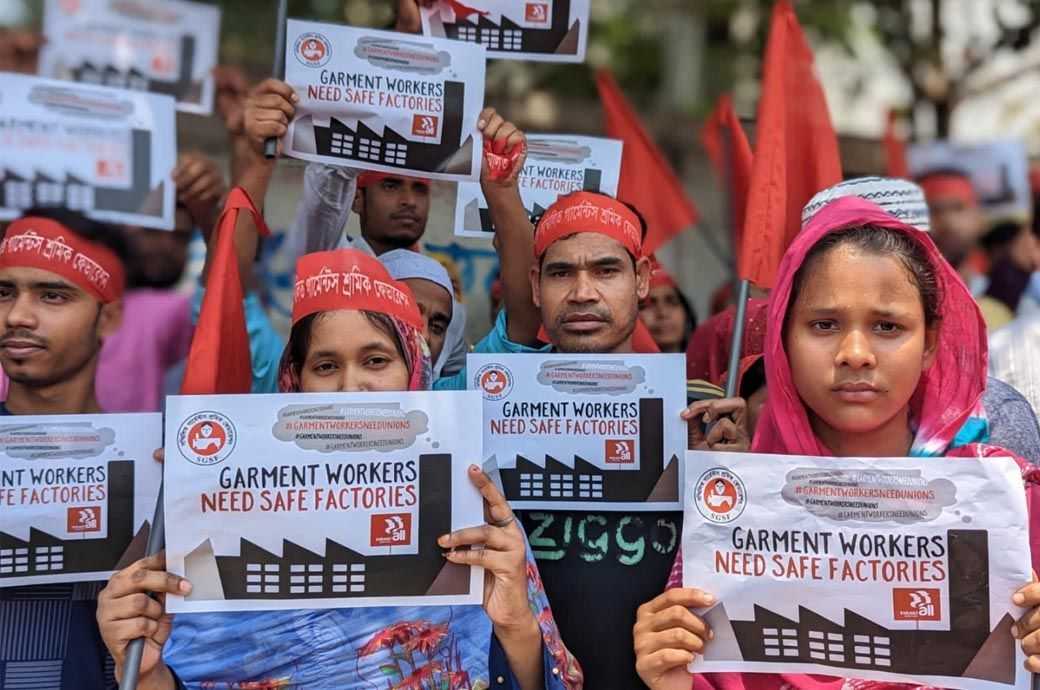
In May 2013, I posted the above photograph on this blog. It was taken by photographer Taslima Akhter, at the site of the Rana Plaza building collapse in Dhaka, Bangladesh. Two garment workers, unnamed and unidentifiable, found in a final embrace, buried together in the rubble of a factory that should never have been standing in the first place.

I wrote at the time that questions about “accountability for how the global garment industry is governed” had been being asked for more than twenty years, and wondered how many more years needed to pass before unnecessary lives stopped being lost.

That was thirteen years ago. The question, uncomfortable as it remains, is the one I keep returning to.

The global garment industry’s accountability crisis didn’t begin with Rana Plaza. It had roots stretching back through the 1990s, when sweatshop scandals (involving poor factory conditions across Asia and Central America) ignited public fury and, eventually, action.

Many brands found themselves in the crosshairs of campaigners, investigative journalists, and increasingly their own consumers. The industry’s response slowly evolved into something more structured. Codes of conduct were written. Auditing regimes were established. Corporate Social Responsibility departments were stood up. A whole apparatus of compliance mechanisms began to proliferate. Much of it well-intentioned, some of it genuinely effective, but quite a lot of it ultimately insufficient.

Rana Plaza, on 24 April 2013, was the industry’s most shattering moment of reckoning. Over 1,100 workers died when the building complex in Savar collapsed. Cracks had been reported. Workers had been told to return anyway. In the days that followed, the labels of high-street brands from across Europe and North America were pulled from the rubble alongside the bodies. The world, briefly, faced what it had been buying.

What followed was a genuine step forward: the Bangladesh Accord on Fire and Building Safety was signed by over 200 garment brands and trade unions, establishing an independent, legally binding mechanism for factory inspections and remediation. It was unprecedented, and it illustrated just how much the threat of accountability (public, legal, reputational) could shift industry behaviour when applied with sufficient pressure. But compliance, even when enforced, only goes so far. You can mandate a fire exit. You can’t mandate dignity, or opportunity, or a living wage, through a checklist.

This is perhaps an important, central issue of the past three decades: the garment industry became very good at measuring problems but less good at solving them. Audits, assessments, surveys, and reporting frameworks multiplied. Brands invested in supplier scorecards. NGOs published league tables. Governments (particularly in Europe) began legislating on due diligence and supply chain transparency. All of this produced enormous quantities of data about where things were going wrong.

What it didn’t produce, reliably, was sustained improvement in the lives of workers – the overwhelming majority of them women – who make the clothes. The gap between knowing and changing turns out to be vast, and it’s one the industry has been navigating ever since.

And that navigation looks different depending on where you are. The compliance frameworks that emerged in the wake of Rana Plaza were, in many ways, a response to one specific context, and that context remains one of the most complex in the world. Bangladesh’s garment industry is vast, politically entangled, and still grappling with pressures that other sourcing countries have had more time, or more favourable conditions, to begin addressing.

Applying a single industry logic across Bangladesh, Vietnam, Indonesia, Cambodia, and beyond (countries at very different stages of this journey, with very different labour environments and political realities) has always been one of the harder problems, and it doesn’t get talked about enough.
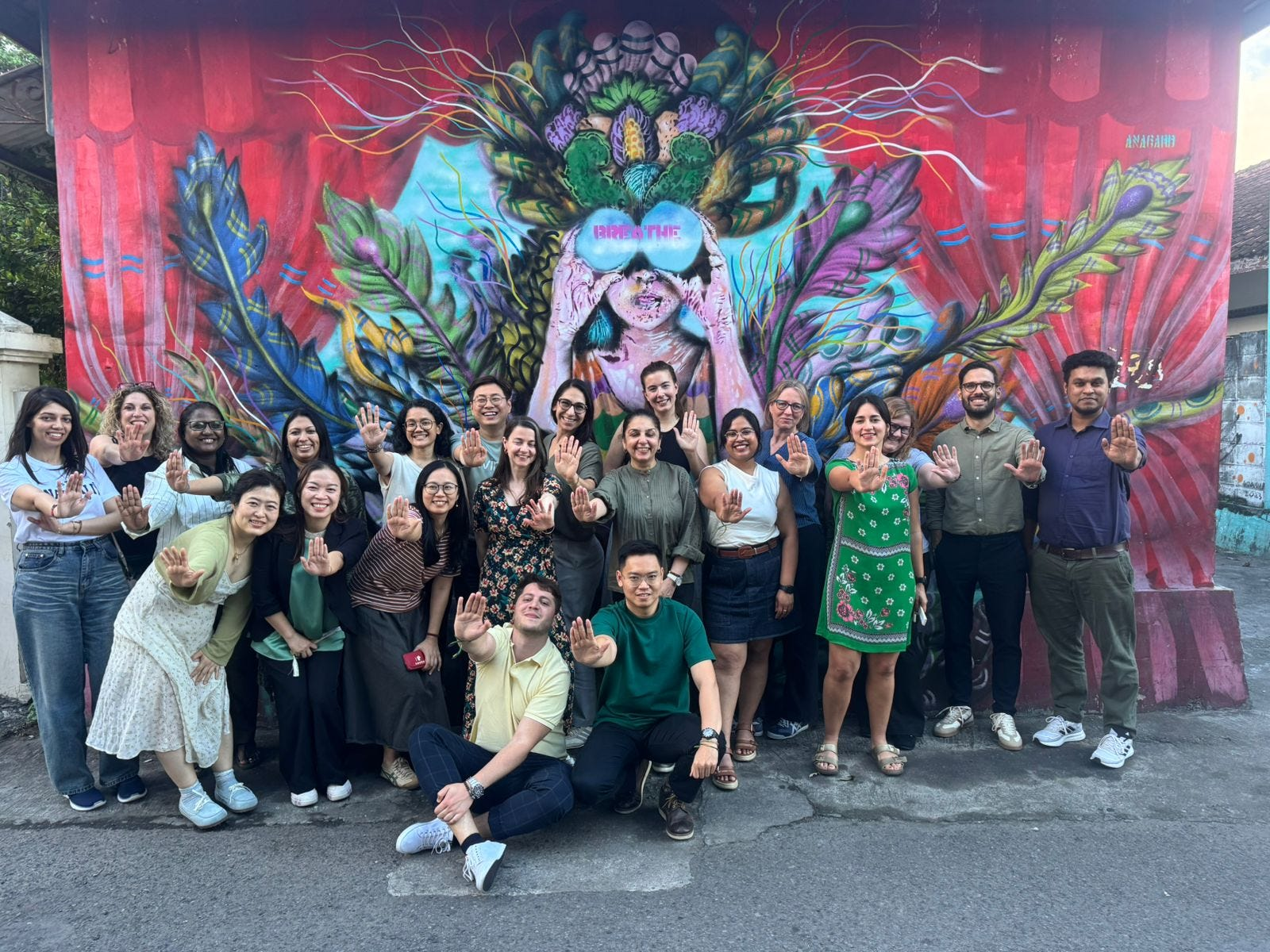
This is precisely the space that RISE – Reimagining Industry to Support Equality has been working to occupy.

RISE focuses on low-income workers in garment, footwear, and home textile industries: the people at the base of the supply chains that clothe the world. The overwhelming majority of those workers are women, and RISE treats that fact not as a footnote but as the central organising reality of everything they do. Gender isn’t a thematic add-on for them, it’s the lens through which the whole supply chain is read – because you can’t meaningfully improve conditions in these industries without confronting the power dynamics, the wage structures, the management behaviours, and the cultural norms that shape women’s experience of work within them.

Their ambition is broader than programme delivery. They are trying to shift the conditions under which change happens (the incentives, the relationships, the industry norms) not just run workplace interventions and hope for the best.

I’ve had the good fortune of working with RISE on a couple of occasions, since their establishment in 2023, including facilitating a workshop in Yogyakarta last month. I’m currently collaborating with their team, and many of their members, about future initiatives and strategies.

What has struck me, sitting in these recent discussions, is a.) how much the industry has genuinely evolved and b.) of course, how much remains stubbornly unresolved.

Many brands have been investing seriously in supplier relationships, worker wellbeing programmes, gender initiatives, and sustainability commitments for years. And yet the fragmentation of effort across the ecosystem remains a persistent problem. Brands often run parallel initiatives. Suppliers can be subjected to multiple, sometimes conflicting, audit regimes.

Everyone, broadly, is working toward similar goals, although often not talking to each other. RISE occupies a distinctive position in this landscape, and that is very exciting. It is neither a traditional implementer of programmes, nor a standard-setting or compliance body, nor a pure advocacy organisation. Instead, it an entity that connects across all these roles. Its value lies in being close enough to workers to have real credibility, while also being capable of convening brands, suppliers, and civil society around shared approaches. Raising standards across an industry that spans dozens of countries, and wildly different contexts, requires something more nuanced than a universal framework dropped from above: it requires meeting each context where it actually is, and that is something RISE and its partner network in-country is seeking to do.

In terms of what else can be built from these positive early achievements of RISE, I’ve also heard frank recognition of where further work is needed. Impact measurement remains an area of increasing expectation for example. Not just evidence of activity and reach, but demonstrable outcomes. And then the role of suppliers (the factories themselves) comes through clearly as under-utilised. For too long, the dominant model has positioned suppliers as recipients of compliance requirements and programme delivery, rather than genuine partners in transformation. That needs to change, and RISE is actively thinking about how to make it change.

Many factories see enormous value in RISE’s approach, precisely because it is collaborative and implementation-oriented (involving practical guidance, peer learning, and workplace-level problem solving) rather than the audit-and-penalise dynamic that has characterised too much of the industry relationship to date.

And, when gender is taken seriously at the factory level, that means something quite specific: it means looking at who gets promoted and who doesn’t, how grievance mechanisms actually function for women in practice, what management culture looks like on the factory floor day to day, and whether the structures in place genuinely enable women to progress or quietly work against them. These are not things an audit captures easily, and they are exactly the kinds of questions that require the kind of sustained, trusted relationships RISE has been building.

There is also a growing demand from both brands and suppliers for a clearer business case, and while that can sound cynical at first blush, it’s actually just realism. Programmes that can demonstrate operational value, worker retention, reduced absenteeism, improved management practices, and a genuine return on investment are programmes that survive strategic reviews and budget cycles. The moral argument for treating workers well is not, on its own, sufficient to drive systemic change in a commercially-driven industry. It needs to be reinforced by the commercial one. This is uncomfortable to say out loud, but the people working in this space are increasingly saying it plainly, and they’re right to.
The broader context for all of this is a global environment that feels considerably less hospitable to progress than it did a decade ago. Trade is increasingly politicised. Tariffs and sanctions are reshaping supply chains. Climate disruption is hitting the regions across South and Southeast Asia where most of the world’s garments are made. Investors are nervous. Governments are looking inward.

In that environment, the risk is that corporate sustainability commitments (many of which are genuine and hard-won) get deprioritised when financial pressure intensifies. Suppliers then get squeezed on price and battered by geopolitical volatility and so have even less bandwidth to invest in the kinds of workplace transformation that RISE and its partners are working towards. This makes the question of scale more urgent than ever.

Proof-of-concept programmes that work well in a handful of factories, or one country, are valuable but insufficient. The industry is vast, and the challenge is how to move from demonstration to systemic change. In a nutshell: how to shift markets and influence policy, not just run good projects in favourable conditions.

I still think about those two people in Taslima Akhter’s photograph. Very little was known about them at the time, except that they went to work one morning in April 2013 and didn’t come home. The garment industry has changed since then, but it has not changed enough.

The architecture of accountability is more developed than it was. The commitments more explicit, the conversations more sophisticated. Ultimately, the number of organisations genuinely trying to make supply chains fairer, safer, and more equitable has grown considerably. We must salute this progress, but also then turn more attention to what organisations such as RISE are doing. RISE is bridging the gap between worker-level reality and industry-level ambition, and after only its first few years of operations, it has galvanised some exciting momentum across its membership, to move beyond compliance to something more akin to genuine transformation.

This work is patient, relational, unglamorous, and, if done well, potentially profound in its effects. The arc from those 1990s sweatshop scandals to where the industry is today has been long and uneven. The people trying to shift it in the right direction deserve more support, more visibility, and frankly more urgency than the world is currently giving them.

Viability vs. Visibility: The Tragedy of Modern Leadership

https://www.newsweek.com/white-house-elon-musk-doge-sec-target-conflict-2032567

Just been reading that Elon Musk is stepping down from his role at DOGE, the government department set up to save the US economy from wasted spending.

I’ve briefly shared my view on DOGE and on Trump, and I mentally flit between one day wanting to write more about how both entities are impacting the world (negatively, in my opinion) and the next day simply wanting the whole circus that is the US Republican administration to fall off the face of the earth.

If only there were some decent Democrat spokes-people out there, these past five months, to counteract the daily ordeal each of us faces when we read the news. Lucky enough I found this guy, Harry, to be a helpful and passionate critique of Musk and Trump.

There’s very little in this piece he posted recently with which I disagree.

The one thing I’d add to this latest piece “news” about Musk leaving DOGE is that, aside from the long list of grievances one would be well justified to level at Elon Musk (Harry covers this neatly, so I don’t need to), and aside from his general awkwardness with everyone he meets, and how he communicates, the thing that sticks most in my throat is his inability to collaborate.

His purchase of Twitter/X has only made his individualism and ego even more pronounced.

Forget the viability of something anymore (be it, say, the “truth” or simply the credentials of one’s EV business) many social media sites have together reframed what is important for society and that, it seems to me, is not viability, but visibility.

Misinformation thrives in these online spaces. Very complex ideas and hypotheses are flattened out into bulleted “top tips”. Twitter, in many ways, is a platform which has gamified shortened attention spans and praises individual’s visibility and their brand.

Which, of course, offers the perfect ground for performers like Trump and Musk, who pretend to be leaders, but act more like ham-fisted Copperfield illusionists. All accountability is removed. All sense evaporates as soon as they start speaking. They don’t answer questions, they gaslight, they lie, they rinse, they repeat.

While Musk claims to build for the future, with neural interfaces and colonies on Mars, he is a caricature of all the shitty habits and traits that we’re collectively adopting from spending too much time, ironically, scrolling through Twitter feeds.

It’s well documented that many people find it ever harder to hold their attention on simple tasks and activities. Young professionals, in particular, embrace more performative ambitions about what they want to do as individuals. It feels, a lot of the time, like there is a fading appetite for collective progress, as folks rush about in a melee of self-made busyness and unfinished projects.

As Musk bounces from city to city, flexing his enormous bank account in front of politicians one day and Silicon Valley the next, we watch as climate plans get drafted annually at COP Conferences, before being routinely shelved. We observe social justice campaigns that trend for days, before being eclipsed by celebrity gossip or some other geopolitical outrage.

Musk is a symbol for these contradictions. His own portfolio reflects a restlessness where the next ambition supersedes the existing one. Bored of this project now, move on.

Perhaps all of this is inevitable, given the world’s richest man is able to sway the markets with a single tweet, and can basically say or do what he wants today, and then pay for the damage afterwards, knowing that tomorrow we’ll all have moved on to the next click-bait article.

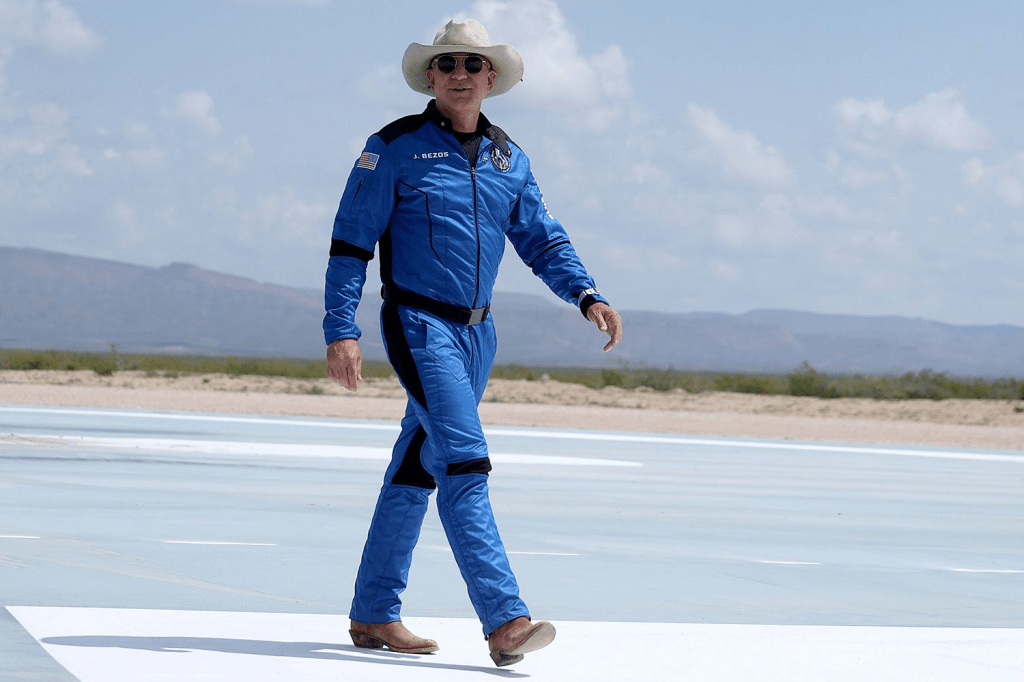
Nice heels, cowboy.

Musk is not alone, of course. As Jeff Bezos floated into Cannes earlier this month, in his $500m schooner, the irony was not lost on those who’ve followed his outspoken support to address climate change. And let’s not forget his Blue Origin space flight debacle. No, let’s.

Whichever of these wealthy elite you handpick for analysis, you’ll find the same paradoxes. The allure of the solo operator, at this echelon of society, remains powerful, there’s no doubt about that, and especially in a world that feels increasingly ungovernable. But the actions and behaviors of these individuals, forging ahead, indifferent to consensus, and chucking U-turns on a weekly basis, smacks of ending up brazenly erasing the work of thousands of others.

And, this approach fundamentally ignores the necessity of institutions, of partnerships, and the wholesome bindings of community. All of which are needed if we’re to arrive at long term solutions to global problems. We don’t need Musk or Bezos to do that.

You can tell me that Musk is responsible for cutting edge technological breakthroughs but, even if I choose to believe that, the nature in which he is conducting himself does not sit well with me, nor fill me with anything other than fear.

Musk, Bezos, Trump: these characters are in the headlines all the time, and they dominate how we think about change because of that. That’s a red flag.

Change that the world urgently requires is slow and deeply collective. We need sustained cooperation, and instead we run the risk of remaining stuck in a loop of promising beginnings and spectacular distractions.

Too Distracted Scrolling to Notice We’re Sinking

In 2025, the world feels perpetually distracted. Elections, wars, AI, celebrity scandals — global attention ricochets between urgency and noise. Today it’s one crisis, tomorrow another. And we all scroll on.

And yet, a slower, more existential threat escalates beneath it all: climate change.

Especially in Southeast Asia, the impacts are already reshaping daily life. I’m guilty of tuning out, and I know many others do the same head-in-the-sand routine when they skim stories about rising temperatures or shrinking icebergs.

If climate change is so serious then why aren’t we acting like it is?

Southeast Asia is on the frontlines of climate risk. Jakarta is sinking by as much as 17 centimetres a year, one of the fastest rates in the world. In Vietnam, over 50% of the Mekong Delta’s land area is projected to face saltwater intrusion by 2050, threatening not just agriculture, but the food security of tens of millions.

Saline intrusion is already choking rice production in the Delta, while intensifying heatwaves and droughts disrupt water supplies. When these come, droughts disrupt water supplies, and you don’t have to be studying GCSE geography like my daughter (who knows more about this than I) to appreciate what then transpires from a biodiversity perspective: that everything is gradually disappearing.

The IPCC (our collective authority on the matter) warns the window to avoid catastrophic change is ‘brief and rapidly closing.’ That’s not hyperbole — it’s scientific consensus. And, still, climate continues to feel like a background hum, rather than breaking news.

The private sector must play a more central role to Southeast Asia’s adaptation and resilience efforts. Governments alone can’t foot the bill or engineer every innovation. Yet, despite growing interest in green investments and carbon markets, engagement remains patchy.

Vietnam’s 2025 Carbon Market Forum and the P4G Summit were welcome steps. These meetings offered the usual fare: policy frameworks, optimistic keynotes, and lots of “roadmaps.” But translating these into real action remains a challenge.

I’ve worked for a long time promoting sustainability and, in particular, getting business to the table however, let’s be honest, when it comes to climate change, aside from a few regional giants and climate-conscious smaller businesses, most private sector entities are still unsure what climate action means for them, or how to act without sacrificing profitability.

So, I think my call to action on this would, ideally, be quite broad (the ownership of the issue should be everyone’s) however it is here is where I think international NGOs (like my former employer CARE) should step in — not as saviours, but as agencies that can help shape the systems that exist within the private sector, and which relate to climate change.

CARE doesn’t treat women’s empowerment and climate action as separate goals. Instead, they have developed programmes that integrate them through market-based, locally led interventions, tackling environmental threats and economic inequality at once.

In Vietnam, for example, HerGreenVenture supports women-led enterprises with training and green finance to adopt low-emission farming and scale sustainable technologies. In Cambodia, CARE also runs community recycling programmes that help women turn waste into income and reduce landfill pollution. And in Thailand, CARE’s eco-tourism projects led by women are creating jobs while preserving forests and coastlines.

What links these diverse initiatives is a belief that resilience is built from the bottom up.

CARE’s core strategy is clear: gender equality isn’t a side note, it’s central. Women, particularly in rural and informal economies, often bear the worst climate shocks while themselves holding the keys to adaptation. Give them access to green finance, leadership roles, and supply chains, and resilience becomes lasting.

We’ve been warned for years, but action has lagged far behind awareness. Climate experts might point to progress — but, from where I sit, I don’t see enough.

If you’re a business leader, why not starting by asking: how is your company contributing to climate adaptation today? Not just ESG compliance, but to real-world impact.

If you’re in government, how about checking the extent to which you are creating the right conditions for innovation, for inclusion, and ultimately for scale?

And, if you’re an INGO or donor, let’s have more discussion about whether you are building systems or simply just running programmes?

We may live in distracted times. I find myself fighting this day-on-day myself. But, distraction doesn’t make the climate crisis less real — if anything it just makes it less seen.

The question is no longer if it’s serious. It’s whether we’ll start acting like it.

Turn Debt into Hope

https://walletgenius.com/loans/why-debt-relief-plans-might-be-better-than-debt-consolidation/

Do you remember much about what you were doing twenty five years ago? Maybe you can recall how you spent that final New Year’s Eve of the 20th century?

Fun fact, that specific NYE, with only an hour left until midnight, I found myself responsible for introducing an old school friend to the woman who turned out to become the love of his life.

Anyway, while some of us were downing drinks and match-making at a bar in South West London, others were galvanizing global attention about world debt, and its impacts on least developed nations. The Jubilee 2000 movement led that charge at the time, their efforts leading to the cancellation of over $130 billion in debt for 36 countries.

A monumental effort which enabled nations to redirect funds toward critical sectors like health and education, offering millions a pathway out of poverty. But, fast forward to 2025, and the call for debt justice still resonates, only things have got worse.

I’ve been working recently with Caritas International, and have come to know about the launch of their “Turn Debt into Hope” campaign, urging the cancellation of unjust and unsustainable debts that, to quote from their website, “hinder nations from investing in their futures.”

From some quick research it seems that, back in 2000, the total external debt for the world’s Least Developed Countries (LDCs) was approximately $150.4 billion. External debt today, for the 31 poorest, high-risk countries, has now topped $200 billion. We’re seeing the highest burden of debt in 30 years.

​This increase means that even more substantial chunks of money from the world’s poorest governments are being diverted away from public sector needs and, instead, allocated to repaying these debts.

When you then consider other ‘crises’ that encroach upon a country’s economy – be it the slow onset ramifications of conflict, or the rapid emergency of an earthquake (much like the one Myanmar experienced a week ago) – it becomes impossible to see how these debts will ever be repaid.

In the aftermath of a crisis, economies dive, job losses occur, inflation prices scupper spending, and a whole myriad of other economic outcomes conspire to spiral a country out of all control.

Waking up this morning to the news of Donald Trump’s sweeping tariffs (which includes a 10% baseline on all imports, and higher rates on key trading partners such as China (34%), the EU (20%) and a whopping 46% here in Vietnam) it is obvious these escalating trade tensions will only lead to market volatility, to fears of a global economic slowdown, and the inevitably unequal impacts of that on so many of the world’s developing countries.

It’s a brutal, cruel economic conundrum, because it is the most vulnerable communities who face the highest threats.

As I’ve been prone to highlight here many times before now, I believe the role of the private sector to be key in these debates. And yet, too often, these conversations happen without the private sector in the room.

That needs to change. Companies are increasingly recognizing that their long-term success is intertwined with the well-being of the communities in which they operate. Engaging with initiatives that promote economic justice, such as “Turn Debt into Hope”, aligns with corporate commitments to Diversity, Equity, and Inclusion (DEI).

By advocating for, and participating in, debt cancellation measures, businesses can play a role in contributing to the creation of more stable and equitable global markets. All of which, ultimately, benefits everyone.

Twenty five years ago, the Millennium Development Goals (MDGs) set out a charter, with a fifteen year timeframe. The MDGs sewed into their narrative this inference about partnership and the role of the private sector, however it’s been a slow process to bring business to the table.

Genuine collaboration takes time, and today we need to keep banging this same drum, hoist up this same flag, and loudly promote why multi-stakeholder collaboration, that includes business, can be instrumental in addressing both immediate financial injustices, while also laying the groundwork for sustainable development.​

The principles that the 2000 Jubilee Campaign champion are more pertinent than ever. We’re experiencing an era marked by economic uncertainty, by geopolitical tensions, and by ongoing climate crises. Debt cancellation is a crucial lever for promoting stability and prosperity, and we cannot wait another quarter of a decade for action in this space.

The children of my old school friend, who met his future wife on New Year’s Eve in 2000, are already in their twenties. Theirs is the generation now grappling with the implications of a world that procrastinated over its responsibilities.

Do please consider donating to any of the organisations currently providing humanitarian assistance to communities in Myanmar affected by the earthquake – here is one.