Value judgements


azraqweb
CARE staffer Ana Mazen at Azraq camp, in Jordon. Picture credit Sarah Rashdan/CARE.

I’m flying to Singapore on Thursday for work. For those more acquainted with my blogs on definitelymaybe (or on the sister site http://www.saigonsays.com) you’ll have picked up on the fact that I go through spells of heavy travel because of my job.

Every time a work assignment involving being out of Saigon (where I live) is conceived – by me, or by someone I work with, or work for – there are formal criteria for finalizing a decision about going, or not going.

For example, is the assignment in response to a need in that country from a CARE team, an invitation from a partner organization, or the mandate of a higher authority in the system? Who is paying for the costs? What is the detailed scope of work, the objectives? And so on.

I wonder, though, about the less formal criteria that come into play? Those that emanate from individual persuasions and from hierarchies?

Does CARE, and do other entities, in situations of deploying staff overseas to conduct their work, have open and accountable ways of prioritizing who goes where, and for what ends?

Furthermore, how should a not-for-profit agency such as CARE, working to empower marginalized and vulnerable women and girls, decide whether it is more impactful for its mission to send someone in a more “senior” role to a networking conference vs. sending a more “junior” level person on a training course?

In this example, the networking assignment might yield an opportunity to bring valuable new investments into CARE. The training course example might, instead, not only increase the quality of a specific piece of programme design but might also inspire that staff member to be retained for a longer period of time (which, as we know, tends to save organisations money, given the cost of recruiting new people.)

Is one of these examples more directly related to CARE being impactful in our work than the other?

This connundrum, perhaps, doesn’t require public consultation via my blog, and these are issues which are persuasive across sectors and institutions.

However, as carbon emissions are a dominant root cause that exacerbate poverty and social injustice around the world, it does feel incumbent upon those of us working to support those people most impacted on by poverty and social injustices, to be held to account around our standards and decision making.

The issue of how CARE goes about bringing investments into our organisation, how we build quality programmes, and how we reduce our carbon emissions must be inter-connected.

**********

It occurs to me, too, that this use of ‘informal’ criteria is pervasive in all walks of life, and how we make decisions on many things, and speaks to our individual, collective and societal values.

When I ride my motorbike around Saigon (itself an often complex past-time, and one of the topics of an early blog) I’ll make judgements at every corner, and with every mirror check along the way. Split second decisions are calculated based on a.) what I perceive should be the (formal) rules – although it’s never 100% clear over here – and b.) what I might then decide are more intuitive (informal) reasons.

Spread over this recipe for decision making a splattering of social and cultural norms (we got into this last week, too) and sometimes the results are pain free, and other times they leave me hand-gesturing and losing face in front of a road full of people and vehicles.

The values based judgements I and others might be drawing from in such scenarios are often buried deep. And so do we always even know that we are drawing from them, particularly in situations where we find ourselves in arguments or in discussions with conflicting view-points?

I rarely quote the bible on this blog, but how often do we stop and follow the “do unto others as you would have them do unto you” mantra (from Jesus’ Sermon on the Mount, for anyone who, like me, just needed to google the line itself)? If I were to create for myself a strong grouping of values to lead my life by, then I think this one is a great contender.

Yet, is it possible to follow this particular biblical ethic in everything one does in life? Who knows. But I do think a small helping of it everyday would be a valuable beginning.

Just as we are taught (rightly so) not to judge a person by their appearance, I think a good deal of inspiration for me comes when you combine various valuex based sentiments together, and ‘walk their talk’.

As someone initially might take up daily meditation, repeatedly over time they might then develop the ability to use what, eventually, becomes a more ingrained technique and state of mind into how they think, speak, and behave, and how they move from each day-to-day activity and past-time.

Perhaps there is a way for those of us operating from positions of power (from wealth, health, security) to genuinely connect with those values which we often speak about, but less often act upon? Better still, can we be consistently true to these values and be honest with ourselves when we are not?

This morning, I watched a video that actress Shay Mitchell hosted for CARE, documenting a visit she made to a refugee camp in Azraq, Jordon. There, she spent time on a CARE project set up to teach young people how to make films, and give them a channel to express themselves (which I’m pleased to say is an initiative that will now continue through past 2018).

Celebrity promotions of international development work have always been ‘a thing’ and some will be critiqued positively, and some negatively. Carbon emissions were expended, and other investments were made, to make this particular visit, project and resulting video happen. It moved and inspired me (caveating that I do have a certain bias). Maybe for others it will illicit different reactions.

Click on many newspaper front pages this morning, and articles underscoring the desperate plights of hundreds of thousands of other refugees, across the globe, are waiting to be read. They demand, and also deserve, our attention.

This, in part, is our dilemma. I’m sharing the Azraq video to (even slightly) help its promotion to even more then the one million or so watches it has already well deserved. In writing about CARE’s other work from time to time, I hope to do the same. To trigger some reflection. To percolate, for any reader who stops by, a thought or a feeling.

I’ll never actually be able to conclude if this creates impact in itself, but I will continue to experiment with that.

One thing that I do know, specifically related to this video, is that I met Jameel (CARE’s Project Manager for the work in Azraq) recently, and it would be impossible to meet someone whose strong values based approach, to his work and to his life, was more profound.
Money is Power

centre
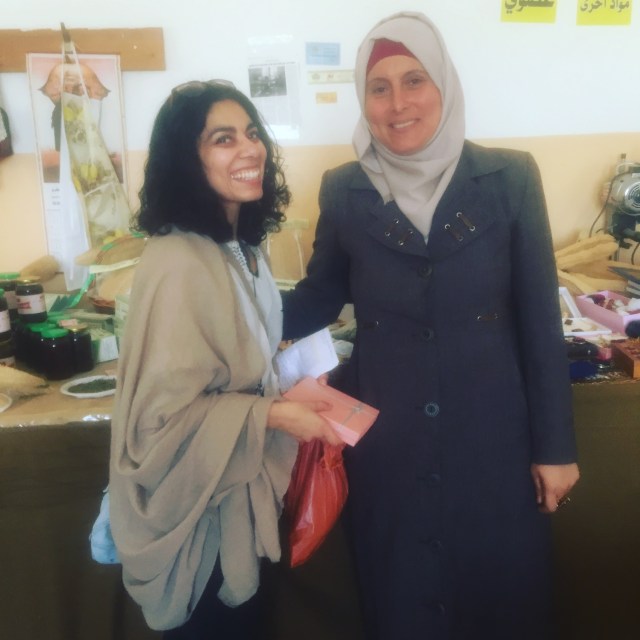
CARE colleague at a project visit to a Women’s Centre in the West Bank

What do you think of when you read the words ‘money is power‘?

Rich tycoons? Celebrity spenders? Men?

Maybe, maybe not. However, for the purposes of this post, let’s assume (and I believe there are solid grounds for such an assumption) that rich, powerful men represent a compelling ‘logo’ for the concept of money being powerful.

This post is about reframing that.

Now, CARE’s work is mainly couched in the language of poverty and injustice. These are far reaching and often misused words. I’ve written before about the way in which the international development sector overuses jargon, and we are still at it.

Within the wide parameters that ‘poverty’ and ‘injustice’ house, CARE delivers humanitarian relief, and we pride ourselves on our long term development interventions. More recently, we have been describing how we build resilience for communities.

There are then a bunch of derivatives used about each of these terms, which I’ll let you research yourself (as I’ve no doubt you now will).

This latest trend towards resilience is, in some ways, an attempt to combine the two historically distinct and typically separate areas of our work – namely, humanitarian relief and longer-term development.      Continue reading “Money is Power”

Innovating against the inevitable

img_7661
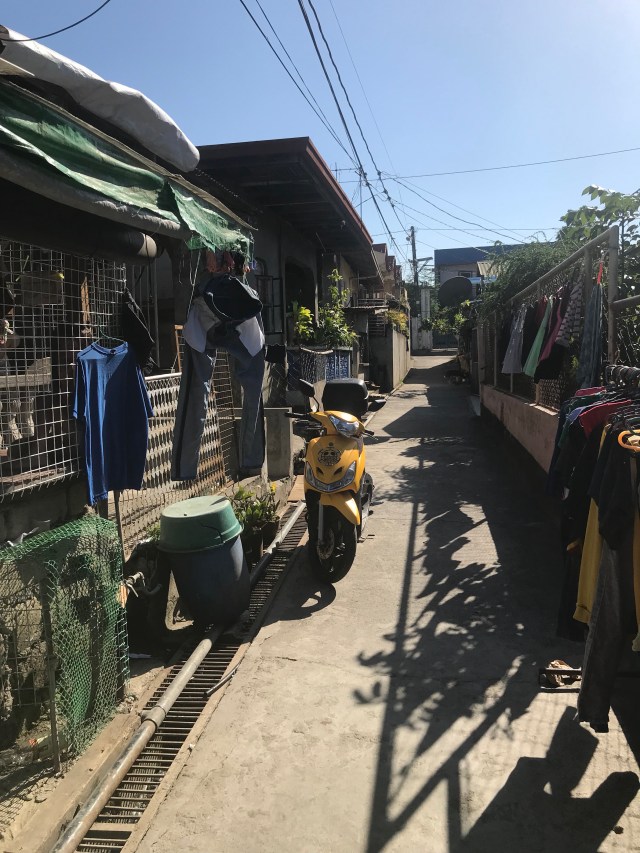
Local street in Calamba City, Philippines

Paula Atun, a young Filipino entrepreneur living in Calamba City, thought she was filling in an online survey, with her idea on how to catch and filter rainwater. She’d seen the idea on the Discovery Channel.

A few weeks later, CARE Philippines had signed her up as one of their local ‘innovators’, tasked with investing over PHp 1,000,000 ($20,000) into this idea, and leading the production and distribution of it to 15 local households, the inhabitants of which are either elderly or living with disabilities.

Paula had, in fact, inadvertently applied to the Philippines TUKLAS Innovation Labs project. And her idea was eventually chosen as one of forty, shortlisted by CARE Philippines and three NGO partners managing this DFID and Start Network initiative.

The Philippines is the second most disaster prone country in the world, and the objective of TUKLAS is to source ideas from local communities for disaster preparedness. It then instigates a process for funding and building the capacities of local creators and entrepreneurs to pilot or scale these.      Continue reading “Innovating against the inevitable”

Making good in a modern world

cb428c0d-f996-4242-a955-89c725794fbc
Local knowledge exchange in Zemalak, Cairo (2016)…
img_7338
….re-visited in 2018

You’ve heard the statistic about the ‘world producing as much information every day as we have in all of humanity’. You maybe read it on Twitter. Or your friend sent you a link to it via WhatsApp. It was probably something like that.

Then there’s the one about our brains only using a small percentage of their capability, and yet we now struggle to absorb more than just bite-sized amounts of news, or information, at any one time.

Sensationalist media headlines fight for our attention in an ever cluttered communications arena. Pictures of Syrian children splattered in blood are up against celebrity scoops, and Trip Advisor adverts mapping our movements and intruding onto our screens and into our lives. The extent to which we depend on, and benefit from, technology is growing exponentially, at the same time as it is eerily replacing so many aspects of our identity, and how and what we fill our waking hours doing.

Do we embrace or reject these advancements? A goose-bump inflection, back to school days of reading Orwell and Huxley, leaves me choosing the latter, and wondering into what flying spaceship fantasy futures my daughters will be subject.      Continue reading “Making good in a modern world”

One day

6140E9AF-8D6B-4473-BF26-63338C17426E

One day,

The wind beneath the wings of a soaring bird
will be felt on his face.

The scent of a crashing wave
will touch his soul.

The freedom of a child at play
will melt his eyes.

And the choices made by a woman living a life free from inequalities
will stir inside of him such unequivocal calm that

he, too,

will soar in the skies,
move with the ocean,
embrace freedom,
and choose to be all these things,

Every day.

Boycott the red tops

In silencing those who have been complaining recently that the topic of sexual harassment is currently peppering news editorials the world over, many commentators have rightly couched that this particular metaphorical surface has only just been scratched.

With each new industry’s public acceptance (and condemnation) of the prevalence of sexual harassment, endemic across their own sectoral landscape, others trivialize the issue, committed it seems to end their days affixed to a depth of denial that even your average canary would shy away from examining…

The gods were indeed having their fun with us mortals to take away the life of Christopher Hitchens, while the caustic barbs of his brother, Peter, run free to propagate so vile a perspective on the topic as they did yesterday that even the Game of Thrones’ own Ramsey Bolton would have taken umbridge.

In his eloquently titled piece: ‘What will women gain from all this squawking about sex pests? A niqab‘  yesterday in The Mail on Sunday, Hitchens offered us this useful perspective:

“The welfare system is about to melt down. And you think the most important thing in your lives is a hunt for long-ago cases of wandering hands, or tellers of coarse jokes?”

And there it is, ladies and gentleman, served up on a plate, a steaming pudding of an indictment, reflecting far too many men’s dismissive attitudes when it comes to sexual harassment. Water under the bridge. Generations of despair and psychological trauma conveniently swept, like human dust particles, under society’s all forgiving moral carpet.

Even by Hitchens’ low-bar standard, yesterday’s article is tour de force material.

As if taking on the mind-set of a man whose lost his worldy possessions at a game of poker, and is being escorted out the door, our protagonist flails and raves at the page. Billions of women enduring lifetimes of objectification? I’ll see your bet, and raise you with a rant about what’s really important, which is that our country is “wobbling on the precipice of bankruptcy”.

Is this the same country who voted to leave the economic safety of Europe, and where corporations, politicians and the country’s own Monarch have spent decades mastering the art of tax avoidance, Peter? If so, maybe take your infantile vitriol out on them.

However, not content with a simple down-grading of sexual harassment in the face of economic meltdowns, our gambling stooge persists.

With one foot out of the casino, and a bouncer’s hand on his shoulder, he can’t resist: “In our post-marriage free-for-all, why should we expect either sex to be restrained? All that’s left is the police or the public pillory of Twitter.”

According to this veritable shitbag of a human being, ever since gender equality started making strides, and the sacred institution of marriage was questioned, society has nose dived.

466 words in, and I’m annoyed that this man has so riled me that I’ve written this (and I apologise for that to the three people who might actually read this blog).

So, let me make a simple recommendation. Boycott this red top propaganda. Boycott the likes of Hitchens, and his poisonous opinions. Boycott Paul Dacre’s lewd, bigoted and fearful curating of these toxic publications. Boycott them all.

Whatever it takes to ensure sexual harassment does not remain a topic analysed only at the surface level, and then filed under a “not that important” index, needs to be done. Those who have committed sexual harassment, whether 80 years ago, should face up to that and pay a penalty. In the public eye, or the private one.

And, all I know, is that there is not one single syllable to be found in yesterday’s vomit inducing Hitchens heckle that will ensure any positive or supportive progress is made in that direction.


Power within

empower
Picture credit: http://www.sassyfitnesschick.com/2016/02/24/the-beauty-of-empowerment/

Back in 2012, I recall discussions at a Bangkok conference with a group of companies keen to lead the charge on ‘women’s economic empowerment’ in Asia.

On the one hand, there was a business case (mainly linked to profitability and staff retention) for these companies to address gender inequalities more systematically and, on the other, many at the time admitted to jumping on a band wagon – the feeling being that women’s economic empowerment was the new thing that people were talking about, but which perhaps had “5 years at best” before the world moved on to the next hot topic.

Fortunately, in 2017 the same companies are still testing the business case and, as we’ve seen in some sparky media pieces on women’s economic empowerment last week, the topic has far from fizzled out.

I enjoy today’s reality of how one op-ed can turn heads, and stimulate an instant planetary debate. Even if such things can also create a battle cry from one school of thinking to the next, with critiques put out more as literary pitch forks plunged into the sides of the opposition, rather than in the more collegiate spirit of pooling our collective energies around an issue – in this case that of gender justice, the world over.

Maybe the space for collaboration is closing, however, and gloves-off conceptual sparring is more useful in garnering attention and bringing issues of women’s empowerment into the mainstream? There have already been multiple “global” conferences over the past 20 years laying down the development challenges of the day, and so an appetite for hosting more such events is, perhaps, understandably waning.

Furthermore, we have a relatively newly re-framed set of UN Development goals, which were met with broad approval. Our stage is set then, and so, within such institutional parameters, conflicting opinions of course need to be aired.

As much as Rafia Zakaria’s NY Times piece instantly struck a chord with many, so too did Linda Scott’s rebuttal. The first article lambasted the array of economic empowerment approaches deployed by organizations, claiming instead that political reforms are the only show in town in terms of actually bringing about change. The second article made the case for why economic empowerment interventions do have a significant role to play and how they can compliment advocacy and political influencing. I found both of value.

Of course, the development sector has much still to learn and we have our idiosyncrasies. As someone who has worked for an international NGO now for over 11 years, I have often buried my head in my hands at our sector’s insistence in dispersing a daily barrage of loaded and contorted rubric, when articulating the everyday realities of people around the world.

However, I am proud to be associated with an entity such as CARE International that is committed to gender justice. In spite of our sector’s insane vocabulary uses, our commitment can – and always should be – first and foremost about influencing change, rather than turning a profit, or trying to win an election.

‘Empowerment’ is, of course, one of the development industry’s most sacred slices of parlance. Crow-barred into panel discussions, funding proposals, office meeting agenda items: it is our holy grail.

Do we know collectively how to prove when empowerment has been achieved? Not quite.

Are we aligned on how to best facilitate or help create empowerment and how it differs contextually? Not always.

Does any of that matter? I really don’t think it should.

That ‘power’ itself is the currency with which we know change can be bought, the notion of empowering those without it seems to me to be a very practical, core mantra for the likes of CARE.

Like Linda Scott, I believe in the work of the many thousands of agencies who pursue empowerment using different approaches. We know, fundamentally know, that re-balancing gender dynamics has a positive impact on poverty reduction, and on social injustices. There is no need to reinvent this theory or replace it with another. CARE’s economic empowerment experiences have also underscored the very need to place emphasis not just on economic gains for women, but on social and political ones, too.

Absolutely, the international NGO industry needs to operate with transparency – we must be accountable for how we invest our resources into “empowering” initiatives and goals. Largely due to the countless examples of how the world’s governments and multi-national companies regularly get caught up in headline grabbing scandals, watch-dog attention on humanitarian and environmental organisations has been low level. Let’s encourage more: there is always room for improvement and, as an industry, we can’t exist in a complacent vacuum.

However, when approached holistically, comprehensively, and in step with others, the pursuit of women’s economic empowerment outcomes, for the many millions of women currently cut off the grid, made vulnerable and marginalised due to their gender, should be not only encouraged and supported, but should be recognised in terms of a set of human rights which everyone in the world has a role to better understand, shape and nurture.

Thoughts on Motivation

IMG_5093

I’ve just listened to a lecture given by a running expert (a “Barbarian ultra-marathon runner” from Denmark) named Simon Grimstrup, who described his motivations for running.

He stressed these as being quite separate to being motivated to be ‘fit’ – he has zero motivation for that. Instead, his calling in life, and his formula for staying motivated, has always been a combination of the trails, the vistas, the mountain peaks, the comraderie, the adventure, the joy, the competition, and the “hunt” for achieving your once in a lifetime perfect race.

On Thursday next week he’ll enter as one of 10 international elite runners into a 403km Gobi Desert race. He thinks running that sort of distance is in fact utter madness, but he is driven to want to do it.

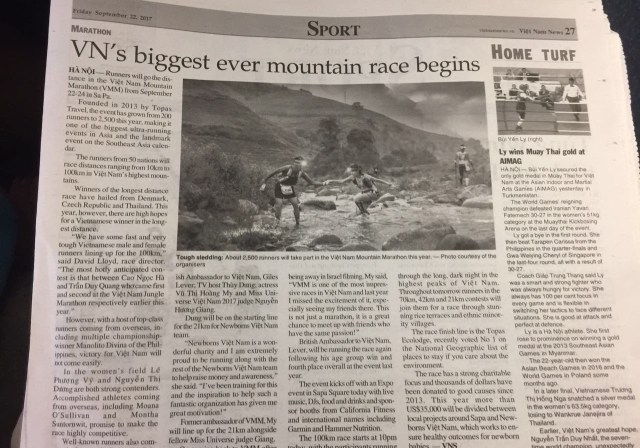
For those who’ve already sponsored me, and sent kind messages (thank you!!) – the reason for this Friday lecture is because Issy and I are up in Sapa (Northern Vietnam) taking part in the Vietnam Mountain Marathon 2017.
Continue reading “Thoughts on Motivation”

Freedom of Self

FullSizeRender
Rest and relaxation in Dar Es Salam, after last week’s HEAT training course

In the confined parameters that determine air travel, as I whirl back on this particular occasion from Africa to home, the experiences learnt on last week’s work trip (comprising an intense training course on Safety and Security) seep through into my consciousness as stone traced markings through paper.

The sharp seam of learning from this particular course was about coping. Coping with confrontation, dilemma, trauma, danger, but mainly, coping with having one’s freedom stolen from underneath your nose.

Since I boarded at the sleepy port of Zanzibar (where 24 hours of “RnR” were spent, and were, for once, an essential bookend to the training course itself) the all too familiar rituals deployed to keep oneself either awake or entertained were running on auto pilot: movie watching; email triage; a few chapters of a novel; social media; face-timing; eating; drinking; freshening up.

With each slice of indulgent escapism, as we are prone to seeking out the most special film to watch, or song to absorb, the constant hunt for ego inflating ‘likes’ and ‘mentions’, that buzz of booze from miniature bottles, all such things, in the end and inevitably, skim the surface of satisfaction, treading the waters high above that particular ocean of Self, rather than dropping lower, as a pearl diver would, in search of deeper treasures: the Soul, and the spirit of being, fathoms below.

This, or, in round terms, just taking things (but mainly, one’s freedom) for granted.

Ironic then that it is only when these freedoms are removed that we get the chance to sink that bit lower and nearer to this Self of ours and, beyond that, to our own truths.

What I mainly reflect on, now that the adrenaline from last week has receded, is how adaptive we all are to crisis situations.

How the unthinkable very quickly can be rationalised and dealt with. Deprived of the freedom to move, see, talk, choose, organise we, in fact, thrive. A bodily revolution of senses takes charge, a new paradigm of prioritising, thinking and imagining rises up, the respective captains, colonels and generals of Being.

We are forced to find new ways to take back control, to inch forward in spite of our inability to behave and feel as free as we are used to and, in that brief chapter of time, we transform, we resolve, and we experience resilience.

Stripped down in that raw state, devoid of our regular freedoms (and in some cases, addictions) we allow ourselves the space and conditions to more profoundly understand.

For that momentary eclipse of the ordinary, arming me with a wholeness and with peace, I will be indebted for a long while yet.


#IWD2017

Societal norms, the world over, since the dawn of time, have placed more undisputed power at the hands of men (and boys) than have been placed with women (and girls).

The narrative of the day reflecting this factual reality changes from context to context. In the UK, for example, we are currently questioning when it is we are going to feel able not to celebrate today’s International Women’s Day (#IWD2017) – when will UK society accept we don’t need a national day to keep reminding everybody about gender equality?

In contrast, here in Vietnam, the entrenchment of gender norms runs deeper. Educated, decent, working husbands and fathers in Vietnam may ‘feel’ a connection to the relatively new concept that women are equal to men (across any indicator) however there is still too strong a cultural leaning away from equality, which has been silently and often subconsciously drummed into that husband/father, for him to really feel 100% behind gender equality.

Another generation and yet one more still, and the softening of these values will happen.
Continue reading “#IWD2017”