Too Distracted Scrolling to Notice We’re Sinking

In 2025, the world feels perpetually distracted. Elections, wars, AI, celebrity scandals — global attention ricochets between urgency and noise. Today it’s one crisis, tomorrow another. And we all scroll on.

And yet, a slower, more existential threat escalates beneath it all: climate change.

Especially in Southeast Asia, the impacts are already reshaping daily life. I’m guilty of tuning out, and I know many others do the same head-in-the-sand routine when they skim stories about rising temperatures or shrinking icebergs.

If climate change is so serious then why aren’t we acting like it is?

Southeast Asia is on the frontlines of climate risk. Jakarta is sinking by as much as 17 centimetres a year, one of the fastest rates in the world. In Vietnam, over 50% of the Mekong Delta’s land area is projected to face saltwater intrusion by 2050, threatening not just agriculture, but the food security of tens of millions.

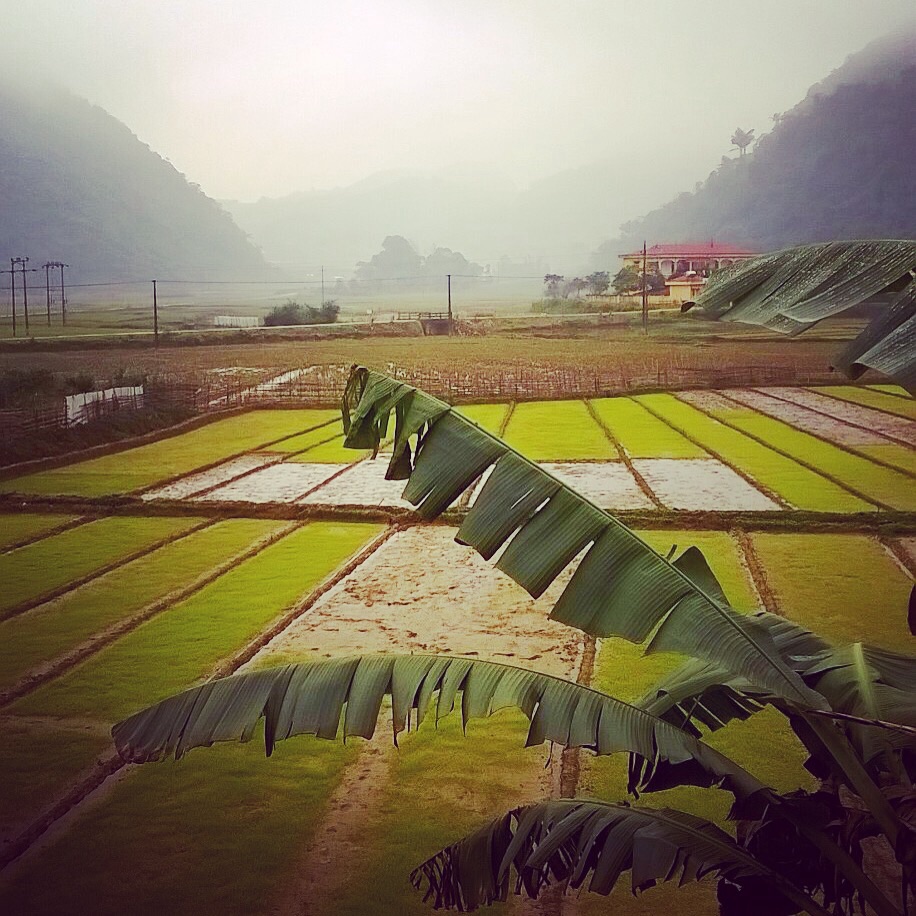
Saline intrusion is already choking rice production in the Delta, while intensifying heatwaves and droughts disrupt water supplies. When these come, droughts disrupt water supplies, and you don’t have to be studying GCSE geography like my daughter (who knows more about this than I) to appreciate what then transpires from a biodiversity perspective: that everything is gradually disappearing.

The IPCC (our collective authority on the matter) warns the window to avoid catastrophic change is ‘brief and rapidly closing.’ That’s not hyperbole — it’s scientific consensus. And, still, climate continues to feel like a background hum, rather than breaking news.

The private sector must play a more central role to Southeast Asia’s adaptation and resilience efforts. Governments alone can’t foot the bill or engineer every innovation. Yet, despite growing interest in green investments and carbon markets, engagement remains patchy.

Vietnam’s 2025 Carbon Market Forum and the P4G Summit were welcome steps. These meetings offered the usual fare: policy frameworks, optimistic keynotes, and lots of “roadmaps.” But translating these into real action remains a challenge.

I’ve worked for a long time promoting sustainability and, in particular, getting business to the table however, let’s be honest, when it comes to climate change, aside from a few regional giants and climate-conscious smaller businesses, most private sector entities are still unsure what climate action means for them, or how to act without sacrificing profitability.
So, I think my call to action on this would, ideally, be quite broad (the ownership of the issue should be everyone’s) however it is here is where I think international NGOs (like my former employer CARE) should step in — not as saviours, but as agencies that can help shape the systems that exist within the private sector, and which relate to climate change.

CARE doesn’t treat women’s empowerment and climate action as separate goals. Instead, they have developed programmes that integrate them through market-based, locally led interventions, tackling environmental threats and economic inequality at once.

In Vietnam, for example, HerGreenVenture supports women-led enterprises with training and green finance to adopt low-emission farming and scale sustainable technologies. In Cambodia, CARE also runs community recycling programmes that help women turn waste into income and reduce landfill pollution. And in Thailand, CARE’s eco-tourism projects led by women are creating jobs while preserving forests and coastlines.

What links these diverse initiatives is a belief that resilience is built from the bottom up.

CARE’s core strategy is clear: gender equality isn’t a side note, it’s central. Women, particularly in rural and informal economies, often bear the worst climate shocks while themselves holding the keys to adaptation. Give them access to green finance, leadership roles, and supply chains, and resilience becomes lasting.

We’ve been warned for years, but action has lagged far behind awareness. Climate experts might point to progress — but, from where I sit, I don’t see enough.

If you’re a business leader, why not starting by asking: how is your company contributing to climate adaptation today? Not just ESG compliance, but to real-world impact.

If you’re in government, how about checking the extent to which you are creating the right conditions for innovation, for inclusion, and ultimately for scale?

And, if you’re an INGO or donor, let’s have more discussion about whether you are building systems or simply just running programmes?

We may live in distracted times. I find myself fighting this day-on-day myself. But, distraction doesn’t make the climate crisis less real — if anything it just makes it less seen.

The question is no longer if it’s serious. It’s whether we’ll start acting like it.

Can we really take big business seriously when it comes to the SDGs?

img_4461-1

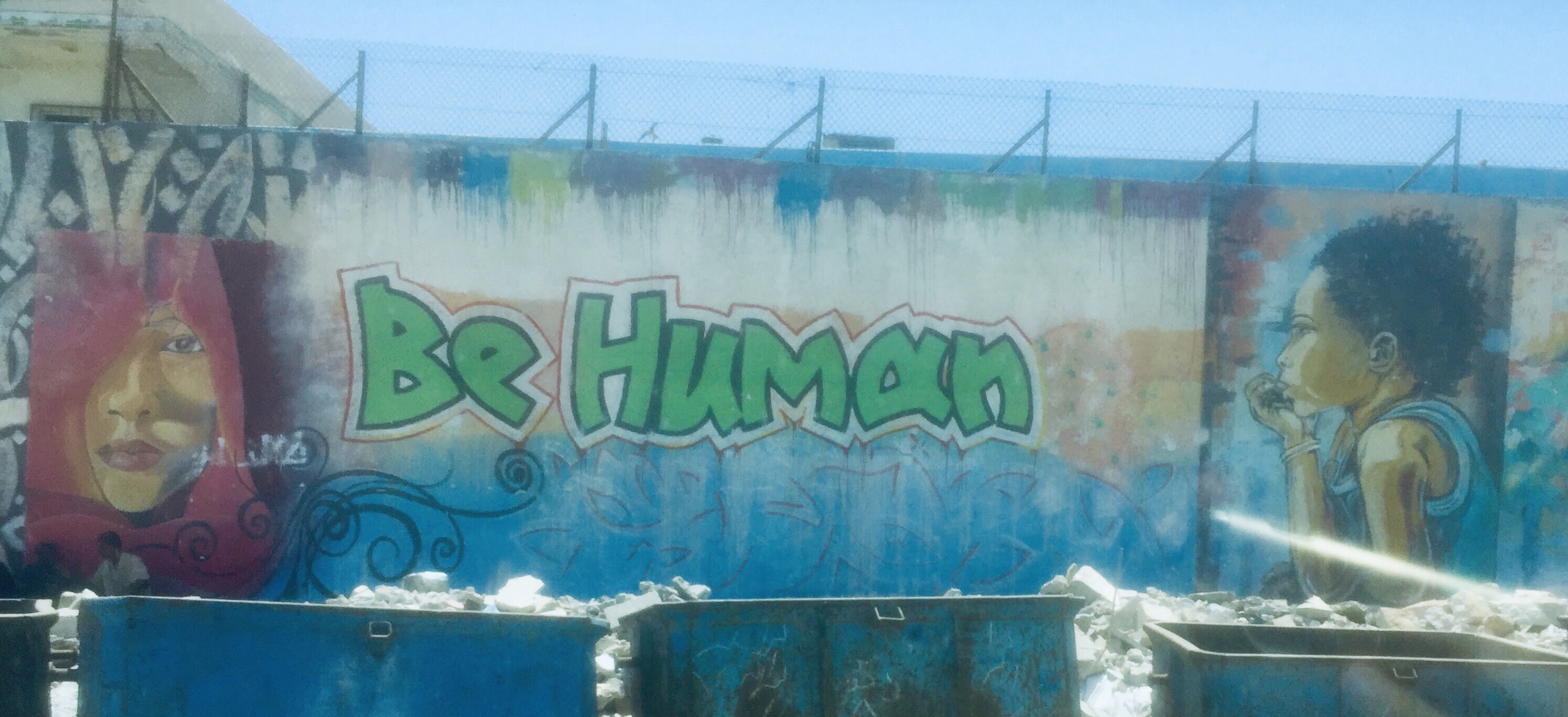
Gaza, May 2017 – https://definitelymaybe.me/2018/05/11/money-is-power/

It was during a Business in the Community event in the summer of 2006 that I first met Carol Monoyios, CARE UK’s Marketing Director, and responsible (in part, at least) for the fact that I spent the next 13 years working for CARE International.

Carol and the organization’s then Programme Director, Raja Jarrah, had hatched a plan and it was to be my fate, attending that July event, to end up playing the role of their main protagonist.

Their plan was, and remains, a simple one: create a multi-functional team inside of CARE to work with businesses and markets in a new and more impactful way.

What various colleagues across CARE’s system had determined, the year before at a conference in Nairobi, was that there were many ways to work with business and markets, with the purpose of supporting CARE’s mission of empowering women and girls, but these were not being centrally coordinated very well.

Inside of the NGO sector at that time, most agencies who took money from business were using this largely as a means to fund projects. A separate department would then typically manage the organisation’s “market development” programmes – the result being that these two functions were not collaborating.      Continue reading “Can we really take big business seriously when it comes to the SDGs?”

Value judgements


azraqweb
CARE staffer Ana Mazen at Azraq camp, in Jordon. Picture credit Sarah Rashdan/CARE.

I’m flying to Singapore on Thursday for work. For those more acquainted with my blogs on definitelymaybe (or on the sister site http://www.saigonsays.com) you’ll have picked up on the fact that I go through spells of heavy travel because of my job.

Every time a work assignment involving being out of Saigon (where I live) is conceived – by me, or by someone I work with, or work for – there are formal criteria for finalizing a decision about going, or not going.

For example, is the assignment in response to a need in that country from a CARE team, an invitation from a partner organization, or the mandate of a higher authority in the system? Who is paying for the costs? What is the detailed scope of work, the objectives? And so on.

I wonder, though, about the less formal criteria that come into play? Those that emanate from individual persuasions and from hierarchies?

Does CARE, and do other entities, in situations of deploying staff overseas to conduct their work, have open and accountable ways of prioritizing who goes where, and for what ends?

Furthermore, how should a not-for-profit agency such as CARE, working to empower marginalized and vulnerable women and girls, decide whether it is more impactful for its mission to send someone in a more “senior” role to a networking conference vs. sending a more “junior” level person on a training course?

In this example, the networking assignment might yield an opportunity to bring valuable new investments into CARE. The training course example might, instead, not only increase the quality of a specific piece of programme design but might also inspire that staff member to be retained for a longer period of time (which, as we know, tends to save organisations money, given the cost of recruiting new people.)

Is one of these examples more directly related to CARE being impactful in our work than the other?

This connundrum, perhaps, doesn’t require public consultation via my blog, and these are issues which are persuasive across sectors and institutions.

However, as carbon emissions are a dominant root cause that exacerbate poverty and social injustice around the world, it does feel incumbent upon those of us working to support those people most impacted on by poverty and social injustices, to be held to account around our standards and decision making.

The issue of how CARE goes about bringing investments into our organisation, how we build quality programmes, and how we reduce our carbon emissions must be inter-connected.

**********

It occurs to me, too, that this use of ‘informal’ criteria is pervasive in all walks of life, and how we make decisions on many things, and speaks to our individual, collective and societal values.

When I ride my motorbike around Saigon (itself an often complex past-time, and one of the topics of an early blog) I’ll make judgements at every corner, and with every mirror check along the way. Split second decisions are calculated based on a.) what I perceive should be the (formal) rules – although it’s never 100% clear over here – and b.) what I might then decide are more intuitive (informal) reasons.

Spread over this recipe for decision making a splattering of social and cultural norms (we got into this last week, too) and sometimes the results are pain free, and other times they leave me hand-gesturing and losing face in front of a road full of people and vehicles.

The values based judgements I and others might be drawing from in such scenarios are often buried deep. And so do we always even know that we are drawing from them, particularly in situations where we find ourselves in arguments or in discussions with conflicting view-points?

I rarely quote the bible on this blog, but how often do we stop and follow the “do unto others as you would have them do unto you” mantra (from Jesus’ Sermon on the Mount, for anyone who, like me, just needed to google the line itself)? If I were to create for myself a strong grouping of values to lead my life by, then I think this one is a great contender.

Yet, is it possible to follow this particular biblical ethic in everything one does in life? Who knows. But I do think a small helping of it everyday would be a valuable beginning.

Just as we are taught (rightly so) not to judge a person by their appearance, I think a good deal of inspiration for me comes when you combine various valuex based sentiments together, and ‘walk their talk’.

As someone initially might take up daily meditation, repeatedly over time they might then develop the ability to use what, eventually, becomes a more ingrained technique and state of mind into how they think, speak, and behave, and how they move from each day-to-day activity and past-time.

Perhaps there is a way for those of us operating from positions of power (from wealth, health, security) to genuinely connect with those values which we often speak about, but less often act upon? Better still, can we be consistently true to these values and be honest with ourselves when we are not?

This morning, I watched a video that actress Shay Mitchell hosted for CARE, documenting a visit she made to a refugee camp in Azraq, Jordon. There, she spent time on a CARE project set up to teach young people how to make films, and give them a channel to express themselves (which I’m pleased to say is an initiative that will now continue through past 2018).

Celebrity promotions of international development work have always been ‘a thing’ and some will be critiqued positively, and some negatively. Carbon emissions were expended, and other investments were made, to make this particular visit, project and resulting video happen. It moved and inspired me (caveating that I do have a certain bias). Maybe for others it will illicit different reactions.

Click on many newspaper front pages this morning, and articles underscoring the desperate plights of hundreds of thousands of other refugees, across the globe, are waiting to be read. They demand, and also deserve, our attention.

This, in part, is our dilemma. I’m sharing the Azraq video to (even slightly) help its promotion to even more then the one million or so watches it has already well deserved. In writing about CARE’s other work from time to time, I hope to do the same. To trigger some reflection. To percolate, for any reader who stops by, a thought or a feeling.

I’ll never actually be able to conclude if this creates impact in itself, but I will continue to experiment with that.

One thing that I do know, specifically related to this video, is that I met Jameel (CARE’s Project Manager for the work in Azraq) recently, and it would be impossible to meet someone whose strong values based approach, to his work and to his life, was more profound.