Power within

empower
Picture credit: http://www.sassyfitnesschick.com/2016/02/24/the-beauty-of-empowerment/

Back in 2012, I recall discussions at a Bangkok conference with a group of companies keen to lead the charge on ‘women’s economic empowerment’ in Asia.

On the one hand, there was a business case (mainly linked to profitability and staff retention) for these companies to address gender inequalities more systematically and, on the other, many at the time admitted to jumping on a band wagon – the feeling being that women’s economic empowerment was the new thing that people were talking about, but which perhaps had “5 years at best” before the world moved on to the next hot topic.

Fortunately, in 2017 the same companies are still testing the business case and, as we’ve seen in some sparky media pieces on women’s economic empowerment last week, the topic has far from fizzled out.

I enjoy today’s reality of how one op-ed can turn heads, and stimulate an instant planetary debate. Even if such things can also create a battle cry from one school of thinking to the next, with critiques put out more as literary pitch forks plunged into the sides of the opposition, rather than in the more collegiate spirit of pooling our collective energies around an issue – in this case that of gender justice, the world over.

Maybe the space for collaboration is closing, however, and gloves-off conceptual sparring is more useful in garnering attention and bringing issues of women’s empowerment into the mainstream? There have already been multiple “global” conferences over the past 20 years laying down the development challenges of the day, and so an appetite for hosting more such events is, perhaps, understandably waning.

Furthermore, we have a relatively newly re-framed set of UN Development goals, which were met with broad approval. Our stage is set then, and so, within such institutional parameters, conflicting opinions of course need to be aired.

As much as Rafia Zakaria’s NY Times piece instantly struck a chord with many, so too did Linda Scott’s rebuttal. The first article lambasted the array of economic empowerment approaches deployed by organizations, claiming instead that political reforms are the only show in town in terms of actually bringing about change. The second article made the case for why economic empowerment interventions do have a significant role to play and how they can compliment advocacy and political influencing. I found both of value.

Of course, the development sector has much still to learn and we have our idiosyncrasies. As someone who has worked for an international NGO now for over 11 years, I have often buried my head in my hands at our sector’s insistence in dispersing a daily barrage of loaded and contorted rubric, when articulating the everyday realities of people around the world.

However, I am proud to be associated with an entity such as CARE International that is committed to gender justice. In spite of our sector’s insane vocabulary uses, our commitment can – and always should be – first and foremost about influencing change, rather than turning a profit, or trying to win an election.

‘Empowerment’ is, of course, one of the development industry’s most sacred slices of parlance. Crow-barred into panel discussions, funding proposals, office meeting agenda items: it is our holy grail.

Do we know collectively how to prove when empowerment has been achieved? Not quite.

Are we aligned on how to best facilitate or help create empowerment and how it differs contextually? Not always.

Does any of that matter? I really don’t think it should.

That ‘power’ itself is the currency with which we know change can be bought, the notion of empowering those without it seems to me to be a very practical, core mantra for the likes of CARE.

Like Linda Scott, I believe in the work of the many thousands of agencies who pursue empowerment using different approaches. We know, fundamentally know, that re-balancing gender dynamics has a positive impact on poverty reduction, and on social injustices. There is no need to reinvent this theory or replace it with another. CARE’s economic empowerment experiences have also underscored the very need to place emphasis not just on economic gains for women, but on social and political ones, too.

Absolutely, the international NGO industry needs to operate with transparency – we must be accountable for how we invest our resources into “empowering” initiatives and goals. Largely due to the countless examples of how the world’s governments and multi-national companies regularly get caught up in headline grabbing scandals, watch-dog attention on humanitarian and environmental organisations has been low level. Let’s encourage more: there is always room for improvement and, as an industry, we can’t exist in a complacent vacuum.

However, when approached holistically, comprehensively, and in step with others, the pursuit of women’s economic empowerment outcomes, for the many millions of women currently cut off the grid, made vulnerable and marginalised due to their gender, should be not only encouraged and supported, but should be recognised in terms of a set of human rights which everyone in the world has a role to better understand, shape and nurture.
Lend Me Your Ears

image
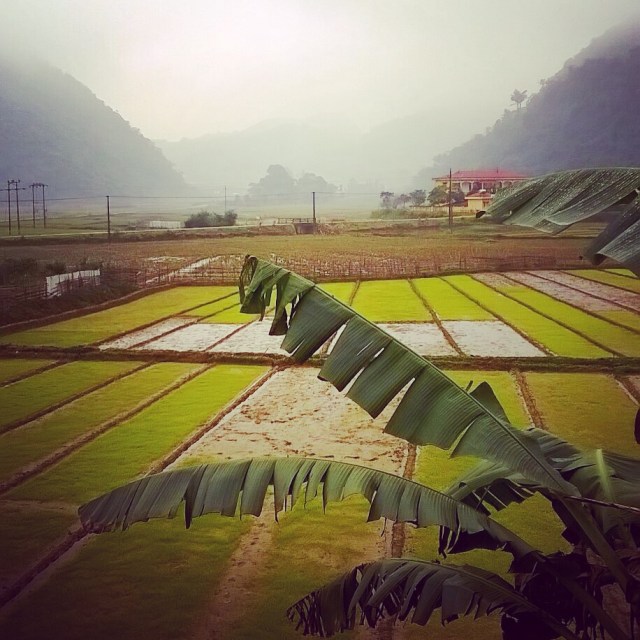
Hoa Binh Province, rural Vietnam

Christmas is coming and there’s no stopping it. Even here in Saigon the Vietnamese have started to embrace what has become an indulgent festival of consumption, celebrating the birth of Jesus Christ.

And, at this time every year, people like me pen blogs like this one, instigated to push a perspective your way. People like me who (you’ll soon enough not be surprised to read) have just spent half my week up in rural Vietnam, meeting local communities.

So, what’s the perspective I’m peddling ? Well, no doubt by the end of this post I will have worked it out…    Continue reading “Lend Me Your Ears”

Partnership musings at 33,000 ft

Photo credit @saigonsays

Over the last couple of months I’ve spent time at various “partnership” themed events. Bangkok, Singapore, Hanoi, even the leafy outskirts of Atlanta, Georgia, many thousands of miles away from the hustle bustle of Saigon. Different venues, but similar take-away recommendations about how, if we are truly to tackle social and environment issues and bring about change in the future, for the future, we must join forces with others.

In some cases, forming alliances which might seem oxymoronic: for example, big business in partnership with local communities; municipal governments working with large NGOs.

Previous case studies on this blog site (where CARE is partnering with companies in the region, including GSK and Diageo) are backed up by hundreds more out there, many of which are breaking new ground and offer hope for replicating models which others can adopt, adapt and improve. Continue reading “Partnership musings at 33,000 ft”

Tacloban: Exposing “middle-income” country realities

effr
CARE’s shelter team with local communities in rural Tacloban

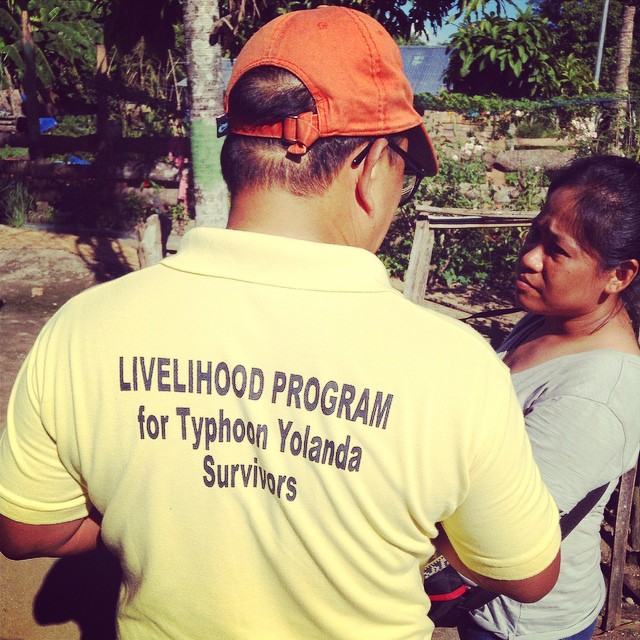
I am on my way home from a visit to Tacloban, in the Philippines, one of the country’s most damaged districts following the carnage caused after Typhoon Yolanda swept through some of the nation’s poorest communities last November.

The Philippines has been classified by the World Bank as a “lower-middle income” economy. Middle-income economies are those with an annual GNI (gross national income) per capita of more than $1,045 but less than $12,74.

Other countries in Asia Pacific who share this classification with the Philippines include Vietnam, Sri Lanka and Indonesia. “Upper-middle income” economies nearby can be found in China, Malaysia and Thailand, whilst the likes of Cambodia and Myanmar are “low income” status.

Meaning that, on the surface of things, the Philippines’ economic gains in recent years, and its growing numbers of new middle-class citizens, represent an optimistic narrative. Its capital city, Manila, stands as a beacon of commercial potential to the private sector, host to a recent World Economic Forum summit, home to some of the world’s most famous, and infamous, global retail brands. Busy, built up, urban Asia. Opportunistic, dynamic but, in fact, wholly deceiving.

Turn this promotional pamphlet over and what lies beneath is, at best, a flimsy and precarious reality… Continue reading “Tacloban: Exposing “middle-income” country realities”

True power lies within

image
The dizzying heights of Singapore’s most powerful

And so to Singapore last week, for CARE’s third successive experience of partnering the annual “Sharing Value Asia” Forum – this year attracting a 30% uplift in delegates since the 2013 event, and focusing on what is becoming a fast emerging consensus around how the “Power of Many” may yet be our best ticket to solving some of the region’s pressing social and environmental dilemmas.

I have written before about “cross-sector” collaboration and partnerships. About forging alliances with shared objectives where the private, public and NGO sectors can work together, realising mutually beneficial outcomes.

This flavour of narrative was once more in play in Singapore, and I welcome that. Continue reading “True power lies within”

This Is Water

image
Last week I was working in Kathmandu. This is a picture I took whilst there. I think it means ‘Water’ in Nepali. If not, it’s still a pretty picture.

It’s the last day of June, a typically pleasant month, heralding in for many of us an array of sporting events and the prospect of summer holidays, before moving us into the second half of the year – as it will do in a matter of a few hour’s time…

In the US, the July 4th celebrations are almost ready. For Muslims the world over, Ramadan began yesterday. The existential crises unfolding in various parts of the Middle East and Africa clog the headlines, in spite of a planet obsessed this month with tales from the World Cup in Brazil (or, for some of those British readers amongst you who have long given up on the football, the ups and downs of following Andy Murray in the tennis at Wimbledon). Continue reading “This Is Water”

Birthday Times

The 27th remains a reasonably significant day of the month for my family. In April, the date marks my birthday, in November, my Dad’s, and in May, my Dad’s Dad: Grandpa, or ‘Pa’ as he was known.

Today, Pa would have been ninety nine years old.

After me, my younger brother’s due date as a baby was also the 27th, of January, however he stayed in for some extra days of peace and quiet, emerging on 1st February.

Not content with being born on what had become a special date, the story goes that I began life immediately setting my parents’ nerves on end, the umbilical cord attaching itself, python-like, around my neck during delivery. No sooner had I gulped my first mouthfuls of hospital air, than I was rushed to an emergency ward for “checks”. Continue reading “Birthday Times”

It’s Inclusion, stupid

download
As so to Singapore, fleetingly, to speak yesterday at Diageo’s inaugural “Women in Hospitality and Tourism in Asia” Conference.

As an $80bn turnover corporation, Diageo were not satisfied with only launching a daytime event, comprising of a range of speeches and panel sessions looking at the women’s empowerment agenda within their own industry, no, they also pulled together the first ever women’s empowerment “Journalist Awards” the very same evening.

Hats off to them for a well organised – and at times, genuinely inspiring – watershed day for a company such as theirs, the largest alcohol beverage company in the world, who have spent the past 18 months recasting their aspirations in society around “empowering women through learning.”

CARE have been supporting these efforts, through skills training and micro-finance initiatives in Nepal and Sri Lanka, and we are also discussing how to use our own experiences over the past 10 years in Cambodia, where we have successfully lobbied the government and the private sector to implement a more responsible Code of Conduct for brewers and drinks companies who distribute their products at a local level, largely employing women as beer sellers. Continue reading “It’s Inclusion, stupid”

ANTs and the Fun Theory

photo credit www.kendrickwan.com
photo credit http://www.kendrickwan.com

Why is it that many of us default to spending an inordinate amount of our time worrying?

Do you find yourself, as I do more often than not, merely seconds into your waking day each morning, thinking instantly about those things past, present or future which make you feel anxious?

On a typical work day (when, I should add, my kids are not staying at my house, in which case my day would inevitably start with berating them for jumping on me at 5:30am, and then pointing out, yet again, that the darkness outside signals “night-time” before going to even greater lengths to stress upon them that “everybody” else in Saigon is still asleep) the first few blinks of the eyes all too often stimulate for me a certain set of thoughts. Continue reading “ANTs and the Fun Theory”