Blue pill, red pill

So, engaging graphics and playing-to-the-crowd sentiments aside, the video above is well worth a gander.

The main thrust of its narrative is a warning to all that we risk creating an increasingly lonelier state of self through the persistent use of social media, ironically pitched as social media can be as a way of improving an individual’s ‘connectivity’ in the world.

In the olden days we used to wake up, make tea, brush our teeth and collect our frozen milk bottle off the doorstep. Today, we’re more likely to check our email, Twitter and Facebook accounts before we even dip a toe out of bed, let alone respond diligently to any line of enquiry emanating from other human beings in our house. Continue reading “Blue pill, red pill”

Engendering change

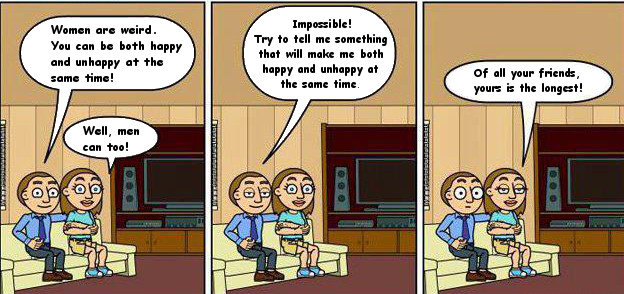
Looking beyond Mars and Venus
How do we move from the mundane of the Mars-Venus analogy?

I’ve just read this: http://blogs.cfr.org/development-channel/2013/10/16/emerging-voices-henriette-kolb-on-gender-equality-and-economic-growth/ which lays out some compelling evidence making the case for how gender equality and economic growth are linked.

Linked positively, that is.

I work for CARE International, and we have made the case ourselves, and continue to do so in the specific area of work that I have been attached to for the last seven years, namely that of engaging business and markets in our precious “development agenda”. Continue reading “Engendering change”

FOMO

Photo courtesy of www.designtaxi.com
The circular trajectories of consumerism – Photo courtesy of http://www.designtaxi.com

What keeps you awake at night? Is it the Fear Of Missing Out?

I read three things recently which deftly, and each in their own way, brought the FOMO concept to life for me.

Let’s start with the amusing Guardian piece:   http://www.theguardian.com/commentisfree/2013/oct/05/100-top-things-dont-need – neatly drawing attention to a daft notion we have become subjected to, which is that there are certain things “we MUST do before we die”.

Usually these things come in the form of a handy list, often of 100 items.  There is no end to the categorization which has been used in this vein of commentary – 100 movies we MUST watch, songs we MUST listen to, places we MUST visit. Continue reading “FOMO”

Freshly pressed thoughts (on way to Bangkok)

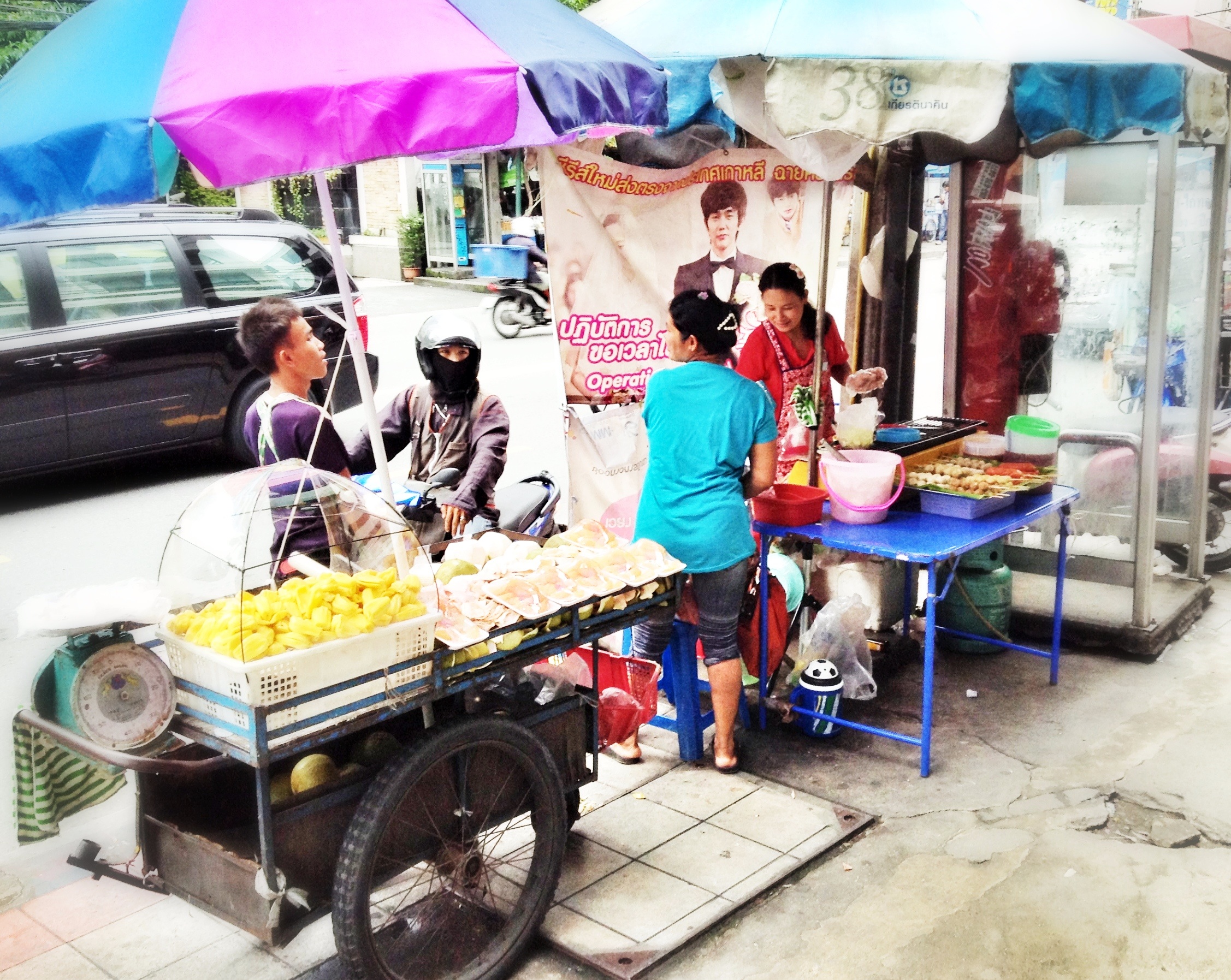
image
Awakening your senses – Bangkok’s colourful street vending network

I’m a mile or so up in the air once more, the flooded dark green plains of the Mekong Delta below so very familiar now after 2.5 years of traversing over them.  Hunched and huddled in the fish-ponged cabin of a Vietnamese airlines aeroplane, I dodge the smiling offers of tepid seafood noodles and ground boot-dust tasting coffee.

This week, up until Wednesday night when I’ll be back to Saigon in time for my daughter’s 5th birthday, it’s Bangkok, for a conference and some networking.

Headphones on, I’m in auto-pilot mode. Continue reading “Freshly pressed thoughts (on way to Bangkok)”

Brit-speak

image

I had coffee with a fellow NGO peer earlier today and, as usual, our chat about work was diverted several times, and we traded amusing anecdotes about life in general.

Van has lived here for 7 years, having been brought up in the USA.  Her Vietnamese is not too bad, but her passion for investing a career and a life in Saigon, where her parents and grandparents lived, like many returning here, is really notable.

This doesn’t mean that some of the quirkiness of living in Vietnam washes over Van: in fact at times it leaves her agog.  Like the occasion when her newly appointed PR assistant (on hearing Van admit to being on a diet, and down the gym each morning) asked her bluntly in front of the team why it was then that Van was wearing “an outfit today which highlights your flabby tummy?” Continue reading “Brit-speak”

The MDGs: Fit for Purpose?

Photo credit: @Samuel Jeffrey www.nomadicsamuel.com
Photo credit: @Samuel Jeffrey http://www.nomadicsamuel.com

The Millennium Development Goals (MDGs) have helped switch on our collective consciousness to social and environmental issues affecting millions of the world’s population, and we should applaud this headline.

Since their establishment in 2000, the MDGs have played a catalytic role in shaping a new international development paradigm.  They’ve raised awareness about global issues in a profoundly effective way and led the charge for more collaboration – across countries and across sectors – to tackle these issues together.

However, one inevitability of setting ambitiously high targets is the unavoidable risk of falling short, hence the daily commentary about the impact the MDGs have actually had, in delivering positive change to people and to planet, predictably paints a mixed picture of both successes and failures. Continue reading “The MDGs: Fit for Purpose?”

Linguistic spaghetti

imageAs someone who has clocked up seven years working in the “aid industry,” I am full to the brim with jargon that I continue to fear means nowt (this is Yorkshire jargon for ‘nothing’ – ‘nil’ – ‘zilch’ – ‘sweet FA’) to anyone not in the know.

For much of the time anyway, those of us in the know, aren’t.

Sure, every business sector has its own nuanced vernacular, too.  The “triple bottom line”.  A “bear” market.  Acronyms galore, whether you are a Wall Street trader, a civil servant, or a quantity surveyor (whatever it is that they do again.)  We all wallow in our respective, tribal refrains.

I have given my best shot over the years to understand what half my mates back in London do working in “the city”.  From memory there are definitely lots of ‘fund management’ types in there.  Maybe some stuff linked to Risk as well.  I keep trying anyway, politely asking fact seeking questions and crossing my fingers that I can remember what it is Ernst and Young do.  I know they are called “E&Y”.  This much I am certain.

And, yes, their eyes glaze over when I talk about sustainable development (in fact I don’t even tend to use these two words given, as continues to be broadcast on development sites these days, it is quite clear no one really knows what sustainable development actually means.)

Let’s assume that these semantic idiosyncrasies are set to stay.  I see no practical reason to deny them to any business, sector, industry, rugby team, local community, or even any NGO, such as CARE.  Just to clarify: an NGO is a Non-Governmental Organisation, although speaking as a CARE employee I can confirm we have also been described as a humanitarian organization, an international development organization, a non-profit, a not-for-profit, a charity, a social development organization…you see where I’m going with this…

So, the Secretary General of the United Nations, Mr Ban Ki-Moon, makes the Guardian development pages at the moment http://www.theguardian.com/global-development/2013/aug/16/ban-ki-moon-development-aid-decline promoting the case for increased ODA (Overseas Development Assistance.)

“Well, he would do that, wouldn’t he?” might be a valid retort to such a promotion…

However, in doing so, he lays out the cornerstone themes that will underpin successful (and sustainable) development for the world – “decent employment, inclusive growth, good wages” – each to be supported by “renewed global partnerships, grounded on the values of equity, solidarity and human rights.”

As someone promoting the role of business in the international development agenda, its encouraging to note the intrinsic links made between what the Sec Gen is proposing, and the helpful way in which a vast chunk of these are reliant on responsible business development – which makes me feel good that CARE is so focused on leveraging business.

However, the main voice in my head just wonders what a fund manager, a risk analyst, a teacher, a tinker, tailor, soldier, spy (you see where I’m going with this…) would make of such statements?

How can we break down some of the silos here?  And then, how to prioritise, in round terms, what comes first?  Where should all this ODA money go and how should it be spent for maximum impact?  Is it good enough to just create jobs, without addressing the ethnic diversity and conflict rife in a particular place?  Do we need: more schools; better trained teachers; more accessible medical services; more women “leaders”; better water and sanitation in urban slums; better mobile coverage in rural areas; environmentally friendly products?

Well, we need all these things.  Easy answer.  And “development” has come a long way in a short (ish) time period, and helped us understand the natural connections between the list above.  The need for a more holistic approach to tackle big problems.

So, to be clear, this is not a “does Aid work?” post.

But, if our baby steps over the past 60+ years have walked us down the front drive, then we still have a long way (at least to the service station on the corner, several blocks away) before equilibrium is reached – across all things.  And I think it is a level playing field concept I most warm to, as I continue to describe and (try to) articulate some of these themes and considerations.

It has to be about equity, and better access.  Access to money, to a livelihood.  Access to information, access to a voice in society that can be heard, and to which there will be a response.  All of such things help society push for accountable and compliant government, business, and the rest.  It is about closing the gap, between rich and poor, male and female – and so on – but also between each other.  Individuals.

And it starts with communication.  Finding the best way to communicate, and the better words to touch someone else’s thoughts and feelings and actions.

Equity, access, but also – intuitively and refreshingly – it has to be about love, tolerance, and understanding.  Whilst we might never become brilliant piano players, sporting greats, or Nobel Peace candidates, every one of us has each of these three characteristics sat waiting to be set free.

If you have found this site via Freshly Pressed, then thanks so much for making it this far down my musings on ‘jargon’ – for anyone interested in what life is like living in Saigon, Vietnam, and traveling around this wonderful region of the world, then check out my other blog www.saigonsays.wordpress.com and, in the meantime, good luck to all the fantastic writers out there.  It was great to connect with you.

Musings on CEO salaries (from a Vietnamese noodle bar)

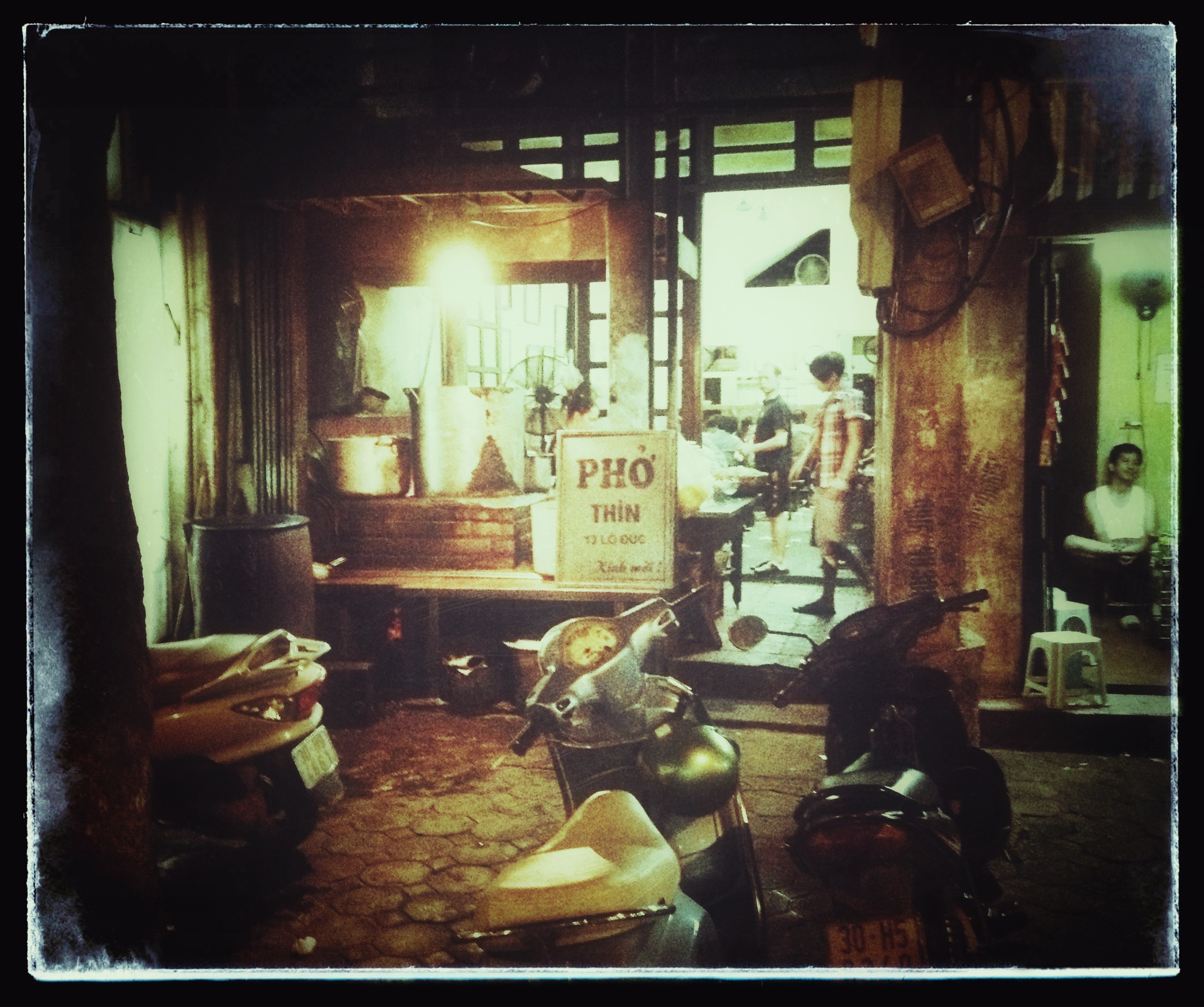
A spurious link at best between this photo and this post...that said, damn fine noodles are to be had here, next time you are in Hanoi...
A spurious link at best between this photo and this post…that said, damn fine noodles are to be had here, next time you are in Hanoi…

Already two months have past since I posted here about Fair and Lovely cream whilst I was working in India.  Various travels have kept me busy since that time (documented in part over on www.saigonsays.wordpress.com).

Suddenly August is in full swing.

Sparking my curiosity enough to open up these pages once more, is a piece in the Guardian, unpacking the seasonal debate we like to have (and perhaps the “we” inferred here – the UK – are not alone in this musing?) about the large salaries paid to CEOs of international NGOs, such as the one I have been working for these past seven years. Continue reading “Musings on CEO salaries (from a Vietnamese noodle bar)”

Fair and Lovely?

A Vaseline advert for men's skin-whitening cream
A Vaseline advert for men’s skin-whitening cream

At what point in the future will branding not be such a dominating force in society, or even cease to exist all together?

I asked myself this question yesterday, following a conversation had with colleagues here in Delhi about skin-whitening, and the way this practice has swept across the country.

Millions of Indian women and (more recently) men buy brands such as Fair and Lovely each day, in an attempt to look fairer and more attractive. The same company who produce Fair and Lovely (Hindustan Lever, a Unilever subsidiary) also just launched a hand-washing initiative in India, through their Lifebuoy soap brand, aimed at helping eradicate easily preventable diseases – such as dysentery – which claim the lives of many young children in India.  The ad is pasted at the end of this post.

In my simple mind, the conflation of these two Unilever brands in what they stand for, and what they are selling, is slightly bizarre. Continue reading “Fair and Lovely?”

Time Piece

How bound are we by the constraints of time?

I have just started reading Tiziano Terzani’s novel “A Fortune-Teller Told Me” – an autobiography, which recounts the specific tale of how Terzani, a journalist, avoided death in 1993 by following a prophecy made by a fortune-teller he met twenty years earlier.

The fortune-teller told him not to fly for the whole of 1993 and, in following this advice, Terzani not only embarked on a twelve month adventure covering many thousands of miles, but he also inadvertedly gave up his place on a UN helicopter, carrying other journalists, which went down on 20 March 1993 in Cambodia.

This, I already know after the opening chapters, will be a book which challenges my assumptions about several things.  Including, perhaps, that of the human capacity to see into the past and the future. Continue reading “Time Piece”