Viability vs. Visibility: The Tragedy of Modern Leadership

https://www.newsweek.com/white-house-elon-musk-doge-sec-target-conflict-2032567

Just been reading that Elon Musk is stepping down from his role at DOGE, the government department set up to save the US economy from wasted spending.

I’ve briefly shared my view on DOGE and on Trump, and I mentally flit between one day wanting to write more about how both entities are impacting the world (negatively, in my opinion) and the next day simply wanting the whole circus that is the US Republican administration to fall off the face of the earth.

If only there were some decent Democrat spokes-people out there, these past five months, to counteract the daily ordeal each of us faces when we read the news. Lucky enough I found this guy, Harry, to be a helpful and passionate critique of Musk and Trump.

There’s very little in this piece he posted recently with which I disagree.

The one thing I’d add to this latest piece “news” about Musk leaving DOGE is that, aside from the long list of grievances one would be well justified to level at Elon Musk (Harry covers this neatly, so I don’t need to), and aside from his general awkwardness with everyone he meets, and how he communicates, the thing that sticks most in my throat is his inability to collaborate.

His purchase of Twitter/X has only made his individualism and ego even more pronounced.

Forget the viability of something anymore (be it, say, the “truth” or simply the credentials of one’s EV business) many social media sites have together reframed what is important for society and that, it seems to me, is not viability, but visibility.

Misinformation thrives in these online spaces. Very complex ideas and hypotheses are flattened out into bulleted “top tips”. Twitter, in many ways, is a platform which has gamified shortened attention spans and praises individual’s visibility and their brand.

Which, of course, offers the perfect ground for performers like Trump and Musk, who pretend to be leaders, but act more like ham-fisted Copperfield illusionists. All accountability is removed. All sense evaporates as soon as they start speaking. They don’t answer questions, they gaslight, they lie, they rinse, they repeat.

While Musk claims to build for the future, with neural interfaces and colonies on Mars, he is a caricature of all the shitty habits and traits that we’re collectively adopting from spending too much time, ironically, scrolling through Twitter feeds.

It’s well documented that many people find it ever harder to hold their attention on simple tasks and activities. Young professionals, in particular, embrace more performative ambitions about what they want to do as individuals. It feels, a lot of the time, like there is a fading appetite for collective progress, as folks rush about in a melee of self-made busyness and unfinished projects.

As Musk bounces from city to city, flexing his enormous bank account in front of politicians one day and Silicon Valley the next, we watch as climate plans get drafted annually at COP Conferences, before being routinely shelved. We observe social justice campaigns that trend for days, before being eclipsed by celebrity gossip or some other geopolitical outrage.

Musk is a symbol for these contradictions. His own portfolio reflects a restlessness where the next ambition supersedes the existing one. Bored of this project now, move on.

Perhaps all of this is inevitable, given the world’s richest man is able to sway the markets with a single tweet, and can basically say or do what he wants today, and then pay for the damage afterwards, knowing that tomorrow we’ll all have moved on to the next click-bait article.

Nice heels, cowboy.

Musk is not alone, of course. As Jeff Bezos floated into Cannes earlier this month, in his $500m schooner, the irony was not lost on those who’ve followed his outspoken support to address climate change. And let’s not forget his Blue Origin space flight debacle. No, let’s.

Whichever of these wealthy elite you handpick for analysis, you’ll find the same paradoxes. The allure of the solo operator, at this echelon of society, remains powerful, there’s no doubt about that, and especially in a world that feels increasingly ungovernable. But the actions and behaviors of these individuals, forging ahead, indifferent to consensus, and chucking U-turns on a weekly basis, smacks of ending up brazenly erasing the work of thousands of others.

And, this approach fundamentally ignores the necessity of institutions, of partnerships, and the wholesome bindings of community. All of which are needed if we’re to arrive at long term solutions to global problems. We don’t need Musk or Bezos to do that.

You can tell me that Musk is responsible for cutting edge technological breakthroughs but, even if I choose to believe that, the nature in which he is conducting himself does not sit well with me, nor fill me with anything other than fear.

Musk, Bezos, Trump: these characters are in the headlines all the time, and they dominate how we think about change because of that. That’s a red flag.

Change that the world urgently requires is slow and deeply collective. We need sustained cooperation, and instead we run the risk of remaining stuck in a loop of promising beginnings and spectacular distractions.

Turn Debt into Hope

https://walletgenius.com/loans/why-debt-relief-plans-might-be-better-than-debt-consolidation/

Do you remember much about what you were doing twenty five years ago? Maybe you can recall how you spent that final New Year’s Eve of the 20th century?

Fun fact, that specific NYE, with only an hour left until midnight, I found myself responsible for introducing an old school friend to the woman who turned out to become the love of his life.

Anyway, while some of us were downing drinks and match-making at a bar in South West London, others were galvanizing global attention about world debt, and its impacts on least developed nations. The Jubilee 2000 movement led that charge at the time, their efforts leading to the cancellation of over $130 billion in debt for 36 countries.

A monumental effort which enabled nations to redirect funds toward critical sectors like health and education, offering millions a pathway out of poverty. But, fast forward to 2025, and the call for debt justice still resonates, only things have got worse.

I’ve been working recently with Caritas International, and have come to know about the launch of their “Turn Debt into Hope” campaign, urging the cancellation of unjust and unsustainable debts that, to quote from their website, “hinder nations from investing in their futures.”

From some quick research it seems that, back in 2000, the total external debt for the world’s Least Developed Countries (LDCs) was approximately $150.4 billion. External debt today, for the 31 poorest, high-risk countries, has now topped $200 billion. We’re seeing the highest burden of debt in 30 years.

​This increase means that even more substantial chunks of money from the world’s poorest governments are being diverted away from public sector needs and, instead, allocated to repaying these debts.

When you then consider other ‘crises’ that encroach upon a country’s economy – be it the slow onset ramifications of conflict, or the rapid emergency of an earthquake (much like the one Myanmar experienced a week ago) – it becomes impossible to see how these debts will ever be repaid.

In the aftermath of a crisis, economies dive, job losses occur, inflation prices scupper spending, and a whole myriad of other economic outcomes conspire to spiral a country out of all control.

Waking up this morning to the news of Donald Trump’s sweeping tariffs (which includes a 10% baseline on all imports, and higher rates on key trading partners such as China (34%), the EU (20%) and a whopping 46% here in Vietnam) it is obvious these escalating trade tensions will only lead to market volatility, to fears of a global economic slowdown, and the inevitably unequal impacts of that on so many of the world’s developing countries.

It’s a brutal, cruel economic conundrum, because it is the most vulnerable communities who face the highest threats.

As I’ve been prone to highlight here many times before now, I believe the role of the private sector to be key in these debates. And yet, too often, these conversations happen without the private sector in the room.

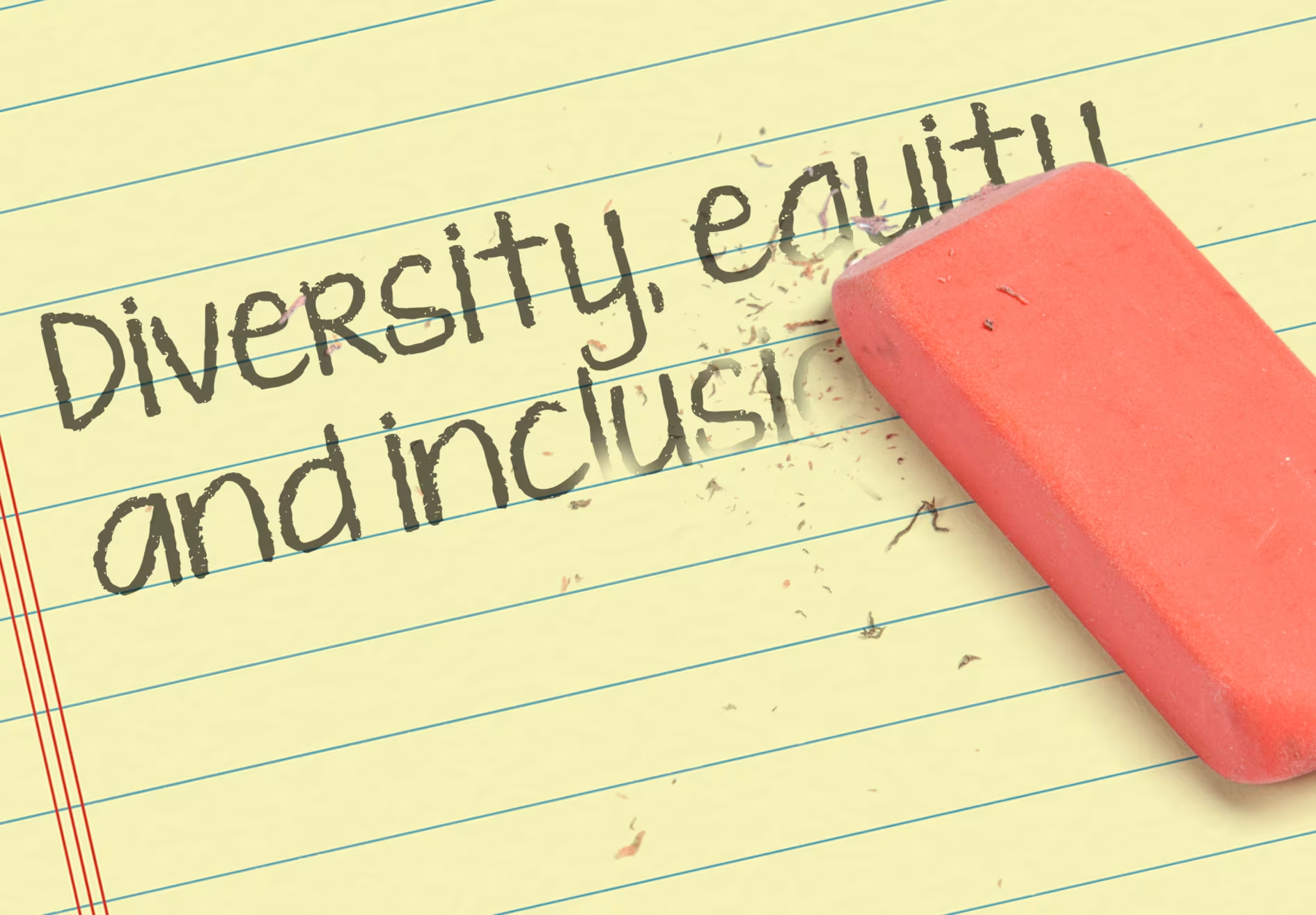
That needs to change. Companies are increasingly recognizing that their long-term success is intertwined with the well-being of the communities in which they operate. Engaging with initiatives that promote economic justice, such as “Turn Debt into Hope”, aligns with corporate commitments to Diversity, Equity, and Inclusion (DEI).

By advocating for, and participating in, debt cancellation measures, businesses can play a role in contributing to the creation of more stable and equitable global markets. All of which, ultimately, benefits everyone.

Twenty five years ago, the Millennium Development Goals (MDGs) set out a charter, with a fifteen year timeframe. The MDGs sewed into their narrative this inference about partnership and the role of the private sector, however it’s been a slow process to bring business to the table.

Genuine collaboration takes time, and today we need to keep banging this same drum, hoist up this same flag, and loudly promote why multi-stakeholder collaboration, that includes business, can be instrumental in addressing both immediate financial injustices, while also laying the groundwork for sustainable development.​

The principles that the 2000 Jubilee Campaign champion are more pertinent than ever. We’re experiencing an era marked by economic uncertainty, by geopolitical tensions, and by ongoing climate crises. Debt cancellation is a crucial lever for promoting stability and prosperity, and we cannot wait another quarter of a decade for action in this space.

The children of my old school friend, who met his future wife on New Year’s Eve in 2000, are already in their twenties. Theirs is the generation now grappling with the implications of a world that procrastinated over its responsibilities.

Do please consider donating to any of the organisations currently providing humanitarian assistance to communities in Myanmar affected by the earthquake – here is one.

Why Companies Must Double Down on DEI

Image credit Marketwatch.com

I have been working with companies for twenty years in a bid to involve them more in the delivery and improved impacts of international aid.

What started primarily as a resource mobilization effort, for CARE International UK in 2006, soon evolved into something more integrated – global banks providing accounts for village savings groups; insurers offering rural communities $1 policies for health coverage; and even beer companies investing in research to understand the link between alcohol and domestic violence.

Throughout this time, I saw how the emergence of diversity, equity and inclusion (DEI) policies into the corporate world helped usher in new modes of leadership. CEOs began talking about putting “people and planet before profit.” HR departments prided themselves on equal opportunities, and invested in understanding workers’ rights and needs.

This shift toward a more inclusive, values-driven model of ‘Business 2.0’ was slow to take hold, but many of the world’s largest companies led the way. At least, they talked a good game. And, sometimes, talking is where progress begins.

DEI Under Threat

Today, however, we are navigating a world increasingly shaped by geopolitical instability, shifting aid flows, and rising nationalist rhetoric. DEI is under threat – not just from external political pressures, but from internal forces like budget cuts and boardroom fatigue. Yet, walking away from DEI now is not only a moral misstep, in my opinion it’s bad for business and bad for society.

The first quarter of 2025 has already seen drastic cuts to development aid. Alongside this, DEI commitments – once publicly celebrated – are being quietly shelved. Still, inequality persists. Marginalized groups, particularly women, ethnic minorities, LGBTQ+ individuals, and people with disabilities, continue to face systemic barriers. The need for equity in the workplace and beyond remains urgent.

Companies have long positioned themselves as leaders in social responsibility. I know this because I’ve spent countless hours in corporate boardrooms discussing the merits of my host’s latest DEI framework. I’ve attended conferences, facilitated panels, sat in workshops, written blogs, and led site visits from the northern provinces of Myanmar to the remote islands of the Philippines.

I’ve seen the important impacts of DEI on company culture, factory floors, and the communities indirectly touched by global supply chains.

The type of leadership that I’ve witnessed in this time, and that prioritizes values-driven business (one that sees the “win-win” for company and society in driving a stronger DEI agenda) is not a “nice-to-have.”

It is, more than ever, core to innovation, resilience, and long-term growth. Numerous studies have shown that diverse teams outperform homogenous ones. Inclusion drives creativity, better decision-making, and market expansion.

According to McKinsey: “Companies in the top quartile for ethnic and cultural diversity outperform those in the bottom quartile by 36% in profitability.” Organisations prioritizing DEI enjoy “up to 50% lower staff turnover”, says the Living Institute, which in turn reduces the high cost of recruitment and onboarding.

During my time with CARE International, I worked closely with companies who shared similar data and positive anecdotes about the way DEI commitments they had made were taking hold. Also while at CARE, I learnt more about micro and small businesses. Globally, these account for 90% of all enterprises and over 50% of global employment, according to the World Bank and the United Nations.

Imagine a world where these businesses adopt inclusive practices – the ripple effects through supply chains and local economies could be truly transformative.

Where to Start?

If you are a business seeking to strengthen your DEI commitments, why not start with the basics:

  • Embed DEI in your core strategy – don’t relegate it to CSR.
  • Publish annual DEI metrics and be transparent about both progress and challenges.
  • Ensure inclusive hiring, equitable pay, and diverse leadership pipelines.
  • Advocate publicly for inclusive policies, even when it’s uncomfortable.

In times of political pushback, I don’t believe ‘neutrality’ is a favourable option for the private sector. Companies that stay silent send a message that rights and equity are negotiable. Silence, in my experience, can be both reputationally and ethically compromising which, during uncertain times, is not ideal if your brand and reputation is under the microscope.

DEI is not a passing political trend.

It’s a human and economic imperative – one that businesses must continue to champion with courage, data, and intent.

It’s Polarisation, stupid

Two hours ago, Melania Trump entered Congress to a standing ovation and what felt like genuine affection from those inside. Perhaps the Republicans were applauding her sheer presence and willingness to support her husband. Others, it would not be too far-fetched to speculate, clapping in sympathy.

It is very difficult to ignore Donald Trump at the moment. As a result of which I find myself, out of visceral frustration, investing time this morning watching these live scenes, and making a decision to post a commentary of sorts onto a public platform.

My stomach is upside down even before the parade of Trump’s Cabinet enters, shuffling down the aisles making their overly emotional hand gestures and head nods to those strategically positioned at the end of each row to meet and greet them.

And then in walks the President, coolly sauntering through the fawning men and women, the politicians and army chiefs, the old-timers and the new hopefuls, none of whom make any effort to contain their exuberance at the prospect of touching Trump’s shoulder, shaking his hand or planting a kiss on his cheek.

For someone with Messiah Complex tendencies, this little pantomime walk can only be further stimulating an ego that has, and will continue to be, frontline news for the next four years.

With his spray tan almost the same shade as the wooden lectern at which he finally arrives, chants of “U-S-A!” eventually simmer down and Donald Trump, once again, has the world watching him.

On the Republican side of the room, it was akin to participating in the early stages of a wedding ceremony inside a church. Hair was slicked back or freshly blow-dried, America tie-pins had been buffed and then, on the other side, a sprinkle of silent protest, as many Democrats had dressed in pink (highlighting the unequal impacts on women the incumbent administration’s policies were having) and, once proceedings were underway, held up discreet signs saying “False” or “Save Medicaid”.

One would be forgiven for forgetting that it was only five days ago that Trump and Vance pincered Zelensky in the Oval Office, itself an acutely polarising moment for global onlookers. This particular “news” was brushed off by The White House (as most ugly spats and comments that Trump makes, are) over the weekend, and whilst the UK was hosting a peace summit with Zelensky and European leaders.

Never before has Harold Wilson’s line that “today’s news is tomorrow’s fish and chip wrapper” been more pertinent and chilling.

Vance, only yesterday, mocked the UK and France’s support of troops to Ukraine (he back-pedaled afterwards) but, then, that was yesterday. Trump’s tariff announcements went on to grab our attention, given they caused a huge stock market drop. According to Trump, he has been the most successful President in the country’s history and has only ‘grown’ America’s economy (in spite of it currently facing $37 trillion dollars worth of debt).

It is a circus. The whole enterprise that is Donald Trump is one ego-driven franchise dripping in power, greed, and male entitlement.

What will he say to Congress later about the mineral deal with Ukraine? What other verbal hand grenades will he drop before I’ve even finished typing these words?

Right now, as I do type this, he’s in full ring-master mode. Using more smoke and mirror bullshit in his speech to distract and deflect any criticisms that could be leveled at him. He’s cracking jokes about “no one knowing where Lesotho is” as he lists out what he calls “wasted” USAID initiatives. He calls Biden the “worst president in America’s history” and blames wokeness for just about everything.

He doesn’t stop spewing utter nonsense.

“Ladies and Gentlemen, America is back. We’ve accomplished more in 43 days than others have in 4 years or 8 years. There’s never been anything like it.”

Ain’t that the truth.

The man is unlike anyone the world has ever had in that role and yet, at the end of every statement he makes to Congress at the moment, half the room is up on its feet, smugly whooping and cheering and braying at the muted Democrats – their faces fallen, as much in embarrassment as in anger.

Behind him, Vance, and the Speaker of the House, two shiny mechanised puppets, synchronise their choreographed erections, like a pair of cuckoos on the stroke of a clock.

A friend told me this morning that it is as if Trump has been “taking a sledgehammer to a birthday cake”.

What scares me more, as he drones on and on, is just how many people keep applauding, not only his speeches, but his every horrific swing at yet another part of the birthday cake.

He’s put the world’s richest man in charge of slashing to pieces the world’s largest supporter of humanitarian assistance to the world’s poorest people. That decision, alone, is having unprecedented and harrowing global repercussions. Tonight, however, he draws only sycophantic praise at the mention of USAID cuts, and Elon Musk, sat as he is next to the Director of the FBI, stands to yet more applause.

Musk, one of those “unelected officials” that Trump has moments earlier claimed he is eradicating.

The President of the United States of America boasts on, listing his achievements like a proud toddler. And, with every reference he makes – on climate change, or the World Health Organisation, on ‘DOGE’, or the price of eggs – it dawns on me that I can’t watch any more of this speech, or this man, today.

He’s talking now about the Panama Canal and about Greenland. More jokes. More laughter. Oh, and he’s “received a letter” earlier today from Zelensky, saying he’s ready for peace. Well, I’m glad we got to Ukraine in the end, and that’s all settled now.

I can’t stand the fact that Trump is here on the screen, and that I’ve felt compelled to talk about him.

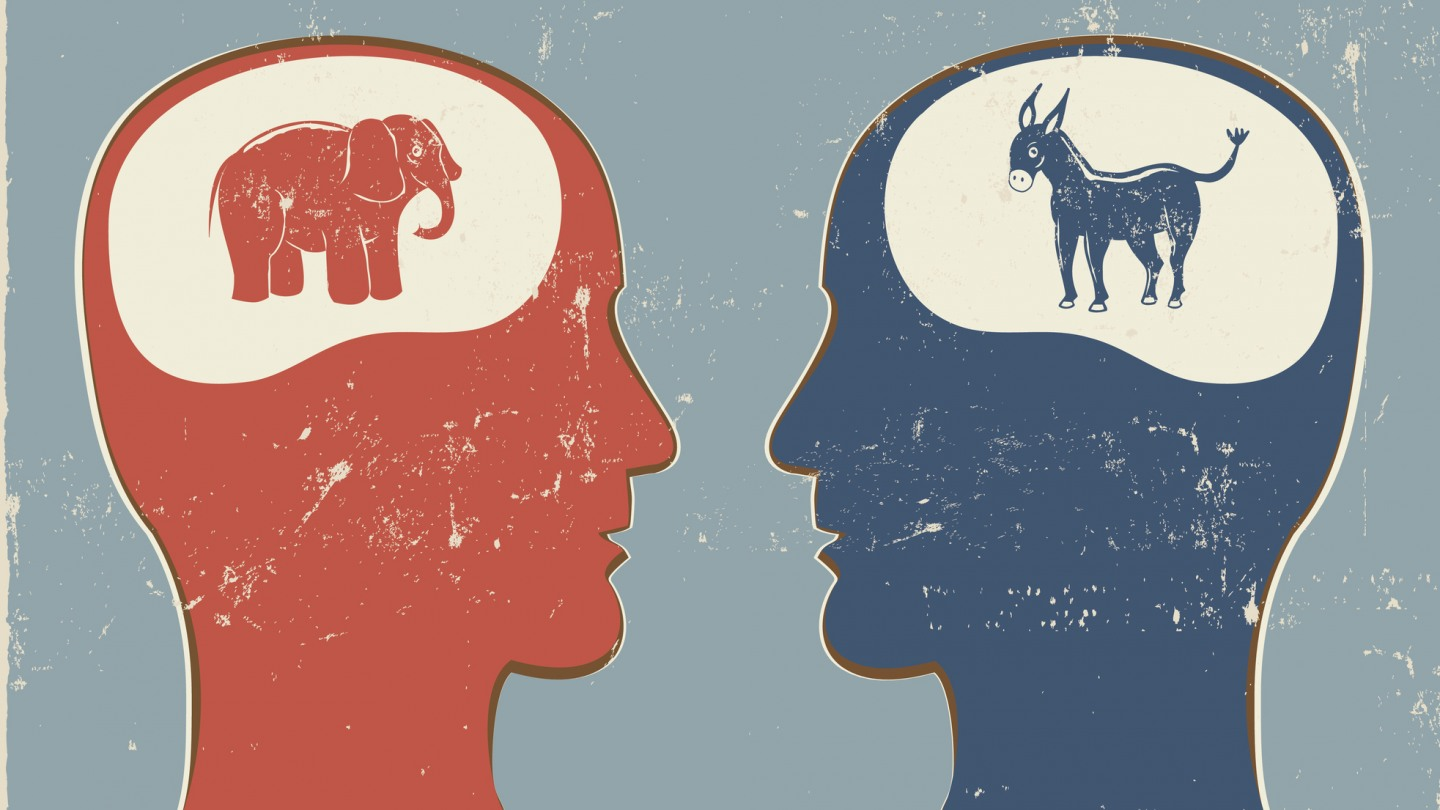
But, mostly, it scares me to wonder if this new paradigm of fake news will ever go away, and we will ever be able to hold reasonable, non-polarised political debates again?

Put more women in charge

image
Photo credit: @Samuel Jeffrey http://www.nomadicsamuel.com

Last Thursday marked the 45th anniversary of the reunification of Vietnam. The day the “American war” officially ended. Evacuations from Saigon continued for some time after 30th April 1975, but Reunification Day is the day that residents here hoist up their flags and commemorate the end of one era, and the beginning of another.

I remember talking to a friend a few year’s back, she was born in Saigon, and her family fled later in the ’70s, bound for Melbourne, Australia. She recalls the memory of being in a boat, aged 5, and can picture still the anguish plastered across her parents’ brows, and their clipped, firm instructions to her.

The plight of a family on the run isn’t something anyone would choose to put themselves through.

Just as no parent would want their loved ones to be victims of war over peace, violent conflict over dialogue.

And, yet, war and conflict riddle our generation, as they have every other one before us, and peace and dialogue so often resolve far less than seems possible.

‘Change’ in our society, as required by the human condition, thrives off of a combination of war and peace, reinforced and shaped, as these forces are, by various forms of dialogue and iterations of conflict.

There is a predictability around the cycles of these dynamics and conditions, and humans seem stuck in the cadence and inevitability of the ebb and flow of these things.

But we needn’t be stuck, dear reader.

I put it to you that we’ve gathered plenty of recent and favourable lessons about how to tackle societal issues (including addressing conflict and war) and one thing is certain: we don’t have enough women in charge.

It’s not necessarily that a Head of State (there are currently 29 female Heads of State out of 195 countries) always single-handedly makes the key decisions. Nor every corporate CEO the same. It takes many voices and influences to ultimately persuade a country to go “to war” in the first place.

However, with power comes great responsibility, as the saying goes, and men simply don’t care enough about the impacts of their decisions, when compared to women.

Forgive the sweeping generalisations but, for too long – forever – men have sat smug and uncontested, their creativity and compassion rendered, more often than not, lethargic and complacent when compared, in the cold and searching light of day, to that of women.

The Mars vs. Venus analogies neatly document the critical differences between men and women. We have this data. Men don’t care as much as women do. They don’t care as much.

The alarm bells have been ringing loud and clear on this point for a long while now. But nothing changes.

Boris Johnson, Scott Morrison, Donald Trump, Jeff Bezos, Mark Zuckeberg, Rupert Murdoch, Vladimir Putin, Xi Jinping, Narendra Modi, Pope Francis. A plethora of male power brokers. Angela Merkel the one female counter-part over the last ten years whose influence is comparable.

More recently, New Zealand’s Jacinda Ardern has captured the attention of many. Because she cares. Because she is self-aware and because her ego, unlike the inflated zeppelins of her male peers, doesn’t take over how she makes decisions.

In the archives of these posts you will find attempts to describe CARE’s solutions to poverty and social injustice. The #1 proof of concept that CARE has? Put more women in charge. Put gender equality at the centre of all poverty programmes, of all campaigns to tackle social injustice. Done. It’s that simple.

Put more women in charge of balancing a low-income household budget and we know they will think more about healthcare and education, than they will about spending that budget on consumption. They will care more about the welfare of their children. There will be less violence and conflict.

BeyondMeToo_NOLogo_Square
Picture credit: http://www.wunc.org

Putting more women in charge of everything can only reap dividends for everyone in the longer term. The stock market, the military, the media, the respective governance structures of every country in the world, the political systems, which toxically cause pain and suffering for so many people. Hell, we’ve even the evidence now that investing more in girls’ education is one of the most important counters to the effects of climate change.

Women make up 51% of the world’s population and yet we are leaving seismic decision-making about the planet’s extractive industry, the planet’s nuclear capacities, the planet’s healthcare and financial systems, dis-proportionality to men. Who we know care less about issues of humanity and welfare than women do.

Patriarchal social norms, everywhere, dictate this status quo. Capitalism only worsens the effects of inequality, and of gender bias.

The world, we are told, is constantly changing. Covid-19 our latest gruesome illustration of this. And yet nothing has meaningfully changed in terms the gender inequality. It rages on.

The #MeToo movement, and the wave of awareness which followed about domestic violence, workplace harassment, and gender-based violence more generally, was long overdue.

But it didn’t stop the election of Donald Trump. It hasn’t resulted in root and branch changes to how some of the world’s most powerful nations staff their top tier of power holders. It hasn’t influenced the accepted norm, the world over, that men can use violence against women as a weapon.

In Vietnam, as this week’s commemorative anniversary of the end of a brutal and protracted war draws to a close, the government continues to flagrantly lead from the front in terms of the male-female ratios of its leaders. And they are not alone in doing that. It’s the same everywhere.

Everyday, unchallenged, predictable and disastrous decisions are made by men.

Put more women in charge of everything.