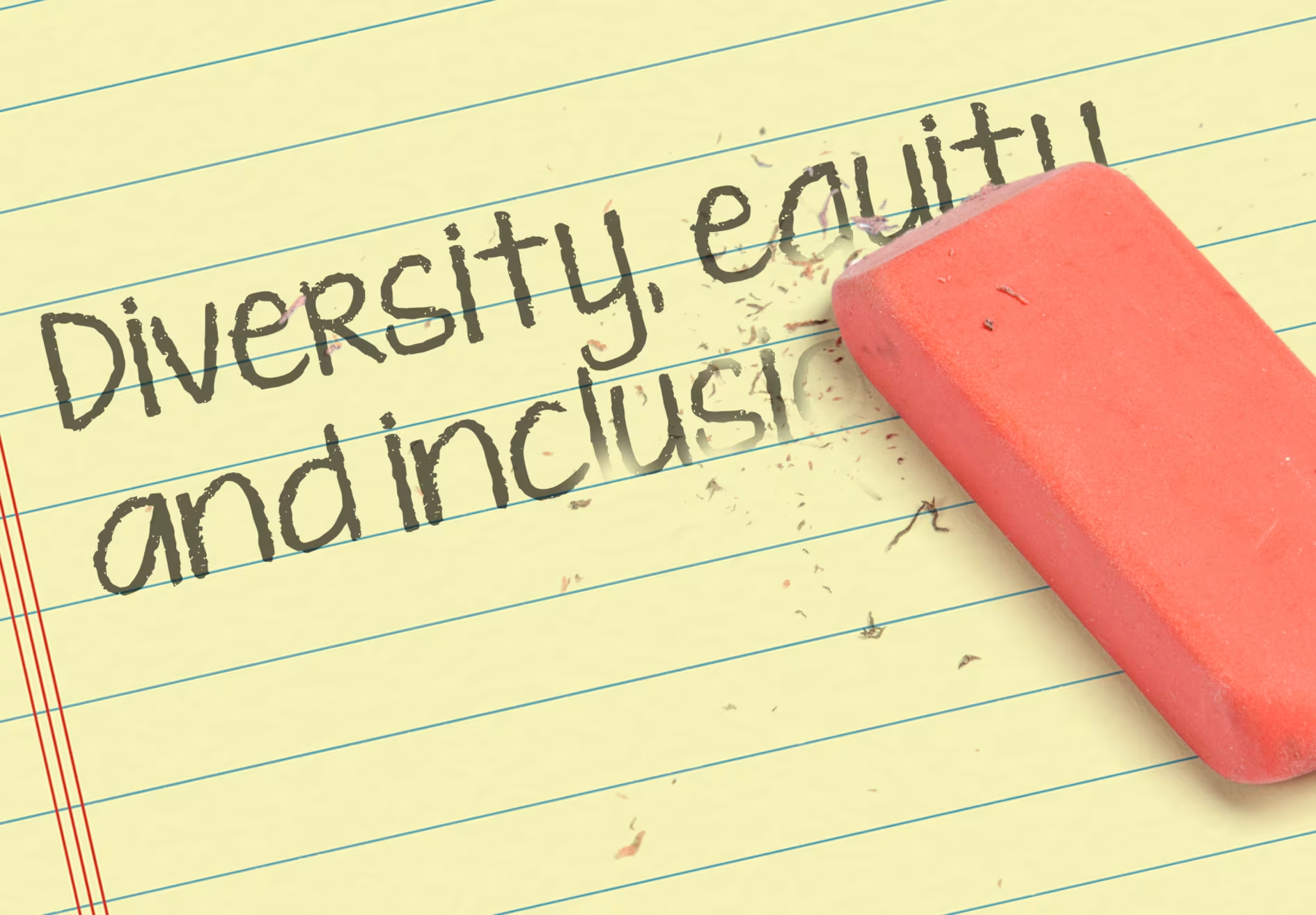
Why Companies Must Double Down on DEI

Image credit Marketwatch.com

I have been working with companies for twenty years in a bid to involve them more in the delivery and improved impacts of international aid.

What started primarily as a resource mobilization effort, for CARE International UK in 2006, soon evolved into something more integrated – global banks providing accounts for village savings groups; insurers offering rural communities $1 policies for health coverage; and even beer companies investing in research to understand the link between alcohol and domestic violence.

Throughout this time, I saw how the emergence of diversity, equity and inclusion (DEI) policies into the corporate world helped usher in new modes of leadership. CEOs began talking about putting “people and planet before profit.” HR departments prided themselves on equal opportunities, and invested in understanding workers’ rights and needs.

This shift toward a more inclusive, values-driven model of ‘Business 2.0’ was slow to take hold, but many of the world’s largest companies led the way. At least, they talked a good game. And, sometimes, talking is where progress begins.

DEI Under Threat

Today, however, we are navigating a world increasingly shaped by geopolitical instability, shifting aid flows, and rising nationalist rhetoric. DEI is under threat – not just from external political pressures, but from internal forces like budget cuts and boardroom fatigue. Yet, walking away from DEI now is not only a moral misstep, in my opinion it’s bad for business and bad for society.

The first quarter of 2025 has already seen drastic cuts to development aid. Alongside this, DEI commitments – once publicly celebrated – are being quietly shelved. Still, inequality persists. Marginalized groups, particularly women, ethnic minorities, LGBTQ+ individuals, and people with disabilities, continue to face systemic barriers. The need for equity in the workplace and beyond remains urgent.

Companies have long positioned themselves as leaders in social responsibility. I know this because I’ve spent countless hours in corporate boardrooms discussing the merits of my host’s latest DEI framework. I’ve attended conferences, facilitated panels, sat in workshops, written blogs, and led site visits from the northern provinces of Myanmar to the remote islands of the Philippines.

I’ve seen the important impacts of DEI on company culture, factory floors, and the communities indirectly touched by global supply chains.

The type of leadership that I’ve witnessed in this time, and that prioritizes values-driven business (one that sees the “win-win” for company and society in driving a stronger DEI agenda) is not a “nice-to-have.”

It is, more than ever, core to innovation, resilience, and long-term growth. Numerous studies have shown that diverse teams outperform homogenous ones. Inclusion drives creativity, better decision-making, and market expansion.

According to McKinsey: “Companies in the top quartile for ethnic and cultural diversity outperform those in the bottom quartile by 36% in profitability.” Organisations prioritizing DEI enjoy “up to 50% lower staff turnover”, says the Living Institute, which in turn reduces the high cost of recruitment and onboarding.

During my time with CARE International, I worked closely with companies who shared similar data and positive anecdotes about the way DEI commitments they had made were taking hold. Also while at CARE, I learnt more about micro and small businesses. Globally, these account for 90% of all enterprises and over 50% of global employment, according to the World Bank and the United Nations.

Imagine a world where these businesses adopt inclusive practices – the ripple effects through supply chains and local economies could be truly transformative.

Where to Start?

If you are a business seeking to strengthen your DEI commitments, why not start with the basics:

  • Embed DEI in your core strategy – don’t relegate it to CSR.
  • Publish annual DEI metrics and be transparent about both progress and challenges.
  • Ensure inclusive hiring, equitable pay, and diverse leadership pipelines.
  • Advocate publicly for inclusive policies, even when it’s uncomfortable.

In times of political pushback, I don’t believe ‘neutrality’ is a favourable option for the private sector. Companies that stay silent send a message that rights and equity are negotiable. Silence, in my experience, can be both reputationally and ethically compromising which, during uncertain times, is not ideal if your brand and reputation is under the microscope.

DEI is not a passing political trend.

It’s a human and economic imperative – one that businesses must continue to champion with courage, data, and intent.

Linguistic spaghetti

imageAs someone who has clocked up seven years working in the “aid industry,” I am full to the brim with jargon that I continue to fear means nowt (this is Yorkshire jargon for ‘nothing’ – ‘nil’ – ‘zilch’ – ‘sweet FA’) to anyone not in the know.

For much of the time anyway, those of us in the know, aren’t.

Sure, every business sector has its own nuanced vernacular, too.  The “triple bottom line”.  A “bear” market.  Acronyms galore, whether you are a Wall Street trader, a civil servant, or a quantity surveyor (whatever it is that they do again.)  We all wallow in our respective, tribal refrains.

I have given my best shot over the years to understand what half my mates back in London do working in “the city”.  From memory there are definitely lots of ‘fund management’ types in there.  Maybe some stuff linked to Risk as well.  I keep trying anyway, politely asking fact seeking questions and crossing my fingers that I can remember what it is Ernst and Young do.  I know they are called “E&Y”.  This much I am certain.

And, yes, their eyes glaze over when I talk about sustainable development (in fact I don’t even tend to use these two words given, as continues to be broadcast on development sites these days, it is quite clear no one really knows what sustainable development actually means.)

Let’s assume that these semantic idiosyncrasies are set to stay.  I see no practical reason to deny them to any business, sector, industry, rugby team, local community, or even any NGO, such as CARE.  Just to clarify: an NGO is a Non-Governmental Organisation, although speaking as a CARE employee I can confirm we have also been described as a humanitarian organization, an international development organization, a non-profit, a not-for-profit, a charity, a social development organization…you see where I’m going with this…

So, the Secretary General of the United Nations, Mr Ban Ki-Moon, makes the Guardian development pages at the moment http://www.theguardian.com/global-development/2013/aug/16/ban-ki-moon-development-aid-decline promoting the case for increased ODA (Overseas Development Assistance.)

“Well, he would do that, wouldn’t he?” might be a valid retort to such a promotion…

However, in doing so, he lays out the cornerstone themes that will underpin successful (and sustainable) development for the world – “decent employment, inclusive growth, good wages” – each to be supported by “renewed global partnerships, grounded on the values of equity, solidarity and human rights.”

As someone promoting the role of business in the international development agenda, its encouraging to note the intrinsic links made between what the Sec Gen is proposing, and the helpful way in which a vast chunk of these are reliant on responsible business development – which makes me feel good that CARE is so focused on leveraging business.

However, the main voice in my head just wonders what a fund manager, a risk analyst, a teacher, a tinker, tailor, soldier, spy (you see where I’m going with this…) would make of such statements?

How can we break down some of the silos here?  And then, how to prioritise, in round terms, what comes first?  Where should all this ODA money go and how should it be spent for maximum impact?  Is it good enough to just create jobs, without addressing the ethnic diversity and conflict rife in a particular place?  Do we need: more schools; better trained teachers; more accessible medical services; more women “leaders”; better water and sanitation in urban slums; better mobile coverage in rural areas; environmentally friendly products?

Well, we need all these things.  Easy answer.  And “development” has come a long way in a short (ish) time period, and helped us understand the natural connections between the list above.  The need for a more holistic approach to tackle big problems.

So, to be clear, this is not a “does Aid work?” post.

But, if our baby steps over the past 60+ years have walked us down the front drive, then we still have a long way (at least to the service station on the corner, several blocks away) before equilibrium is reached – across all things.  And I think it is a level playing field concept I most warm to, as I continue to describe and (try to) articulate some of these themes and considerations.

It has to be about equity, and better access.  Access to money, to a livelihood.  Access to information, access to a voice in society that can be heard, and to which there will be a response.  All of such things help society push for accountable and compliant government, business, and the rest.  It is about closing the gap, between rich and poor, male and female – and so on – but also between each other.  Individuals.

And it starts with communication.  Finding the best way to communicate, and the better words to touch someone else’s thoughts and feelings and actions.

Equity, access, but also – intuitively and refreshingly – it has to be about love, tolerance, and understanding.  Whilst we might never become brilliant piano players, sporting greats, or Nobel Peace candidates, every one of us has each of these three characteristics sat waiting to be set free.

If you have found this site via Freshly Pressed, then thanks so much for making it this far down my musings on ‘jargon’ – for anyone interested in what life is like living in Saigon, Vietnam, and traveling around this wonderful region of the world, then check out my other blog www.saigonsays.wordpress.com and, in the meantime, good luck to all the fantastic writers out there.  It was great to connect with you.