The Pendulum Effect in Corporate Culture

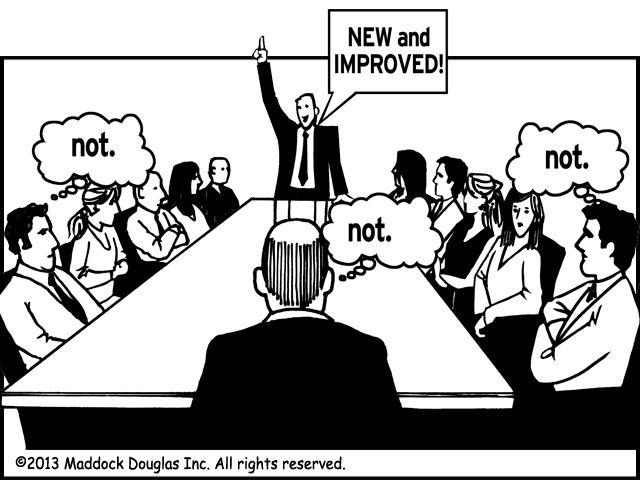
Trends have a habit of swinging like pendulums. First something is ignored, then it becomes important, then it becomes very important. Eventually it becomes so important that everyone talks about it endlessly – until the backlash arrives and people pretend they were never quite that enthusiastic about it in the first place.

Corporate Social Responsibility (CSR) went through this earlier in the 21st century, swinging through a melee of definitions and frameworks for quite some time. The moment that started to shift CSR into a new paradigm came in 2011, when the Harvard Business Review published Creating Shared Value by Michael E. Porter and Mark R. Kramer. Their argument was simple but powerful: companies should stop thinking about social impact as philanthropy and start seeing it as strategy.

In hindsight, I think this marked the moment when social responsibility stopped being a side activity and started edging toward the core of business strategy. I remember 2011 particularly well. It was the year I moved to Saigon and began attending – and occasionally speaking at – CSR conferences in Bangkok and Singapore. Suddenly everyone was talking about CSR being all about partnerships, collaborations, and how business could create both profit and social value at the same time.

CSR over here in Asia was cresting its wave back then, associated as it was with Porter and Kramer’s theory and less with the previous bolted on, and rather tokenistic, CSR practices. Much of the old, PR-centric ways began to lose their shine, finding themselves repeatedly accused of greenwashing.

While CSR still exists today as a function in business, I’d say those companies using it have nuanced how they describe it so that it comes across much more as a business model, rather than as an add-on. Which is what it was always intended to be.

However, a fair number of years before COVID-19 was to strike, CSR was nudged aside by ‘Sustainability’. Riding into town like a gun-slinging John Wayne, and charging through the swing doors of every industry, blasting away the many offshoots of CSR that had come before it, Sustainability was the word of the moment.

Sustainability earned its spurs pretty quickly and still enjoys the spoils of a period that spans at least the last decade. Many larger corporations will tell you they’ve had sustainability strategies for longer that that, however it’s hard to always find compelling evidence for this.

As all-consuming concepts go, Sustainability covers a lot, and I don’t see it going anywhere for a while. More recently, it has been accompanied by its trusty side-kick: DEI (Diversity, Equity and Inclusion) galloping from pillar to post, infiltrating HR departments and budgets with training modules and policies.

To be clear, the business cases for all of these ideas have been well made. DEI has one – linked to ethics as well as business performance – and, as the constant digital transformation of our lives further advances, the blanket understanding of these concepts has gradually grown to a healthy level.

For a while there, particularly in the United States, the corporate world embraced DEI with extraordinary zeal. Statements were issued, targets were set, teams were established. Corporate websites began to resemble small manifestos about fairness, representation and opportunity.

None of this was entirely unreasonable. Businesses operate inside societies, and societies have been wrestling with these questions for a long time. But, as often happens when corporate enthusiasm meets social justice, the pendulum swung rather hard. I remember a period when DEI programmes multiplied rapidly and the language surrounding them intensified. Companies competed to demonstrate how committed they were to the cause. In some cases this then meant that initiatives became quite narrowly targeted – and occasionally clumsily implemented.

A recent article in the Harvard Business Review suggests that it wasn’t long after this, and in line with Trump’s second term being launched, that the lawyers started arriving. More than a hundred lawsuits have now been filed in the United States challenging corporate DEI programmes. Critics argue that some initiatives may themselves constitute discrimination, particularly when opportunities are reserved for specific groups.

Over the past year and a half, the tone has changed. Large American corporations have begun scaling back, rebranding or simply speaking less about DEI altogether. At the same time, it seems clear that a more conservative policy environment has taken hold in Washington and across parts of the Western world.

Does this mean the pendulum has swung back? I’m fairly confident that this latest pivot does not mean companies have decided diverse teams are a bad idea. Having spoken with various CEOs this year, many working in Asia, I’d say quite the opposite. Plenty of executives I’ve spoken with still recognise that organisations perform better when they can draw on a wide range of perspectives, experiences and skills. So, perhaps the problem was not the goal, but the packaging.

It often feels as though both the NGO and private sectors share a curious fetish for acronyms and jargon – one that tends to clutter the simple ideas sitting behind the labels. In my experience, what most organisations actually want is something much simpler. They want teams that work well together. They want leaders who understand different perspectives. And they want workplace cultures where people feel able to contribute.

These are not especially radical concepts. In fact, they have been the basic ingredients of effective organisations for about as long as organisations have existed.
Which brings me back to Asia.

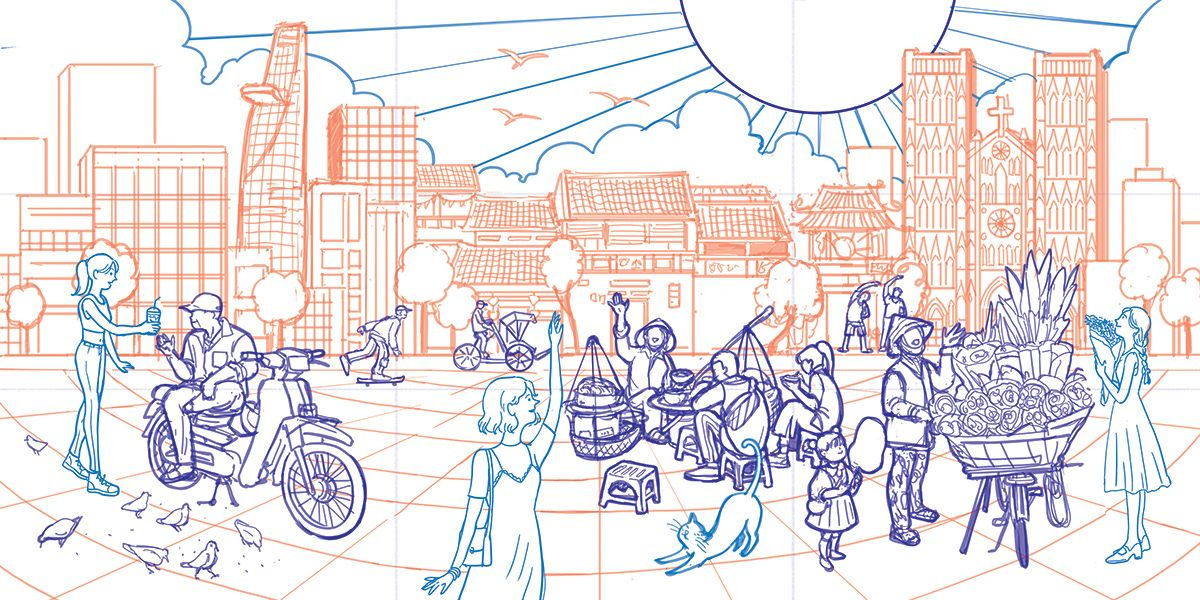
I’d posit that the pendulum swing here has been far less dramatic than in the West. One reason may simply be that the region has approached the topic with a little more pragmatism. In many Asian workplaces, diversity is not something that needs to be invented or theorised about – it is simply the daily reality of operating across languages, religions, ethnicities and generations. That tends to shift the conversation away from ideology and toward something far more practical, namely to help people collaborate effectively despite those differences.

While some large companies operating in the region have adopted DEI frameworks, the conversation has generally been more pragmatic and considerably less theatrical. Which, in turn, might be a fortunate position for them to be in now because, as the Western corporate world recalibrates its language and tone, I think Asian organisations will find themselves slightly ahead of the curve. Rather than importing culture wars from elsewhere, companies here can focus on how they build strong teams in complex, diverse workplaces. The task is not to invent diversity, but simply to manage it well.

Optimistically, the next chapter of this conversation may look straightforward, and devoid of quite so much ideological framing. Instead, placing more emphasis on leadership, collaboration and culture. And if organisations find themselves needing a little guidance navigating this gently rebalanced pendulum, well, there are the occasional small consultancies out there ready to help.

Take mine – Coracle Consulting – for example. We spend a surprising amount of time helping organisations think about precisely these questions: how teams work, how leaders lead, and how workplace cultures evolve. No acronyms required.

The pendulum will keep swinging. The trick, perhaps, is learning how to stay one step ahead of it.

Quality over quantity: taking a new approach to partnering

The adage about “quality over quantity” is, perhaps, a useful moniker to attach to the behaviour of much of what has defined the last 30 years of Western society. If only more people invested less on satisfying their own need to consume and amass money.

I remember Oxfam’s hard hitting inequality campaign about the 85 people on the bus earning more than half the world’s wealth. Suitably appalled at the notion, I carried on with my life. The Panama Papers brought out a similar reaction, and I maybe spent as much as 15 minutes spluttering into my morning coffee about that one, before moving onto the next item.

Is it possible we are becoming immune to these well articulated and researched realities, when they’re plastered over a Guardian front page, because these issues are too enormous for us to do anything useful about? In which case, have the last 18 months helped curate reasonable conditions for the world to begin what many have called a “re-set” – when it comes to consumer greed and wealth – or does lockdown, instead, simply reinforce individual survival instincts?

I see zero changes in the status quo – the richest in the world continue to set the conditions for life as we know it, the dividends of which are only enjoyed by the people on the bus.

I also see no chance of this status quo changing in the next ten years. The role of China in that time will surely be one of the decade’s defining legacies however, in the meantime, whilst as individuals we can make daily choices about how we conduct ourselves, who we support, and how we “show up” in the world, this post focuses on the coalescing of organisations and institutions.

******************************************************

Partnerships. Collaborations. Multi-sector platforms. Shared value.

These are all buzzwords. In particular, but not exclusively, they’re used across the international development industry, bandied from website to website, embedded in keynote speeches from Washington DC to Ho Chi Minh City.

In the non-profit world I’ve inhabited, for nearly two decades now, if I had a dollar for every time I’ve spoken about each of these these words and phrases (or been lectured to about them) I, too, would have been tweeting moronic selfies from space by now.

In spite of what feels like a decent collective effort, by many in the public, private and non-profit sectors, I simply don’t buy it that the majority of those organisations, pontificating and evangelising about their partnerships, are actually properly invested in them, and committed to partnering, operationally, in the ways that they say they are.

Given the UN helpfully convened and framed a new set of Sustainable Development Goals (SDGs) for the world, six years ago, a good starting place to find evidence of how organisations have been partnering with each other, to support the SDGs, can be found via http://www.sdgsinaction.com or directly through their app. There are some great insights here, and it’s a good way to start to familiarise yourself with each of the Goals, and behind which specific organisations are rallying.

My daughters learnt about the SDGs at primary school. A positive marker of progress, in my opinion, in terms of how the issues of poverty and social and environmental injustice have become mainstreamed through education, and through easier access to information.

Still, I’m skeptical that organisations are only just touching the edges of potential, when it comes to truly partnering with one another.

Having worked with UN agencies, with large International NGOs, smaller non-profits, and with a range of corporations, in different regions of the world, I see the attention to detail lacking. The processes and systems for partnering are not in place. The commitment to rigour – in brokering partnerships, in their execution and in their assessment – are all below par.

Why is that?

1. Many organisations bolt-on these partnering skills to the responsibilities of already “very busy” people;

2. Others don’t secure the buy-in from important decision-makers, which usually results in under-performing partnerships;

3. And, categorically, too many organisations are prone to talking a good game in public about their reasons for partnering, but then oversee (or are forced to oversee) a compromised reality, when it comes to what their organisation is able or willing to invest in that partnership.

Like other things in life, practice makes perfect.

Organisations might do better securing all the resources, time and energy that they do have, into a smaller number of partnerships. Even starting with one. Managing just one partnership really well could have far-reaching and longer lasting results, than managing five mediocre ones.

The Partnering Initiative is a great outfit for those organisations looking to upskill in this area. They offer tools and policy guidance for setting up partnerships, as well as examples on good and bad practice.

There are other good resources out there, too, for those organisations ready to reframe and reinvent how they conduct their partnerships, and especially for those whose objectives are not exclusively designed for the 85 on the bus.

My tip, is to shoot for quality over quantity: make one partnership truly count for something, and this will pay valued dividends in the future, to those who deserve it more.

2020 Vision

sunrise may 12
Sun up, Saigon, 12 May 2020.

Thanks to technology, we have all kinds of information at the click of a button. Whilst huge numbers of population groups can’t access the internet, not long from now everyone will be connected in some shape or form.

Technology is helping us make better sense of our impacts on the environment, and how to resolve the negative aspects of these. Technology has enabled block chain systems to evolve, challenging how existing global market transactions work, and providing alternative methods for citizens to cast votes in elections. Technology is enhancing the way we communicate with each other, how we forge and maintain relationships, both professional and personal.

I’ve been working with The Partnering Initiative (TPI) recently and we’re seeing how technology can also be a positive vehicle for partnership work. In particular, between organisations seeking to solve societal issues, such as poverty, injustice and now, during such comprehensively macabre times, a health pandemic.

The current implications of Covid-19 are reverberating through every country of the world. We rely on technology to support our response to this virus, as well as to develop its vaccine.

However, there is one damning chasm that technology has failed to fill in: inequality.

American author, William Gibson, once said: “the future is already here, it’s just unevenly distributed”. 

Inequality, on a global scale, rages on.

Recently, the stark extent to which our planet’s wealth is unevenly distributed has been shared wider and wider.

Oxfam’s Inequality Campaign helps put the data into perspective – 1% of the world’s population own more than the rest combined. Other agencies have provided tools to help us determine how our own wealth fares, when compared to global median levels. If you are curious about your ranking, then The Giving What We Can platform calculates this for you here: How Rich Are You?

Covid-19 has exposed the pervasive extent to which social inequalities direct so much of what and how societies function.

Capitalist market-based models and patriarchal and cultural norms clearly also contribute heavily. Too many men in positions of power. Too many assumed entitlements, personified daily by too many people used to getting what they want, when they want it.

Which is, of course, where the remedial qualities of partnership working can play a critical role.

As TPI and others have experienced, on the topic of partnership working, it is not sustainable to broker a meaningful partnership with another organization if both parties refuse to embrace new methods, new approaches and new behaviours. Partnerships also won’t sustain if individuals don’t cede elements of control and influence to which they might intuitively feel they are entitled.

Instead, long-term, impactful partnerships will only succeed in their objectives if any aspects of inequality within them are not re-balanced.

Covid-19 should be seen as an overdue warning shot across a country’s bows, but specifically the world’s wealthiest ones.

The US and the UK are floundering with their responses to the pandemic. Caught up in political points scoring, unwilling to learn from the experiences of other nations, blinkered in their pursuit of populist messages.

There was a time when these countries took pride in their international development investments, a time when being a “global citizen” was worn as a badge of some honour by political ambassadors.

A time when signing up to the doctrine of partnership, that the Sustainable Development Goals got close to evangelizing (as part of the United Nation’s second round of fifteen year commitments to the world’s most marginalized and vulnerable citizens) was taken ‘as a given’.

These times have changed. Those sentiments shelved.

And, one scenario perhaps, is that we won’t now see a return to that previous status quo. It’s plausible that the seismic nature of the shifts caused by Covid-19 are too severe to be fully repairable.

Gibson’s statement asks us to consider if our new normal will see more people living comfortably with wealth, or more people living uncomfortably with poverty?

Will our human condition – when so flagrantly put under the microscope and tested, as it could be argued is happening in 2020 – regenerate more altruistically as a result of Covid-19? Or, will the opposite scenario unfold, and a more self-centered and individualistic norm rise from the ashes of the pandemic?

That partnerships can solve complex social and environmental challenges is undisputed.

But partnerships, we also know concretely, won’t survive long, if those leading them choose not to believe in the power of the many, and in the spectacular innovation that comes from collaboration.

To hope for a future where collective action and shared goals are espoused by all (by organisations who traditionally function to benefit only their shareholders, or by governments who only crave election votes) is, of course, a version of a utopia state. And that hope itself carries with it many complications and flaws.

And yet, no amount of technological advances will ever truly make a difference in the pursuit of a more just and equal society.

Real change only ever comes from hearts and minds. Not from algorithms.

Economic Resilience: Lessons from a workshop in Kenya

market3
Local market in Westlands, Nairobi

Every day, we each make decisions about money. Weighing up hundreds of transaction options in a single week, our choices are based on quality, value, needs and desires. To do this, we require information and knowledge, and ultimately we crave the security of knowing that we can afford to buy things.

Cryptic introductions aside, this post is inspired by an illuminating week overseas with new people, and offers up some jet-lagged musings about money and about equity.

Last week I was in Nairobi, with colleagues from Save the Children who’d gathered to share their experiences on the topic of “Economic Resilience”.

In a game of ‘Non-Governmental Organisation [NGO]’ Bingo, now would be the time to mark a cross in your first box: Economic Resilience, what a buzz-word (or “fuzz-word” as someone in Nairobi suggested) indeed.

There were 14 country teams in attendance last week, each armed with definitions, approaches, ideas and stories to tell about their respective efforts at delivering projects with local communities that increase people’s Economic Resilience.    Continue reading “Economic Resilience: Lessons from a workshop in Kenya”