Power within

empower
Picture credit: http://www.sassyfitnesschick.com/2016/02/24/the-beauty-of-empowerment/

Back in 2012, I recall discussions at a Bangkok conference with a group of companies keen to lead the charge on ‘women’s economic empowerment’ in Asia.

On the one hand, there was a business case (mainly linked to profitability and staff retention) for these companies to address gender inequalities more systematically and, on the other, many at the time admitted to jumping on a band wagon – the feeling being that women’s economic empowerment was the new thing that people were talking about, but which perhaps had “5 years at best” before the world moved on to the next hot topic.

Fortunately, in 2017 the same companies are still testing the business case and, as we’ve seen in some sparky media pieces on women’s economic empowerment last week, the topic has far from fizzled out.

I enjoy today’s reality of how one op-ed can turn heads, and stimulate an instant planetary debate. Even if such things can also create a battle cry from one school of thinking to the next, with critiques put out more as literary pitch forks plunged into the sides of the opposition, rather than in the more collegiate spirit of pooling our collective energies around an issue – in this case that of gender justice, the world over.

Maybe the space for collaboration is closing, however, and gloves-off conceptual sparring is more useful in garnering attention and bringing issues of women’s empowerment into the mainstream? There have already been multiple “global” conferences over the past 20 years laying down the development challenges of the day, and so an appetite for hosting more such events is, perhaps, understandably waning.

Furthermore, we have a relatively newly re-framed set of UN Development goals, which were met with broad approval. Our stage is set then, and so, within such institutional parameters, conflicting opinions of course need to be aired.

As much as Rafia Zakaria’s NY Times piece instantly struck a chord with many, so too did Linda Scott’s rebuttal. The first article lambasted the array of economic empowerment approaches deployed by organizations, claiming instead that political reforms are the only show in town in terms of actually bringing about change. The second article made the case for why economic empowerment interventions do have a significant role to play and how they can compliment advocacy and political influencing. I found both of value.

Of course, the development sector has much still to learn and we have our idiosyncrasies. As someone who has worked for an international NGO now for over 11 years, I have often buried my head in my hands at our sector’s insistence in dispersing a daily barrage of loaded and contorted rubric, when articulating the everyday realities of people around the world.

However, I am proud to be associated with an entity such as CARE International that is committed to gender justice. In spite of our sector’s insane vocabulary uses, our commitment can – and always should be – first and foremost about influencing change, rather than turning a profit, or trying to win an election.

‘Empowerment’ is, of course, one of the development industry’s most sacred slices of parlance. Crow-barred into panel discussions, funding proposals, office meeting agenda items: it is our holy grail.

Do we know collectively how to prove when empowerment has been achieved? Not quite.

Are we aligned on how to best facilitate or help create empowerment and how it differs contextually? Not always.

Does any of that matter? I really don’t think it should.

That ‘power’ itself is the currency with which we know change can be bought, the notion of empowering those without it seems to me to be a very practical, core mantra for the likes of CARE.

Like Linda Scott, I believe in the work of the many thousands of agencies who pursue empowerment using different approaches. We know, fundamentally know, that re-balancing gender dynamics has a positive impact on poverty reduction, and on social injustices. There is no need to reinvent this theory or replace it with another. CARE’s economic empowerment experiences have also underscored the very need to place emphasis not just on economic gains for women, but on social and political ones, too.

Absolutely, the international NGO industry needs to operate with transparency – we must be accountable for how we invest our resources into “empowering” initiatives and goals. Largely due to the countless examples of how the world’s governments and multi-national companies regularly get caught up in headline grabbing scandals, watch-dog attention on humanitarian and environmental organisations has been low level. Let’s encourage more: there is always room for improvement and, as an industry, we can’t exist in a complacent vacuum.

However, when approached holistically, comprehensively, and in step with others, the pursuit of women’s economic empowerment outcomes, for the many millions of women currently cut off the grid, made vulnerable and marginalised due to their gender, should be not only encouraged and supported, but should be recognised in terms of a set of human rights which everyone in the world has a role to better understand, shape and nurture.
Freedom of Self

FullSizeRender
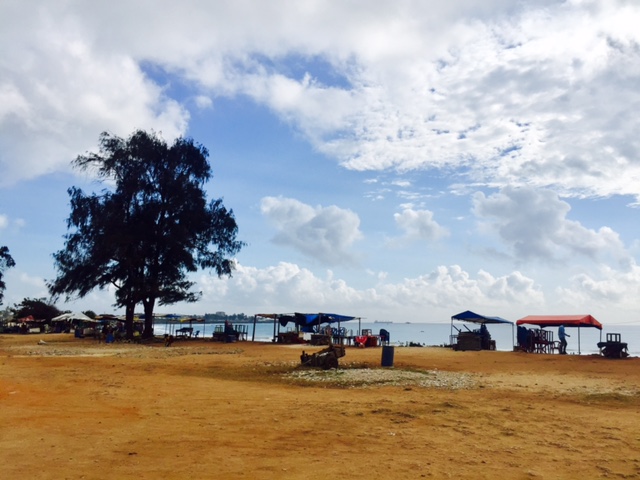
Rest and relaxation in Dar Es Salam, after last week’s HEAT training course

In the confined parameters that determine air travel, as I whirl back on this particular occasion from Africa to home, the experiences learnt on last week’s work trip (comprising an intense training course on Safety and Security) seep through into my consciousness as stone traced markings through paper.

The sharp seam of learning from this particular course was about coping. Coping with confrontation, dilemma, trauma, danger, but mainly, coping with having one’s freedom stolen from underneath your nose.

Since I boarded at the sleepy port of Zanzibar (where 24 hours of “RnR” were spent, and were, for once, an essential bookend to the training course itself) the all too familiar rituals deployed to keep oneself either awake or entertained were running on auto pilot: movie watching; email triage; a few chapters of a novel; social media; face-timing; eating; drinking; freshening up.

With each slice of indulgent escapism, as we are prone to seeking out the most special film to watch, or song to absorb, the constant hunt for ego inflating ‘likes’ and ‘mentions’, that buzz of booze from miniature bottles, all such things, in the end and inevitably, skim the surface of satisfaction, treading the waters high above that particular ocean of Self, rather than dropping lower, as a pearl diver would, in search of deeper treasures: the Soul, and the spirit of being, fathoms below.

This, or, in round terms, just taking things (but mainly, one’s freedom) for granted.

Ironic then that it is only when these freedoms are removed that we get the chance to sink that bit lower and nearer to this Self of ours and, beyond that, to our own truths.

What I mainly reflect on, now that the adrenaline from last week has receded, is how adaptive we all are to crisis situations.

How the unthinkable very quickly can be rationalised and dealt with. Deprived of the freedom to move, see, talk, choose, organise we, in fact, thrive. A bodily revolution of senses takes charge, a new paradigm of prioritising, thinking and imagining rises up, the respective captains, colonels and generals of Being.

We are forced to find new ways to take back control, to inch forward in spite of our inability to behave and feel as free as we are used to and, in that brief chapter of time, we transform, we resolve, and we experience resilience.

Stripped down in that raw state, devoid of our regular freedoms (and in some cases, addictions) we allow ourselves the space and conditions to more profoundly understand.

For that momentary eclipse of the ordinary, arming me with a wholeness and with peace, I will be indebted for a long while yet.


#IWD2017

Societal norms, the world over, since the dawn of time, have placed more undisputed power at the hands of men (and boys) than have been placed with women (and girls).

The narrative of the day reflecting this factual reality changes from context to context. In the UK, for example, we are currently questioning when it is we are going to feel able not to celebrate today’s International Women’s Day (#IWD2017) – when will UK society accept we don’t need a national day to keep reminding everybody about gender equality?

In contrast, here in Vietnam, the entrenchment of gender norms runs deeper. Educated, decent, working husbands and fathers in Vietnam may ‘feel’ a connection to the relatively new concept that women are equal to men (across any indicator) however there is still too strong a cultural leaning away from equality, which has been silently and often subconsciously drummed into that husband/father, for him to really feel 100% behind gender equality.

Another generation and yet one more still, and the softening of these values will happen.
Continue reading “#IWD2017”

One born every two seconds

img_0474
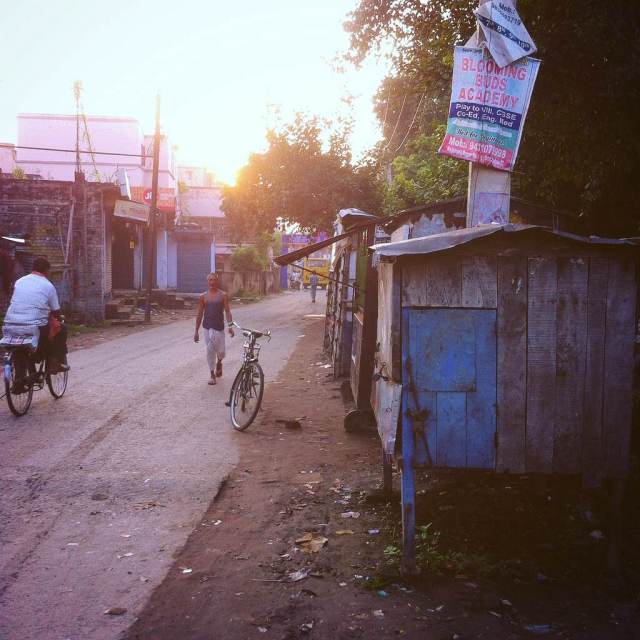
Dawn in Patna

Her first four children each died of asphyxiation during delivery. The 30 year old’s fifth – a baby girl – was born safely at home, and against all odds. However, when the same expectant mother entered Bihar’s district hospital last Friday, to deliver her sixth baby, she was praying for a boy. She entered the hospital carrying the hopes and dreams of the many family members waiting outside for the news and, as I bore witness to, her prayers were answered.

Through CARE International’s influence within the health sector of Bihar (one of India’s most populated states with 110 million citizens) this mother had been encouraged to deliver her sixth baby in hospital, rather than at home. A decision which instantly improved her and her baby’s chance of survival.

I was visiting the hospital with the local CARE team at the time, to learn more about how CARE is helping transform the state’s healthcare system, and improve the quality of the services available.
Continue reading “One born every two seconds”

Making change happen: Collaboration, and the power of Storytelling

Blog-Timor-Leste-580x386
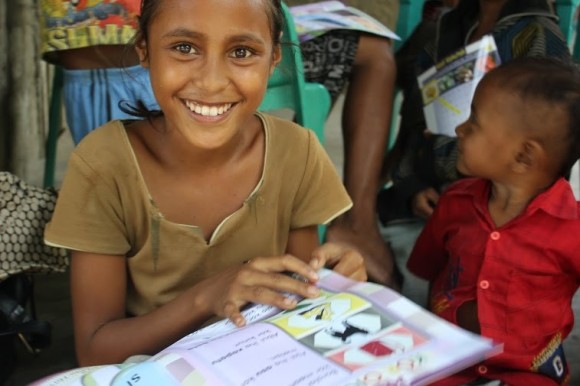
Children reading Lafaek Community Magazine. Photo Credit Sarah Rippin/CARE

I’ve been working in Dili, the capital of Timor-Leste (East Timor) this week, and it’s been a privilege as always to spend time in new surrounds. More so when stationed one hundred metres from the sea, with spectacular daily sunsets, and some of the tastiest coffee money can buy. 

Timor is an island, just a short hop north of Darwin, Australia, and up until quite recently, following 500 years of Portuguese occupation, was an Indonesian colony (between 1975 and 1999). The western side of the island is still governed by Indonesia. Timor-Leste claimed its independence in 2002.

Like so many other countries in 2016, Timor-Leste is experiencing the effects of the current El Nino droughts, disrupting the country’s wet season and ruining harvesting potential. A topic covered on this site back in March during my time in Ethiopia.

My assignment this week, however, has been to support CARE’s work to engage more with private sector companies in Timor-Leste (banks, retail, media and others) and examine ways in which, together, initiatives and relationships can be forged to tackle some of the social and economic challenges the country faces – poor infrastructure, lack of employment opportunities, issues around food security and nutrition, financial literacy, to name a few. Even without a more severe El Nino year, Timor-Leste is dealing with all of these mini crises combined.     Continue reading “Making change happen: Collaboration, and the power of Storytelling”

Resilient Markets in Ethiopia

DSC_0137
At home with Sindayo, a GRAD beneficiary in Tigray. Photo credit @ CARE Ethiopia.

Last month I visited Tigray, Northern Ethiopia, to interview farmers and livestock traders faced with the drought effects of one of the most devastating El Niños in 50 years, to learn about their coping strategies in the face of extreme weather patterns.

We wanted to find out how these coping strategies were linked to national and international market systems and how, through these systems, it might be possible to bring about a better deal for those in the supply chain typically made more vulnerable by drought: women.

CARE International, the global NGO and my employer for the last decade, has been operating in Ethiopia since 1984, and works alongside other international and national organisations to bring solutions to those whose livelihoods are invested in agriculture, and who by default are affected by regular market “shocks”.

After 70 years of operations around the world, CARE’s focus within any country programme is to bring about positive changes for women and girls. We do this because of the myriad of existing social and economic injustices faced by women and girls, all over the world, many of which have been described on this blog. At CARE, we talk a lot about “empowering” women and girls, and this encompasses many aspects, including improving access to economic resources for women and, crucially, increasing their control over those resources.       Continue reading “Resilient Markets in Ethiopia”

Lend Me Your Ears

image
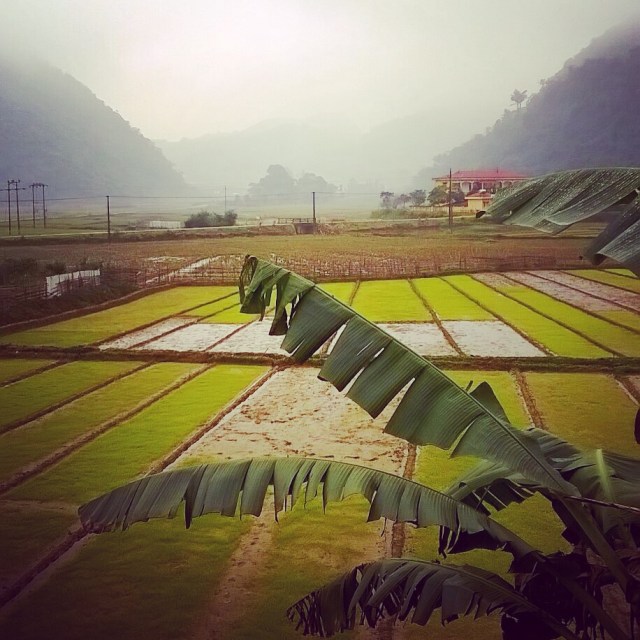
Hoa Binh Province, rural Vietnam

Christmas is coming and there’s no stopping it. Even here in Saigon the Vietnamese have started to embrace what has become an indulgent festival of consumption, celebrating the birth of Jesus Christ.

And, at this time every year, people like me pen blogs like this one, instigated to push a perspective your way. People like me who (you’ll soon enough not be surprised to read) have just spent half my week up in rural Vietnam, meeting local communities.

So, what’s the perspective I’m peddling ? Well, no doubt by the end of this post I will have worked it out…    Continue reading “Lend Me Your Ears”

The Anti-Bucket List Post

bucket-list3

Weeks and months have evaporated into the vaults of history since I last visited my own blog site. The two month period since book-marked in the memory bank with fond recollections of holidaying back in the UK with my kids, and then re-engaging in Saigon life following our return.

I’ll be on the road again soon, no doubt inspired into literary action once more by long stretches at airport terminals, cramped airline meals, exchanging mundane commentary with fellow passengers, or jostling down the streets of Bangkok, inhaling the familiar fragrances and stark realities that I have come to associate with urban Asia.

Even when the work emails were switched off on holiday this summer, what was constant was the addictive white noise of the Twitter machine, militantly keeping up its fervent pulse. And I indulged regularly enough in entertaining it. The World Cup semi final demolition of Brazil, at the hands of Germany, was relayed to my bedside early in the morning via a short – and at the time gob-smacking – tweet. On July 17th, it was twitter once more alerting me as I touched down in Dubai, en-route to London, of the Malaysia Airlines tragedy. Scottish independence, air-strikes in the Middle East, ebola out-breaks, celebrity break-ups, Robin Williams’ suicide, or, how late my old co-worker’s commuter trains might have been on any given Monday morning: twitter supplies them all. Continue reading “The Anti-Bucket List Post”