Viability vs. Visibility: The Tragedy of Modern Leadership

https://www.newsweek.com/white-house-elon-musk-doge-sec-target-conflict-2032567

Just been reading that Elon Musk is stepping down from his role at DOGE, the government department set up to save the US economy from wasted spending.

I’ve briefly shared my view on DOGE and on Trump, and I mentally flit between one day wanting to write more about how both entities are impacting the world (negatively, in my opinion) and the next day simply wanting the whole circus that is the US Republican administration to fall off the face of the earth.

If only there were some decent Democrat spokes-people out there, these past five months, to counteract the daily ordeal each of us faces when we read the news. Lucky enough I found this guy, Harry, to be a helpful and passionate critique of Musk and Trump.

There’s very little in this piece he posted recently with which I disagree.

The one thing I’d add to this latest piece “news” about Musk leaving DOGE is that, aside from the long list of grievances one would be well justified to level at Elon Musk (Harry covers this neatly, so I don’t need to), and aside from his general awkwardness with everyone he meets, and how he communicates, the thing that sticks most in my throat is his inability to collaborate.

His purchase of Twitter/X has only made his individualism and ego even more pronounced.

Forget the viability of something anymore (be it, say, the “truth” or simply the credentials of one’s EV business) many social media sites have together reframed what is important for society and that, it seems to me, is not viability, but visibility.

Misinformation thrives in these online spaces. Very complex ideas and hypotheses are flattened out into bulleted “top tips”. Twitter, in many ways, is a platform which has gamified shortened attention spans and praises individual’s visibility and their brand.

Which, of course, offers the perfect ground for performers like Trump and Musk, who pretend to be leaders, but act more like ham-fisted Copperfield illusionists. All accountability is removed. All sense evaporates as soon as they start speaking. They don’t answer questions, they gaslight, they lie, they rinse, they repeat.

While Musk claims to build for the future, with neural interfaces and colonies on Mars, he is a caricature of all the shitty habits and traits that we’re collectively adopting from spending too much time, ironically, scrolling through Twitter feeds.

It’s well documented that many people find it ever harder to hold their attention on simple tasks and activities. Young professionals, in particular, embrace more performative ambitions about what they want to do as individuals. It feels, a lot of the time, like there is a fading appetite for collective progress, as folks rush about in a melee of self-made busyness and unfinished projects.

As Musk bounces from city to city, flexing his enormous bank account in front of politicians one day and Silicon Valley the next, we watch as climate plans get drafted annually at COP Conferences, before being routinely shelved. We observe social justice campaigns that trend for days, before being eclipsed by celebrity gossip or some other geopolitical outrage.

Musk is a symbol for these contradictions. His own portfolio reflects a restlessness where the next ambition supersedes the existing one. Bored of this project now, move on.

Perhaps all of this is inevitable, given the world’s richest man is able to sway the markets with a single tweet, and can basically say or do what he wants today, and then pay for the damage afterwards, knowing that tomorrow we’ll all have moved on to the next click-bait article.

Nice heels, cowboy.

Musk is not alone, of course. As Jeff Bezos floated into Cannes earlier this month, in his $500m schooner, the irony was not lost on those who’ve followed his outspoken support to address climate change. And let’s not forget his Blue Origin space flight debacle. No, let’s.

Whichever of these wealthy elite you handpick for analysis, you’ll find the same paradoxes. The allure of the solo operator, at this echelon of society, remains powerful, there’s no doubt about that, and especially in a world that feels increasingly ungovernable. But the actions and behaviors of these individuals, forging ahead, indifferent to consensus, and chucking U-turns on a weekly basis, smacks of ending up brazenly erasing the work of thousands of others.

And, this approach fundamentally ignores the necessity of institutions, of partnerships, and the wholesome bindings of community. All of which are needed if we’re to arrive at long term solutions to global problems. We don’t need Musk or Bezos to do that.

You can tell me that Musk is responsible for cutting edge technological breakthroughs but, even if I choose to believe that, the nature in which he is conducting himself does not sit well with me, nor fill me with anything other than fear.

Musk, Bezos, Trump: these characters are in the headlines all the time, and they dominate how we think about change because of that. That’s a red flag.

Change that the world urgently requires is slow and deeply collective. We need sustained cooperation, and instead we run the risk of remaining stuck in a loop of promising beginnings and spectacular distractions.
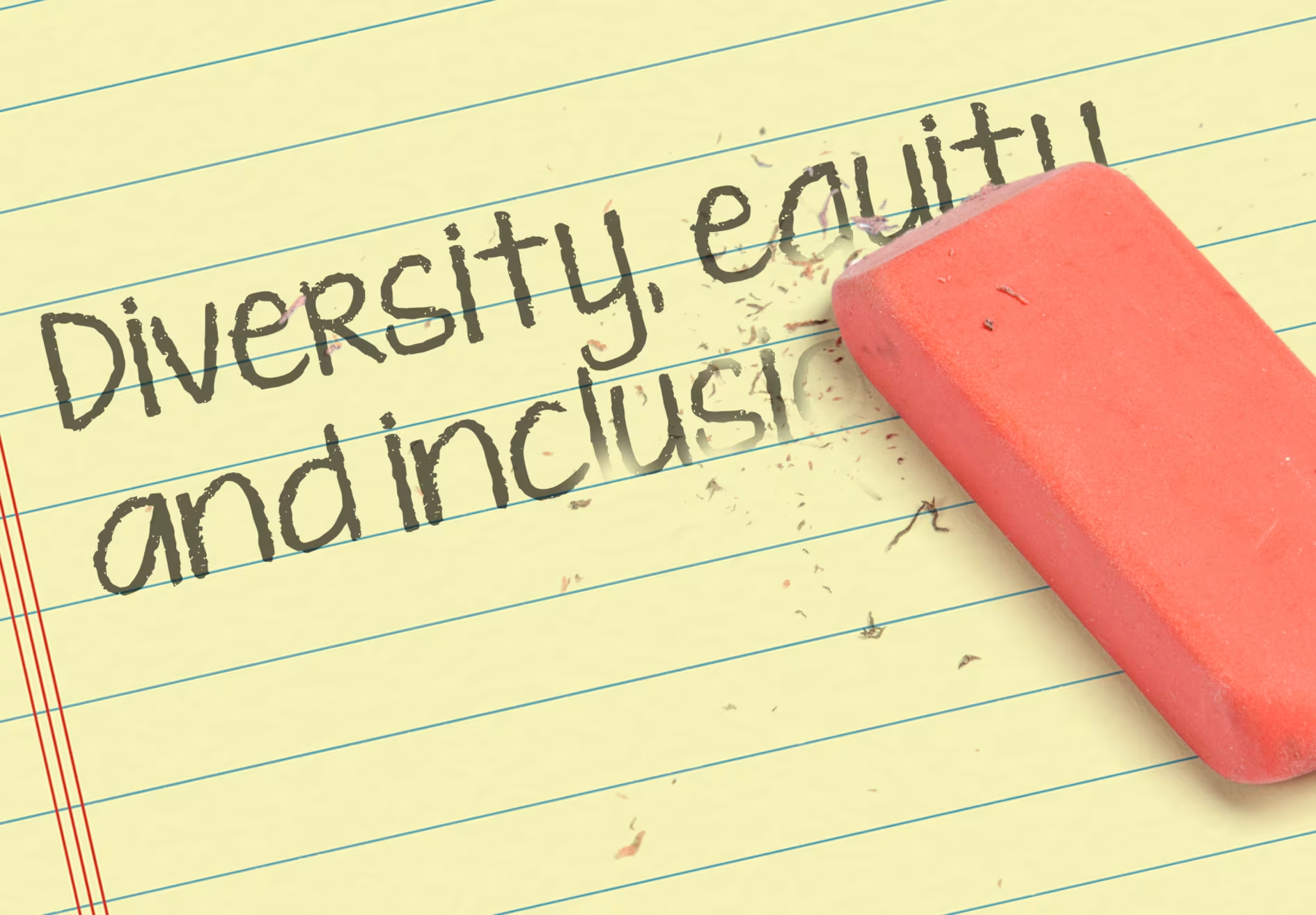
Why Companies Must Double Down on DEI

Image credit Marketwatch.com

I have been working with companies for twenty years in a bid to involve them more in the delivery and improved impacts of international aid.

What started primarily as a resource mobilization effort, for CARE International UK in 2006, soon evolved into something more integrated – global banks providing accounts for village savings groups; insurers offering rural communities $1 policies for health coverage; and even beer companies investing in research to understand the link between alcohol and domestic violence.

Throughout this time, I saw how the emergence of diversity, equity and inclusion (DEI) policies into the corporate world helped usher in new modes of leadership. CEOs began talking about putting “people and planet before profit.” HR departments prided themselves on equal opportunities, and invested in understanding workers’ rights and needs.

This shift toward a more inclusive, values-driven model of ‘Business 2.0’ was slow to take hold, but many of the world’s largest companies led the way. At least, they talked a good game. And, sometimes, talking is where progress begins.

DEI Under Threat

Today, however, we are navigating a world increasingly shaped by geopolitical instability, shifting aid flows, and rising nationalist rhetoric. DEI is under threat – not just from external political pressures, but from internal forces like budget cuts and boardroom fatigue. Yet, walking away from DEI now is not only a moral misstep, in my opinion it’s bad for business and bad for society.

The first quarter of 2025 has already seen drastic cuts to development aid. Alongside this, DEI commitments – once publicly celebrated – are being quietly shelved. Still, inequality persists. Marginalized groups, particularly women, ethnic minorities, LGBTQ+ individuals, and people with disabilities, continue to face systemic barriers. The need for equity in the workplace and beyond remains urgent.

Companies have long positioned themselves as leaders in social responsibility. I know this because I’ve spent countless hours in corporate boardrooms discussing the merits of my host’s latest DEI framework. I’ve attended conferences, facilitated panels, sat in workshops, written blogs, and led site visits from the northern provinces of Myanmar to the remote islands of the Philippines.

I’ve seen the important impacts of DEI on company culture, factory floors, and the communities indirectly touched by global supply chains.

The type of leadership that I’ve witnessed in this time, and that prioritizes values-driven business (one that sees the “win-win” for company and society in driving a stronger DEI agenda) is not a “nice-to-have.”

It is, more than ever, core to innovation, resilience, and long-term growth. Numerous studies have shown that diverse teams outperform homogenous ones. Inclusion drives creativity, better decision-making, and market expansion.

According to McKinsey: “Companies in the top quartile for ethnic and cultural diversity outperform those in the bottom quartile by 36% in profitability.” Organisations prioritizing DEI enjoy “up to 50% lower staff turnover”, says the Living Institute, which in turn reduces the high cost of recruitment and onboarding.

During my time with CARE International, I worked closely with companies who shared similar data and positive anecdotes about the way DEI commitments they had made were taking hold. Also while at CARE, I learnt more about micro and small businesses. Globally, these account for 90% of all enterprises and over 50% of global employment, according to the World Bank and the United Nations.

Imagine a world where these businesses adopt inclusive practices – the ripple effects through supply chains and local economies could be truly transformative.

Where to Start?

If you are a business seeking to strengthen your DEI commitments, why not start with the basics:

  • Embed DEI in your core strategy – don’t relegate it to CSR.
  • Publish annual DEI metrics and be transparent about both progress and challenges.
  • Ensure inclusive hiring, equitable pay, and diverse leadership pipelines.
  • Advocate publicly for inclusive policies, even when it’s uncomfortable.

In times of political pushback, I don’t believe ‘neutrality’ is a favourable option for the private sector. Companies that stay silent send a message that rights and equity are negotiable. Silence, in my experience, can be both reputationally and ethically compromising which, during uncertain times, is not ideal if your brand and reputation is under the microscope.

DEI is not a passing political trend.

It’s a human and economic imperative – one that businesses must continue to champion with courage, data, and intent.

It’s Polarisation, stupid

Two hours ago, Melania Trump entered Congress to a standing ovation and what felt like genuine affection from those inside. Perhaps the Republicans were applauding her sheer presence and willingness to support her husband. Others, it would not be too far-fetched to speculate, clapping in sympathy.

It is very difficult to ignore Donald Trump at the moment. As a result of which I find myself, out of visceral frustration, investing time this morning watching these live scenes, and making a decision to post a commentary of sorts onto a public platform.

My stomach is upside down even before the parade of Trump’s Cabinet enters, shuffling down the aisles making their overly emotional hand gestures and head nods to those strategically positioned at the end of each row to meet and greet them.

And then in walks the President, coolly sauntering through the fawning men and women, the politicians and army chiefs, the old-timers and the new hopefuls, none of whom make any effort to contain their exuberance at the prospect of touching Trump’s shoulder, shaking his hand or planting a kiss on his cheek.

For someone with Messiah Complex tendencies, this little pantomime walk can only be further stimulating an ego that has, and will continue to be, frontline news for the next four years.

With his spray tan almost the same shade as the wooden lectern at which he finally arrives, chants of “U-S-A!” eventually simmer down and Donald Trump, once again, has the world watching him.

On the Republican side of the room, it was akin to participating in the early stages of a wedding ceremony inside a church. Hair was slicked back or freshly blow-dried, America tie-pins had been buffed and then, on the other side, a sprinkle of silent protest, as many Democrats had dressed in pink (highlighting the unequal impacts on women the incumbent administration’s policies were having) and, once proceedings were underway, held up discreet signs saying “False” or “Save Medicaid”.

One would be forgiven for forgetting that it was only five days ago that Trump and Vance pincered Zelensky in the Oval Office, itself an acutely polarising moment for global onlookers. This particular “news” was brushed off by The White House (as most ugly spats and comments that Trump makes, are) over the weekend, and whilst the UK was hosting a peace summit with Zelensky and European leaders.

Never before has Harold Wilson’s line that “today’s news is tomorrow’s fish and chip wrapper” been more pertinent and chilling.

Vance, only yesterday, mocked the UK and France’s support of troops to Ukraine (he back-pedaled afterwards) but, then, that was yesterday. Trump’s tariff announcements went on to grab our attention, given they caused a huge stock market drop. According to Trump, he has been the most successful President in the country’s history and has only ‘grown’ America’s economy (in spite of it currently facing $37 trillion dollars worth of debt).

It is a circus. The whole enterprise that is Donald Trump is one ego-driven franchise dripping in power, greed, and male entitlement.

What will he say to Congress later about the mineral deal with Ukraine? What other verbal hand grenades will he drop before I’ve even finished typing these words?

Right now, as I do type this, he’s in full ring-master mode. Using more smoke and mirror bullshit in his speech to distract and deflect any criticisms that could be leveled at him. He’s cracking jokes about “no one knowing where Lesotho is” as he lists out what he calls “wasted” USAID initiatives. He calls Biden the “worst president in America’s history” and blames wokeness for just about everything.

He doesn’t stop spewing utter nonsense.

“Ladies and Gentlemen, America is back. We’ve accomplished more in 43 days than others have in 4 years or 8 years. There’s never been anything like it.”

Ain’t that the truth.

The man is unlike anyone the world has ever had in that role and yet, at the end of every statement he makes to Congress at the moment, half the room is up on its feet, smugly whooping and cheering and braying at the muted Democrats – their faces fallen, as much in embarrassment as in anger.

Behind him, Vance, and the Speaker of the House, two shiny mechanised puppets, synchronise their choreographed erections, like a pair of cuckoos on the stroke of a clock.

A friend told me this morning that it is as if Trump has been “taking a sledgehammer to a birthday cake”.

What scares me more, as he drones on and on, is just how many people keep applauding, not only his speeches, but his every horrific swing at yet another part of the birthday cake.

He’s put the world’s richest man in charge of slashing to pieces the world’s largest supporter of humanitarian assistance to the world’s poorest people. That decision, alone, is having unprecedented and harrowing global repercussions. Tonight, however, he draws only sycophantic praise at the mention of USAID cuts, and Elon Musk, sat as he is next to the Director of the FBI, stands to yet more applause.

Musk, one of those “unelected officials” that Trump has moments earlier claimed he is eradicating.

The President of the United States of America boasts on, listing his achievements like a proud toddler. And, with every reference he makes – on climate change, or the World Health Organisation, on ‘DOGE’, or the price of eggs – it dawns on me that I can’t watch any more of this speech, or this man, today.

He’s talking now about the Panama Canal and about Greenland. More jokes. More laughter. Oh, and he’s “received a letter” earlier today from Zelensky, saying he’s ready for peace. Well, I’m glad we got to Ukraine in the end, and that’s all settled now.

I can’t stand the fact that Trump is here on the screen, and that I’ve felt compelled to talk about him.

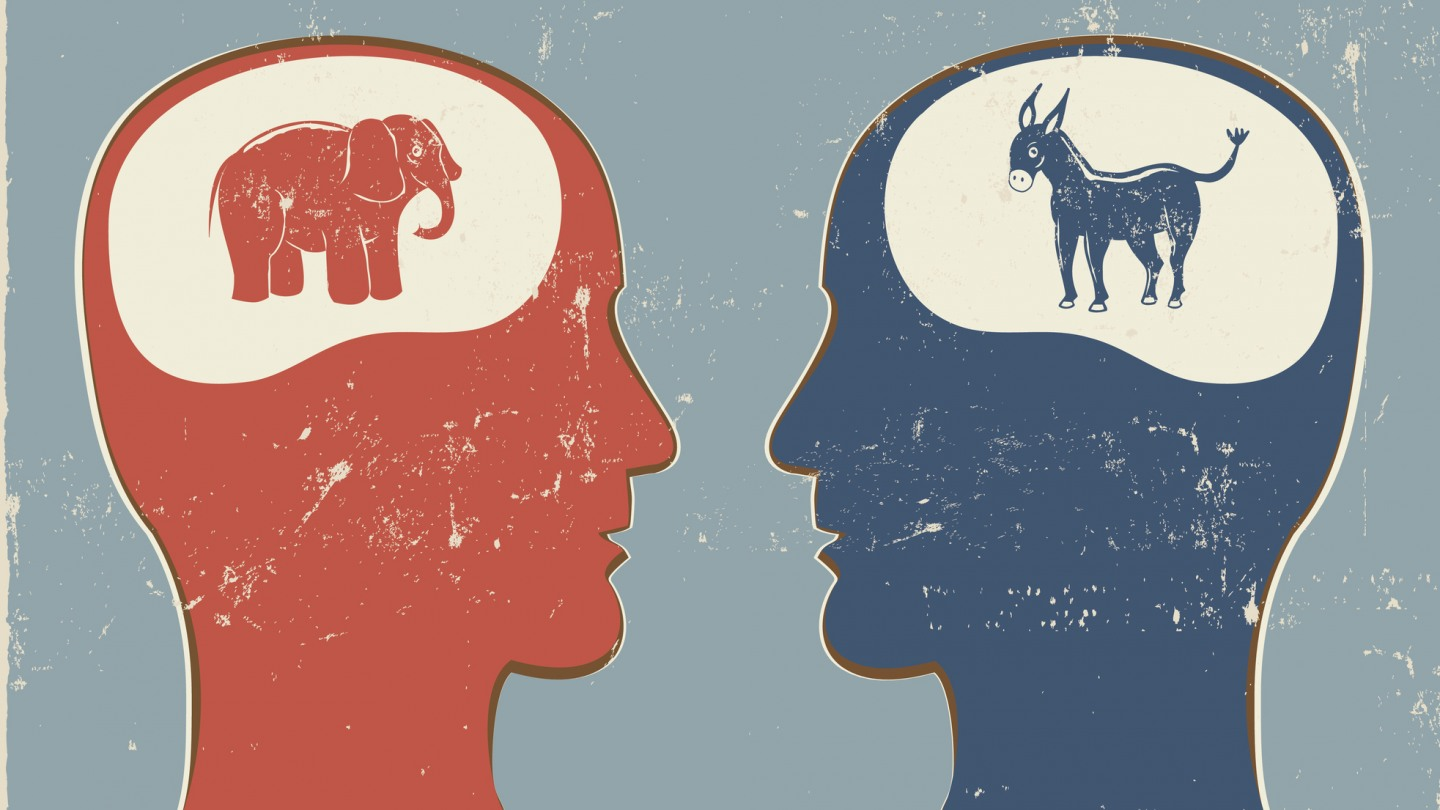
But, mostly, it scares me to wonder if this new paradigm of fake news will ever go away, and we will ever be able to hold reasonable, non-polarised political debates again?

Precious moments

In a recent, albeit fruitless, effort to ween myself off social media, I was struck by a quote that runs along the lines of: “live a pleasant life, and support other people to find the same…if you don’t find a way of reducing the suffering of your surrounding, your suffering won’t stop.”

With a suitable background piano, and delivered by Shi Heng Li, no less (https://www.shihengyi.online/the-10-shaolin-virtues) the message smacks one “in the chops”, as we say back home.

It’s lingered over the weekend as a sentiment for me, like a welcome mental mist.

Out and about in the smog and hot fug of Saigon each day since, I’m running these words over and over, unsure what the necessary action is to satisfactorily fulfill Shi’s gentle command.

Every 50 metres you walk further away from my house, you will pass a dozen people selling small items, each day the same routine and outcomes, and yet I sense no suffering there.

Further afield, into Vietnam’s literal paddy-fields, and a similar story unfolds. Very small incremental gains for those living in the countryside. Some additional livestock purchased, perhaps, repairs to a roof, petrol for the scooter.

However, enter into these rural enclaves as I have done, and the warmth of welcome is deeper than the pockets of the most generous philanthropist.

The charm and wisdom of the millions of Vietnamese who have thrived, from one day to the next, away from the grey city skylines of Hanoi and Ho Chi Minh, all of their lives, cannot be matched by any city dweller, of any age.

What is the nature of the suffering out in these rice fields?

Were a local farmer to have access to Instagram, would we then learn more about his or her anxieties, through the medium of a ‘reel’ or a series of sarcastic snapshots? Would they be blogging in such existential ways?

I think not.

The curse of some of our modern day social norms, exacerbated by social media, is the value we place on our own brands as individuals, over and above the value which we place on lifting up others.

If many of us stopped spending time – as I am doing now? – talking about all the things we’re doing, and how we are feeling and, if we reduced the hours and hours of watching others doing the same, we’d have a whole lot of fresh time back, with which to tackle Shi’s conundrum.

So, for what it’s worth, I’ve settled on a humble solution for this, which takes a leaf out of many self-help books, no doubt.

You will see, as I reveal it, a corollary with such topics as diet, exercise, health, wellbeing, and so on. The solution? It needs, surely, to be the tried and tested “little and often” approach.

It being compassion, it being thoughtfulness, it being the act of lifting others up.

If we’re happy obsessing about walking 10,000 steps a day, or committing to eating less sugar with each meal, or more fibre and less meat, or more locally sourced products, or, if we’re looking at regular stretching, meditating, reading, or even regular time not on our phones (the list here is endless) then, let’s experiment with what it looks like, and feels like, to spend more time, little and often, showing up for each other.

I’m sure plenty of ground-breaking new science is released every week that I don’t know about. New poetry, fabulous prose, faultless new musical scores. Technology and innovation this century has already whooshed past me like a bullet train.

And yet, it’s a fairly humiliating prospect to contemplate the years and years of downloadable nonsense that we’ve collectively archived, since social media first graced our tablets and our smartphones.

What a seething canon of wasted oxygen and countless hours of millions of people’s lives, trawling the murky corners of someone else’s piece-to-camera, or trolling a perfect stranger’s statement about the ennui of their day job.

How many more cats slapping the household pet dog am I going to inflict on myself? How many more troll-able opportunities am I going to deliberate?

Elon may have slowed down his purchase of Twitter for now, but the bloated price-tag of the initial sale made me sick to the core – and guilty, too.

The 10 Shaolin virtues are a good start to some sort of social purging, no question. I’m not sure you could jump off from a more solid base.

Should it be, however, a little too much to digest and embody all ten in one go (I think each one probably requires about a year of practice first) then don’t feel too deflated.

Instead, simply practice the art of connecting with your loved ones, or with someone out there who you know would welcome the chance to feel your showing up them, for a few precious moments.

Respectfully human

“If your actions inspire others to dream more, learn more, do more and become more, you are a leader.”

(John Quincy Adams, 6th President of the United States)

Whilst many conflicts rage on around the world, the current invasion of Ukraine by Russia has repercussions on a seismic scale. The ominous sequencing and nature of what we’ve been watching unfold is steeped in derangement, and pulls on our every fear about the dark capabilities of man.

Separated by distance and our screens, we can only wonder at what impacts are being hoist on innocent lives, on both sides – the collective unpacking of what it all means seeping into everyone’s daily discussions.

At a business networking event yesterday, it was in reference to this war, with its nuclear connotations, that crystalised a debate we’d been having about corporate responsibilities, and about the world’s sustainability agenda.

Like the ultimate trump card, all possible solutions and interventions to patch up society’s failings and our handling of climate controls, can be swiftly rendered obsolete at the mention of events currently unfolding across Europe.

And still, a bright and intuitive lesson was shared, as our forum closed out, by one of the panelists, an erudite businessman who spoke from the heart about the issue of ‘fatigue’.

On the surface, for someone who has money in the bank and a comfy bed to sleep on, one solution to fatigue, for him and for others alike, is in plain sight. Many millions of people can only fantasize about having access to such “luxury”.

A deeper point he drove home, however, was less about physical exhaustion. It was, instead, more pertinent to a fatigue of the soul.

The disruption caused by the pandemic over the past two years has had far-reaching implications on just about everyone. As each day paints for us another bleak picture of just how much Covid-19 has come to redefine and reframe reality, we are internalising new sets of questions about almost everything.

Impossible, though it may be in practice, I think there are unifying aspects to this from which, perhaps, we can draw.

As this same panelist spoke about his own coming out, as a gay man in the 1980’s, the challenges of which were ever present both in and out of the workplace, he offered the audience an insight into some of the things that had shaped him as a leader.

“Once I was able to feel accepted as who I was, particularly by my peers at work, I was able to give 100% of myself to the job in hand – before that, this was impossible.”

Therein lies a truth that all of us, but especially those of us who are managing others, must never underestimate.

Whilst many employers have policies and practices in place, which might support workers’ rights and protect their safety, how often and how easy it can be to miss the finer details. The tone of an email, the implications of a decision made, perhaps. Or the inequalities that some organisations perpetuate every minute of the day through thoughtlessness and unconscious power plays.

Each example of which can chip away at the spirit and the productivities of those employees who will, always, hold the key to that same organisation’s only truly viable and long term success.

If we are to stand up to those who misuse their power, on any level and in any scenario, then we must show up, consistently, with a different set of tools and approaches.

Diversity and inclusion (favoured parlance of our current times) do not simply manifest because a policy is drawn up. They happen when we break down the essence of what they embody – the ability to empathise, to listen, and to allow others around us to give their 100%.

None of which advice needs to be couched in terms of democracy vs autocracy, nor should these attributes be waved off because of “cultural differences” or “behavioural norms.”

They transcend beyond the connotations of leadership, even, because they are intrinsically bound by one thing only, and one thing only – a respect for being human.

Water Tiger time

I’ll push off at dawn tomorrow on my bike, and carve down towards the coast. A new route, snaking through swampland and through rivulet shards, broken off from the Mekong River.

Countdown to midnight on December 31st is well underway over here. Stranded in Vietnam for another Christmas, another long drawn out year of waiting.

With each gear shift and wheel cycle, splattering droplets of mud off the road’s hard shoulder, I’ll be seeing off 2021, with its pain-staking lockdowns and startling monthly ennui, as the world kept seeking out answers from pasty, fat-faced figures of authority.

Turning each corner as I sail off, briefly, on another routine voyage of escape, gripping the handlebars of my bike tightly, hoping for some normality in this coming year.

Hoping for travel outside of Vietnam, hoping to see our family. Hoping Flo and Martha’s school re-opens after another protracted seven months of online tuition.

I’ve not been short of work this year, nor different types of focus, but the familiarity and comfort of forward planning has again been cut off at the legs.

As I reach my 11th Tet in this country, all the many daily wonders on offer here remain: hot, black drip coffee supped at a local cafe, street vendors nearby, all smiles as their livelihoods come out of a four month hibernation. “3 jabs” points the pho seller to me, proudly pointing to the top of his arm.

With each rise and fall of tropical sun here, I count the smiles received from locals as sacred moments. And there are many smiles. So many locals here are fully focused at any one time, focused at hustling, surviving, making it all work. Accepting full-heartedly that things “are what they are.”

Me, I’m still learning how.

In the meantime, as I walk by my house, the smell of fried pork sizzles with the roasting of garlic, and coffee bean steam rises up from the local factory. Conical hats bob up and down my street, one on a bicycle peddling re-cycled boxes, one carrying a wooden yoke of coconuts.

The Year of the Water Tiger – a year of stability and self-esteem – is coming.

Identifying for Good

Over the last twenty years I’ve had no reason to doubt my career choices. It felt very comfortable, reassuring and affirming to decide to work in the non-profit sector in 2000, having come out of brief dalliances in both the public and private spheres, and that hasn’t changed since.

For each new organisation with whom I committed my time, the binding employment contract I accepted came second (in my subconscious, perhaps, at the time) to the far more important criteria of attaching my own modus operandi to each new organisational mission that hired me.

I moved first through the genres of disability and cancer, before being lured into to what has ostensibly become my main discipline, namely the role that the private sector plays in social development.

It was then inside the world of international development, from 2006 to 2019, whilst working for CARE, that I probably become the most entrenched. If adopting today’s parlance, I would go further and say that it is with this “group” of people (ie working in similar roles inside of global NGOs) that I identify with being closest.

It feels like the older we get, the more potential there is for us as individuals to incorporate areas of knowledge from our professions, alongside some of the other identifiers available to us, such as gender, geography, religion, politics, race, age, and on and on.

For the best part of 11 years now living in Saigon, I’d be adding “ex-pat” to the list of characteristics that define aspects of who I am and how I come to process truth, make decisions, and show up in the world.

This, in addition to: originally being from the UK (from the “South-East” of the country and also for a long time as a “Londoner”); to being a father; to feeling more artistically oriented; to requiring more collaboration and contact in my everyday; to being Caucasian; or, even, through to being a committed dawn runner, and perhaps various other things in between.

What I’ve enjoyed from working in the development sector has been the connections with so many different people along the way, the collective interest in bringing about change for others, and finding solutions in different contexts.

I don’t see that altering now, either. As a freelance consultant, my radar is set to a similar setting, the rewards from which, for me, feel the same as before. Success through connection and through the working out of problems together.

One difference I’d like to posit, today, is to pose a question about the under-pinning of how organisations working in social development (and I’m particularly thinking about the likes of CARE) might benefit from a radical reframing of their mission statements.

By which I am specifically asking: does an organisation categorising groups of people around the world as “most vulnerable” or “marginalised” or “poor” in fact compromise their own efforts in fulfilling their mission to bring about “change” or “positive impact” to these groups by using categorisation in the first place?

One academic exercise I won’t carry out at this point (as I’d like to try and entertain the idea that a few people reading this might persevere and make it to the end of the blog) is to ask what we mean by each of these words in quotation marks above? Answering that question is important but not for right now.

Instead, I’d like to suggest that, in arranging society into these categories, and then by claiming that the logical change you want to bring about would be to stop a “poor” person being poor, could be a highly flawed claim to be making.

Testing one’s central hypothesis for such things is key, and many development entities would tell you that their approach to change is rooted in “localised” ideas and solutions to local issues. Or, that they fully consult with the groups they are seeking to help.

As a process for validating an assumption about what might work, this type of inclusive approach is fine. I wouldn’t also suggest, too, that the aid industry hasn’t in fact moved away from its foundational principles of why it was ever necessary to give aid to others, back in the mid-forties when the Marshall Plan was established. Much has changed since then, in terms of how to achieve impact. Technology, innovation, learning lessons, sharing models – such things are helping streamline operations and interventions.

However, does it still make sense to orient an end state for all, that seeks out equity, balanced prosperity, equal rights and opportunities for all, that aims to harmonise and align societal norms and behaviours so that all voices are heard and all valued?

I don’t think it does anymore. And this is the first time I’ve really challenged the assumption.

I’ve been finding social media can perpetuate aspects of what I’m describing here, and maybe that has been the trigger for this post.

Internet platform such as Facebook or Twitter, offering everyone the space and the audience to share truth-seeking philosophies is, in my opinion, creating an out of control paradigm, where identifiers are more important than facts, and have more online utility than scientific data. As well as predominantly being platforms through which young people curate the content and the processes for public discourse, the result of which is seeing substantive numbers of moralising arguments, solely based on identifiers, rather than based on knowledge.

I don’t see this new reality changing much in the near term, either.

What I would advocate for would be longer form discussions, debates and shared learning about solutions to what, of course, remains a long shopping list of social and environmental inadequacies, inequities and injustices. We should always want, and need, to find ways to discuss these topics, however, is social media the right vehicle for doing so?

It seems to me that, whilst the world has advanced and evolved, and can lay claim to some significant achievements over the past 75 years, many individuals are not currently living the lives they want to live. Many people, similarly, can’t fully follow the dreams they have. Or, are unable to access services and products they need. And this is happening across many countries, of differing dynamics and historical contexts.

A commitment to changing this, would be a good commitment to have. But not at the expense of dehumanizing people through categorization, and in such an assumptive and alienating way.

In some religious dogmas, the after-life is represented as a utopia. For non-religious organisations such as CARE, this utopia is typically summarised in a vision for a world “with no poverty”, or such like.

I would argue against visioning or believing in any form of utopia. Which is not to say one shouldn’t work hard in life to be supportive and compassionate, and to display qualities of grace and forgiveness, and ultimately to want to make improvements for oneself and for others.

What I think is missing, in these grandiose organisational mission and vision statements – the language and sentiment of which is used to professionally baptise employees from Day 1 – is a more fundamental enquiry and validation of whether these outcomes are the rights ones to be targeting?

Otherwise they simply become meaningless sound-bites, and monikers (onto which one can spend disproportionate amounts of time pinning aspects of one’s own identity) and which can then pull people away from the actual task in hand of addressing critical societal questions.

In my work going forward, I will continue to delve into these elements of enquiry. Across the diversity of organisations and individuals with whom I engage, I think, in many ways, this might be the most important pursuit to try and honour.

The answers might not always come back as we should be investing in “organisational development” or in “brokering multi-sector partnerships and collaborations” (all popular rubric from the past 15 years) the answers could instead be to leverage social media in new ways, or to catalyse a new way of learning about what change means and how to make it happen.

The answers could be all or none of these things.

What matters, perhaps, is that, on this particularly journey of learning, we are each “empowered” to ask and answer these questions along the way.

Where praise is due

Batesville Voted #1 in Product Quality, Service & Innovation | Batesville

The crowds always warm to the underdog, it seems.

Novak Djokovic, losing the US Open final on Sunday, has won over many of those who’ve mocked his countless victories. At least that’s what Jonathan Liew from The Guardian believes.

I’m not sure it matters if Jonathan Liew is right or wrong (these days, truth is a thankless commodity to peddle, in any case) but it’s easy to lean into Liew’s sense of how this epiphany moment for Djokovic is worth highlighting.

One game away from a heavy defeat and then, and only then maybe, did the throng of spectators whoop with gusto at the prospect of a Novak Djokovic fight-back. In the presence of this wave of emotional support, Djokovic broke down in tears. His defeat a matter of points away, he found himself emotionally unraveled.

If Liew’s hunch is correct, then this could have been the most glorious of defeats, outshining past triumphs, insomuch as it allowed the Serbian protagonist to connect with his audience in a way that had been out of this reach up until then, for the 17+ years he’d played professional tennis.

Whilst there have obviously been a cadre of die-hard fans, following Djokovic’s every perfectly weighted backhand, their collective heart skipping a beat with each t-shirt ripping tournament climax, it would seem (from a brief survey) that an uncomfortable majority of us have felt quite the opposite about his sheer awesome ability.

Rather than challenge the datasets here, I’d wager it might be possible to broadly agree that it can go against our better judgement to consistently praise the same person. Particularly when that person sits up high, undefeated, resplendent in their continued pursuit of winning.

After several years of such carrying on, watching Djokovic, I think it was just instinctive for me to want him to lose.

This isn’t typically the same with team sports. Or during times when we dedicate, say, a fortnight of our life to proudly cheer on anything vaguely “national” – from Eurovision to the Olympics, we don’t pay too much attention to egos, instead we keep churning out only positive sentiments, for our respective flag-bearers and brave gladiators.

With teams, I think even the less hardened patriots are also more forgiving in defeat. If Brazil wins the World Cup – again – whilst there’ll always be supporters of both sides, I feel we’d generally harp on less about them being so infuriatingly unbeatable than many of us have done over the years about Djokovic.

With Djokovic, there seems to have been something else at play all along, when it came to truly appreciating his talent for the game.

I think, sadly, I bought into the idea that he was this smug, robotic, charmless man. Knowing, all along, that this was most likely entirely bullshit.

I’m drawn to plenty of other people, held up in the celebrity spotlight, who ooze passion and determination about their chosen profession or past-time. Without ever questioning why. And, I’ve no doubt, many of them likely possess unappetizing traits, and sizeable egos.

Djokovic maintained identical characteristics to these same people, and yet I never threw down my support for him.

Why, I wonder? An inert desire to see someone, who thinks he’s unbeatable, get beaten? Was I suckered into the media propaganda, carping on about his posturing and his arrogance?

I don’t suppose it matters what has gone in the past. One can’t ‘un-feel’ an emotion, or take back a sentiment that might have been ill-advisedly shared.

Djokovic’s end of game breakdown on Sunday, followed soon after by his admission of being the “happiest man alive” – basking not in another victory, but in the face of this new, unbridled public warmth – is a marvel to watch, and from which to learn.

What shapes our attitudes and perspectives of others is a fundamental, if not the most fundamental, piece of emotional hardware that we have both the luxury and the curse of owning. We’ll never always get it right, that’s for sure. But we should be aiming to condition ourselves towards constant improvements.

Bestowing upon others the praise they deserve, is a reasonable starting point.

Giving them that, however gritted the teeth are through which you do so, would be a welcome change from a status quo where pulling people down seems all too often to be the main show in town.

Human System Failure

“It could be that there is something incompatible between us and our needs and our desires and our nature, and the idea of a human system that can guarantee everything, that can control everything, that can know everything, and that can control and know and run everybody.”

Christopher Hitchens, (Commonwealth Club of California lecture, 2014.)

Down a Hitchens’ rabbit-hole this morning I was, as ever, inspired by his take on a range of topics, and wondering what his column would be saying today about the recent events in Afghanistan, were he to still be alive.

A firm supporter of the decision to invade Iraq, Hitchens’ erudite perspectives over the last decade would have likely propped up a good deal of my knowledge about the world’s various armed conflicts, and the decisions taken by the US and the UK, and others, pertaining to involvement in them.

Covid-19, and its effect on the types of “human systems” to which Hitchens’ analysis alludes, will certainly stand, for a while yet, as a topic for political studies.

One of my friends recently described the last 18 months as an “enormous global bed wetting exercise” which, choice of metaphors aside, can easily be backed up, in terms of the clear evidence we have of the economic and social downturns being experienced, in particular due to lockdowns and the restrictions imposed on society by the world’s governments.

Whilst proven to be deadly, and growing deadlier through its variants, we’ve also growing proof that this virus is manageable. That vaccines are effective. But then, again – and critically for so many millions of people – that knowledge has come at the considerable loss of all the conditions necessary for economic development.

Which is fine if you have savings in the bank and access to the internet, however if you possess neither of these, and happen to also be living in a country experiencing humanitarian crisis, all you can possibly hope to do each day is earn some money.

From a very basic survey of the differences between countries, it’s become clear to me that locking down lower middle income categorised countries, such as Tanzania, Vietnam and Sri Lanka (Sri Lanka is borderline “upper middle” in fact) is an enterprise fraught with issues.

It is possible to lower transmission rates through lockdown but, in a lower-middle income country, it is simply untenable to enforce this for too long.

Talking to friends in Colombo and Dar-es-Salaam just this week, it’s also quite clear that the lower the income classification, the more unrealistic it can be to expect lockdown to be effective at all. In Dar, by all accounts, lockdown hasn’t been a tactic, given the expected disruption, and reaction, it would receive. Sri Lanka’s current lockdown is quite stringent, however many are choosing to bend the rules.

Here in Saigon, we’ve been fully housebound for the past 11 days, and there are plenty of signs that this a.) has not reduced the # of daily cases and b.) is being increasingly questioned by residents, whose businesses have suffered directly, not just recently, but over the last 8 weeks, during which lockdown rules have gradually tightened.

All of which, I think, provides a fresh set of data and assumptions to tackle the question of what type of governance structures, and what over-arching principles of governing, are actually fit for purpose? And, furthermore, which of these, ultimately, will provide optimal future gains for countries, both economically and socially?

Huge question, and no doubt my inability to answer it is what has left me glued to Christopher Hitchens’ monologues, and now penning this blog.

To borrow Hitchens’ line, there may well never be a perfect human system. Instinctively, I’d wager we’ve more examples from the last 100 years of how not to govern, rather than the other way around. Although I led with the mention of Afghanistan, it will surely take another twenty years to understand the full implications of the governance changes undertaken there, since the turn of this century. Not least, the changes of the past fortnight.

Purely from listening to the experiences of others, living in different countries, it’s a somewhat limiting exercise to list out examples of countries in which citizens are currently satisfied with the political status quo. In some cases, people’s whole lives appear to have been dedicated to illustrating the grievances to which they’ve been subjected, due to incompetent and unrepresentative politicians.

Sure, a modicum of vocal support for one’s country is easy enough to come by from these same people. I’m guilty as charged when I think of the unfounded fixation experienced during the recent Olympics, cheering on teenager skateboarders and pensioned show-jumpers. In every sense, since the pandemic took hold, any momentary and welcome distraction, sporting or otherwise, away from the topic of Covid itself, should have been embraced, like a long lost family member.

However, when people are drawn on the subject of welfare systems, of racial equality, government accountability, capitalism, communism – all the way through to exchanging stories of lockdown measures, contact tracing, vaccination brands, and everything in-between – it’s safe to say we’re very quick to get ourselves hot under the collective collar.

Will we undertake the type of “reset” that some are hopeful will, like a silver lining, provide a positive seam of learning to take away from this pandemic?

I was skeptical, earlier in the week, about this, within the context of organisations embracing the concept of collaborating with one another, sharing resources and objectives in the face of difficult social and economic conditions.

However, as individuals, with the respective desires, needs and nature, to which Hitchens references, can we actually reset ourselves? What does this look like even? Donating more time to good causes, loving thy neighbour, learning new skills, teaching old ones?

Once more, I can only conclude that, to do any of that – viscerally, actually – remains the privilege of the few, rather than of the many.

To even contemplate how “resetting” what we want, and how we go about getting it, for far too many people (from Kabul to Ho Chi Minh City, from London to Leeds) is at best an impossible proposition.

Quality over quantity: taking a new approach to partnering

The adage about “quality over quantity” is, perhaps, a useful moniker to attach to the behaviour of much of what has defined the last 30 years of Western society. If only more people invested less on satisfying their own need to consume and amass money.

I remember Oxfam’s hard hitting inequality campaign about the 85 people on the bus earning more than half the world’s wealth. Suitably appalled at the notion, I carried on with my life. The Panama Papers brought out a similar reaction, and I maybe spent as much as 15 minutes spluttering into my morning coffee about that one, before moving onto the next item.

Is it possible we are becoming immune to these well articulated and researched realities, when they’re plastered over a Guardian front page, because these issues are too enormous for us to do anything useful about? In which case, have the last 18 months helped curate reasonable conditions for the world to begin what many have called a “re-set” – when it comes to consumer greed and wealth – or does lockdown, instead, simply reinforce individual survival instincts?

I see zero changes in the status quo – the richest in the world continue to set the conditions for life as we know it, the dividends of which are only enjoyed by the people on the bus.

I also see no chance of this status quo changing in the next ten years. The role of China in that time will surely be one of the decade’s defining legacies however, in the meantime, whilst as individuals we can make daily choices about how we conduct ourselves, who we support, and how we “show up” in the world, this post focuses on the coalescing of organisations and institutions.

******************************************************

Partnerships. Collaborations. Multi-sector platforms. Shared value.

These are all buzzwords. In particular, but not exclusively, they’re used across the international development industry, bandied from website to website, embedded in keynote speeches from Washington DC to Ho Chi Minh City.

In the non-profit world I’ve inhabited, for nearly two decades now, if I had a dollar for every time I’ve spoken about each of these these words and phrases (or been lectured to about them) I, too, would have been tweeting moronic selfies from space by now.

In spite of what feels like a decent collective effort, by many in the public, private and non-profit sectors, I simply don’t buy it that the majority of those organisations, pontificating and evangelising about their partnerships, are actually properly invested in them, and committed to partnering, operationally, in the ways that they say they are.

Given the UN helpfully convened and framed a new set of Sustainable Development Goals (SDGs) for the world, six years ago, a good starting place to find evidence of how organisations have been partnering with each other, to support the SDGs, can be found via http://www.sdgsinaction.com or directly through their app. There are some great insights here, and it’s a good way to start to familiarise yourself with each of the Goals, and behind which specific organisations are rallying.

My daughters learnt about the SDGs at primary school. A positive marker of progress, in my opinion, in terms of how the issues of poverty and social and environmental injustice have become mainstreamed through education, and through easier access to information.

Still, I’m skeptical that organisations are only just touching the edges of potential, when it comes to truly partnering with one another.

Having worked with UN agencies, with large International NGOs, smaller non-profits, and with a range of corporations, in different regions of the world, I see the attention to detail lacking. The processes and systems for partnering are not in place. The commitment to rigour – in brokering partnerships, in their execution and in their assessment – are all below par.

Why is that?

1. Many organisations bolt-on these partnering skills to the responsibilities of already “very busy” people;

2. Others don’t secure the buy-in from important decision-makers, which usually results in under-performing partnerships;

3. And, categorically, too many organisations are prone to talking a good game in public about their reasons for partnering, but then oversee (or are forced to oversee) a compromised reality, when it comes to what their organisation is able or willing to invest in that partnership.

Like other things in life, practice makes perfect.

Organisations might do better securing all the resources, time and energy that they do have, into a smaller number of partnerships. Even starting with one. Managing just one partnership really well could have far-reaching and longer lasting results, than managing five mediocre ones.

The Partnering Initiative is a great outfit for those organisations looking to upskill in this area. They offer tools and policy guidance for setting up partnerships, as well as examples on good and bad practice.

There are other good resources out there, too, for those organisations ready to reframe and reinvent how they conduct their partnerships, and especially for those whose objectives are not exclusively designed for the 85 on the bus.

My tip, is to shoot for quality over quantity: make one partnership truly count for something, and this will pay valued dividends in the future, to those who deserve it more.