Turn Debt into Hope

https://walletgenius.com/loans/why-debt-relief-plans-might-be-better-than-debt-consolidation/

Do you remember much about what you were doing twenty five years ago? Maybe you can recall how you spent that final New Year’s Eve of the 20th century?

Fun fact, that specific NYE, with only an hour left until midnight, I found myself responsible for introducing an old school friend to the woman who turned out to become the love of his life.

Anyway, while some of us were downing drinks and match-making at a bar in South West London, others were galvanizing global attention about world debt, and its impacts on least developed nations. The Jubilee 2000 movement led that charge at the time, their efforts leading to the cancellation of over $130 billion in debt for 36 countries.

A monumental effort which enabled nations to redirect funds toward critical sectors like health and education, offering millions a pathway out of poverty. But, fast forward to 2025, and the call for debt justice still resonates, only things have got worse.

I’ve been working recently with Caritas International, and have come to know about the launch of their “Turn Debt into Hope” campaign, urging the cancellation of unjust and unsustainable debts that, to quote from their website, “hinder nations from investing in their futures.”

From some quick research it seems that, back in 2000, the total external debt for the world’s Least Developed Countries (LDCs) was approximately $150.4 billion. External debt today, for the 31 poorest, high-risk countries, has now topped $200 billion. We’re seeing the highest burden of debt in 30 years.

​This increase means that even more substantial chunks of money from the world’s poorest governments are being diverted away from public sector needs and, instead, allocated to repaying these debts.

When you then consider other ‘crises’ that encroach upon a country’s economy – be it the slow onset ramifications of conflict, or the rapid emergency of an earthquake (much like the one Myanmar experienced a week ago) – it becomes impossible to see how these debts will ever be repaid.

In the aftermath of a crisis, economies dive, job losses occur, inflation prices scupper spending, and a whole myriad of other economic outcomes conspire to spiral a country out of all control.

Waking up this morning to the news of Donald Trump’s sweeping tariffs (which includes a 10% baseline on all imports, and higher rates on key trading partners such as China (34%), the EU (20%) and a whopping 46% here in Vietnam) it is obvious these escalating trade tensions will only lead to market volatility, to fears of a global economic slowdown, and the inevitably unequal impacts of that on so many of the world’s developing countries.

It’s a brutal, cruel economic conundrum, because it is the most vulnerable communities who face the highest threats.

As I’ve been prone to highlight here many times before now, I believe the role of the private sector to be key in these debates. And yet, too often, these conversations happen without the private sector in the room.

That needs to change. Companies are increasingly recognizing that their long-term success is intertwined with the well-being of the communities in which they operate. Engaging with initiatives that promote economic justice, such as “Turn Debt into Hope”, aligns with corporate commitments to Diversity, Equity, and Inclusion (DEI).

By advocating for, and participating in, debt cancellation measures, businesses can play a role in contributing to the creation of more stable and equitable global markets. All of which, ultimately, benefits everyone.

Twenty five years ago, the Millennium Development Goals (MDGs) set out a charter, with a fifteen year timeframe. The MDGs sewed into their narrative this inference about partnership and the role of the private sector, however it’s been a slow process to bring business to the table.

Genuine collaboration takes time, and today we need to keep banging this same drum, hoist up this same flag, and loudly promote why multi-stakeholder collaboration, that includes business, can be instrumental in addressing both immediate financial injustices, while also laying the groundwork for sustainable development.​

The principles that the 2000 Jubilee Campaign champion are more pertinent than ever. We’re experiencing an era marked by economic uncertainty, by geopolitical tensions, and by ongoing climate crises. Debt cancellation is a crucial lever for promoting stability and prosperity, and we cannot wait another quarter of a decade for action in this space.

The children of my old school friend, who met his future wife on New Year’s Eve in 2000, are already in their twenties. Theirs is the generation now grappling with the implications of a world that procrastinated over its responsibilities.

Do please consider donating to any of the organisations currently providing humanitarian assistance to communities in Myanmar affected by the earthquake – here is one.

What next after CSR?

Subscribe to continue reading

Subscribe to get access to the rest of this post and other subscriber-only content.

What a piece of work is man

Several high-profile shadow ministers, from the British Labour party, including Jess Philips, resigned this week.

Philips told news outlets: “I have to use my voice to try and wherever possible, move a dial. And look, I think this dial will move. I think that it won’t be too long before the US and the UK feel that the military action is achieving nothing.”

Honorable as resignations may be, in circumstances such as these (the issue in question was that Philips disagrees on Labour not backing a proposed ceasefire in Gaza) it’s gut-wrenching that 7 weeks have now past since the conflict of October 7th snowballed into the humanitarian crisis that we’ve woken up to each morning since, and yet many UK politicians are still not formally supporting a ceasefire.

Philips thinks “it won’t be too long” before that could change. How long is too long though, under the current circumstances in which those in Gaza find themselves today?

How is it possible or feasible, how is it acceptable or justifiable, that some of the world’s most powerful political figures are still towing a line that is allowing for the daily slaying of innocent people in Gaza?

What is the figure of deaths that will finally tip the scales here? Over 1,200 Israelis and over 11,200 Gazans have been killed since Oct 7th.

So, over 12,000 people, who were alive 42 days ago, have so far been killed in this conflict. In Gaza, those killed are leaving behind extended family members, too scared and under threat themselves to mourn lost ones, let alone preside over their burial.

12,000 lives. 12,000 lives, in 7 weeks. And UK politicians are justifying things to continue. Further bloodshed. I’m ashamed, as a British citizen. I cannot find any other words to describe the rancid loathing I feel for those currently in charge.

I’ve read a lot over the past weeks. I spent a lot of time in Israel some years ago and have worked in Gaza and the West Bank more recently. Like many commentators since October 7th, I don’t want to try and unpack and debate historical arguments. I want innocent people to stop fearing for their lives.

Perhaps the Israelis knew the attack was coming, and allowed it, in order to fuel their response – I have heard this said. Perhaps Hamas knew that, too, and were therefore further inspired in their mission, knowing that much of the region would then oppose Israel’s military intervention – I have also heard this said.

Whether both of these things could be true, or are true, neither side deserves the benefit of the doubt when it comes to killing innocent people. Both sides would be culpable of slaughter under cross-examination.

Today, in Gaza, the UN is talking of the very real scenario of mass starvation. We have known about the lack of usable unsalinated water in Gaza, for over a decade. We have been told about the frequent electricity shedding. About the border controls. The constant surveillance of Gazans. We are all familiar with the moniker of Gaza being “the world’s largest open-air prison”. And, we’ve sat back, and allowed it to continue that way.

These past weeks we’ve read about the cutting off of all water, all electricity, and all mobile networks to Gaza. Politicians continue to pontificate but are unable to force a ceasefire. Still now.

What will it take?

Enter Joe Biden yesterday…

“This is not the carpet bombing, this is a different thing,” he mumbles, with all the gravitas of a gross waxwork, “they’re also bringing in incubators, they’re bringing in other means to help people in the hospital…this is a different story than I believe was occurring before with indiscriminate bombing. The IDF [Israeli Defense Force] acknowledges they have an obligation to use as much caution as they can going after targets.”

Acknowledging one’s “obligation to use as much caution as they can,” having already killed over 11,200 people in 7 weeks, is one of the most ludicrous statements I’ve heard Biden offer during his current tenure as Leader of the Free World. His playlist is a strong one, too, so this is going down on his Greatest Hits List.

Biden has refuted the 11,200 killed figure, also. He doesn’t trust the source. Like, that’s where we should be spending time, debating specifically how many innocent people have been killed.

Numbers, games, pompous, political, egotistical point scoring. When does it stop? When will people in power attribute equal value to the lives of everyone? Who decides who is more or less valuable to society?

What does ‘acknowledging an obligation’ even mean, Joe Biden?

It means nothing. It changes nothing. If anything, the more asinine waffle that drips out of Biden’s quivering lips, the more Hamas will be incentivized to continue their cause, the more the Israelis will feel emboldened to retaliate, and the more today’s ‘12,000 killed’ figure will grow and grow.

What a piece of work these “leaders” are. The fetid egos of so many of those in power, and their cowardice, stinks. They are not serious people.

I hope the public marches continue, I hope people keep writing, campaigning, and speaking out.

Just Keep Going


img_2631
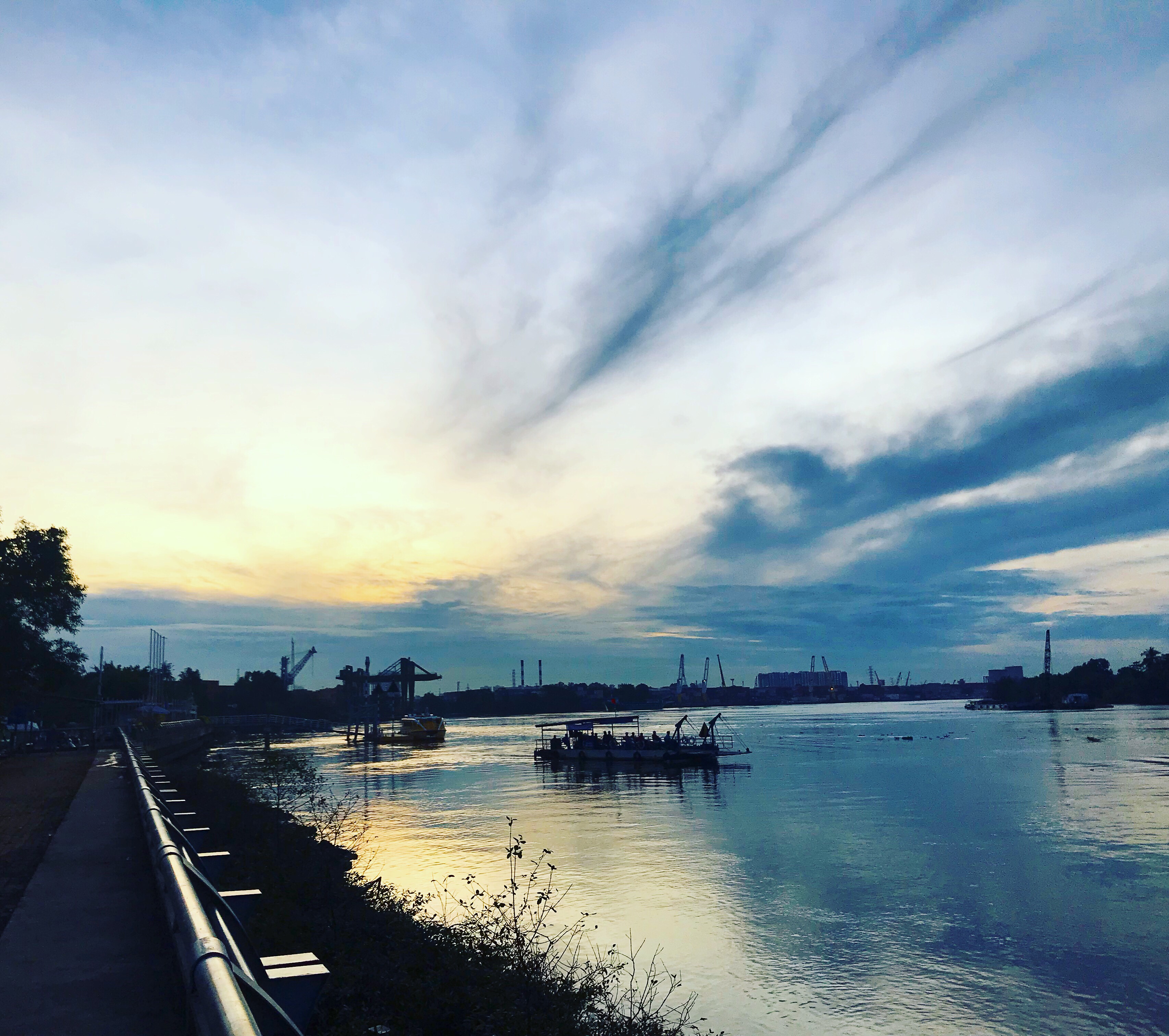
Last sunrise of 2018 in Saigon, complete with my favourite ferry crossing.

Happy New Year from Saigon!

There’s nothing like the arrival of January to spark action. Resolutions, I’ve had a few. The most plausible so far being a commitment to eat and drink more slowly, rather than inhaling meals and bottles of wine as if food rationing and prohibition laws were about to be imposed.

Less plausible resolutions include: writing more; drinking less; reading more; and looking at my phone less.

I say ‘less plausible’ in that I’m fairly confident of being able to strike a balance with objectives like these – it’s just a fear of setting myself up to fail by insisting on rigid, self-imposed restrictions. Moderation, it’s often touted, is key, but then so, too, is our ability to feel in control of what we are doing.

More’s the pity that, in many ways, I simply enjoy so many of these pursuits (including my job, and the ebb and flow of travel and time it requires) that I feel more practice is still required to find a useful daily cadence to accommodate all the ‘things’.     Continue reading “Just Keep Going”

Back in This

img_0494
CARE’s Innovation Team working the camera at Goodlight Studio, Birmingham, AL.

This time last week I returned from the USA – a giddy eight flights and two weeks of work and immersion into some of the country’s civil rights history, as CARE contemplates setting up programmes in America.

I’m still absorbing all that I saw and heard…

From talking to activists outside The White House the day after I arrived; to discussions with colleagues in D.C. about CARE’s future presence in Nigeria, where we are aiming to build the resilience of those affected by ongoing humanitarian issues there; through to time in Atlanta with my incredible team, exploring ways to lift up the opportunities for innovation across CARE’s network…

…before pausing for a weekend’s moment of Southern Decadence in New Orleans, a city whose authenticity and openness (in more senses of the word during that particular weekend, and which requires it’s own discreet blog post) to diversity and to humanity really are as creative and appealing as one imagines they could be; followed by road tripping up and into the State of Alabama, for more planning sessions at the fabulous Goodlight Studio in Birmingham, and a whistle-stop dive into some of the iconic civil rights moments of the 1960s, which unfolded in this infamous part of the country (from the 16th Street Baptist Church bombing of 1963, to visiting Joe Mintor’s garden displaying thirty years of work in bringing to life historical events in his garden, through the medium of scrap metal and every day objects)…

…all of which culminated in a final leg in Montgomery, meeting the team at the Equal Justice Institute (EJI) and hearing from Lecia Brooks and Richard Cohen at the Southern Poverty Law Centre, privileged encounters (amongst others had that week with lawyers, journalists, pastors and advocates for change) offering up precious, honest and heart wrenching insights into the social justice journeys that so many generations across the “Deep South” have been experiencing, each story a momentary platform to quench the individual (and increasingly collective) thirst for action which pulsates through the corridors of these justice-focused institutions, and through the determination of those who inhabit them on a daily basis…

…until, with my last 24 hours to spare, I flew up to Connecticut, to spend time with one of my oldest and dearest of friends, whose son, my godson, Sam, and I played pool whilst, trading insights about the speeches of Martin Luther King, taught at Sam’s high school, and equipping him and his peers with knowledge, in a way that left me more inspired about how this next generation of power holders and decision makers, of mothers and fathers, of politicians and business executives, might be gifted the intuitive sense of how their fingerprints and footprints can have positive meaning and a place in future history books, as they embark on their own life missions to become their best selves…     Continue reading “Back in This”

Brexit: a view from afar

thDSSDWDQI
Picture credit: http://www.newstatesman.com

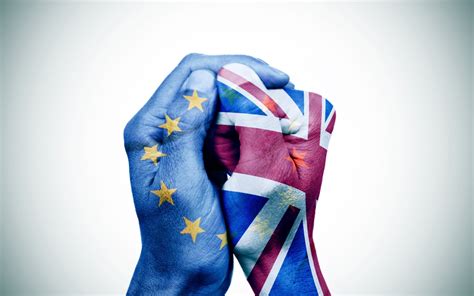
I’ve been living outside of the UK for more than 7 years, although I doubt am any less informed or confident about what lies beyond March 2019 – post Brexit – were I to have continued living in South West London, rather than shifting to Vietnam, as I did, in early 2011.

I was in Da Nang listening to Radio 4 when the Leave Campaign victory was announced. I’d not managed to organize an overseas vote in time, yet was one of the first to hear the result at 6am local time here. This was followed by a majority of my old school friends waking up back home and immediately affirming their dissatisfaction and shock at the new reality.

Appreciating the indulgence of writing about a decision that I was unable to organize myself to participate in originally I have, nonetheless, followed the foreboding sequence of Brexit shenanigans over the past two years.

An inherent sense shared on the day of the result was that there had been a melding of different persuasions, which conspired to produce the unexpected outcome: some voters swayed by ‘red-top’ immigration propaganda; some by a sense of wanting, once and for all, to be heard through the ballot box midway through the tenure of a government administration who were cockily prepared to bet their Notting Hill mortgages on the final numbers; others by a more considered and ultimately frustrated feeling of sustained economic unease, exacerbated by the centralized powers of Brussels policy makers; or, an equally frustrated commitment to vote nostalgically for a societal and political construct which more resembled the UK’s former standings in the world.      Continue reading “Brexit: a view from afar”

Lending: the new giving?

pattern
Vietnamese hill tribe handicrafts

I live in Saigon, Vietnam, and it’s hotting up once more as we approach the muggiest time of the year.

Luckily, for me, this week I have been in Hanoi and luckier still, yesterday spent the day visiting local hill tribe communities about 180 kms north west of the capital.

Not only did the mercury drop down lower for the day, as we snaked our bus round the mountains through wispy clouds and potholed roads, but we were privileged to meet incredibly talented individuals, tucked away as they are from the life of urban Hanoians, and cut off from the collective consciousness of the world outside Vietnam.

The objective of the visit was as part of an expansion of an initiative in the UK that CARE International have built over the past four years, called Lendwithcare.

scenary
Local hill tribe community
Continue reading “Lending: the new giving?”

Raising the bar on tax

fundraising_power_of_one
What can you do today that will make a difference?

George Osborne, the UK Chancellor, was front page news yesterday, receiving positive plaudits from Action Aid and the ONE Campaign, as well as from other organisations also not known for being routinely generous with such public praise.

The story in question centres around how large corporations have skillfully dodged paying taxes to poorer countries in which they conduct business.  Osborne used his attendance at a G20 meeting of finance ministers to make UK Govt commitments to a “new agenda of transparency” that will move towards stamping out skillful tax dodging by said corporations.

At the same time, he took the opportunity, quite rightly, to reinforce his government’s own pledge to increase to 0.7% (of GNI – gross national income) the funds it spends on international development programmes around the world.

The argument against increasing this UK “aid” budget has been made time and again since the Conservatives took office nearly 3 years ago, and no doubt Osborne’s piece in the Observer will not go down well with many.  Whilst 0.7% is a small percentage compared to other government budgets, it still amounts to tens of millions of pounds of tax payers’ money.  All other public sector budgets have been cut and, last year, the UK economy flat-lined, triple dipping back into recession. Continue reading “Raising the bar on tax”

Reinvention in the public eye

On the road to redemption?

After yesterday’s admition of guilt (10 years too late) and accompanying resignation from his Eastleigh seat, MP Chris Huhne will almost certainly be the face of the next edition of Private Eye.  Fame at last, in my books – I love the Eye – and only wish it had the membership of facebook, and perhaps the world would be a cleaner place.

So, Chris Huhne.  He “perverted the course of justice”.  Lied for a decade to protect his career.  He stood (and almost won) in the leadership contest to be head of the Liberal Democrats.  He is now facing a prison sentence.  On paper, it’s a solid performance.

If anyone required some sort of “reinvention,” as we embrace the Year of the Snake next week, it is Mr Chris Huhne.

Lance Armstrong may be able to sympathise.  Armstrong went on Oprah last month, and confessed to a nation about his sorry tale.  A day of trending on Twitter, and perhaps Armstrong’s own redemption journey has begun now in earnest, and will see him resurrected in a year or two, in a new role.

What is the take-away from comparing these two fallen-from-grace public figures, in their respective professions and life pursuits?  What does any of it all mean for those of us not in the public eye?

Once you move on from shaking your head at their misdemeanors, and thinking “what were you thinking at the time?” I am just not sure what purpose any further raving on the matter will ultimately serve to satiate, other than our own tendencies to jump on hate bandwagons and point the finger. Continue reading “Reinvention in the public eye”