Yolanda

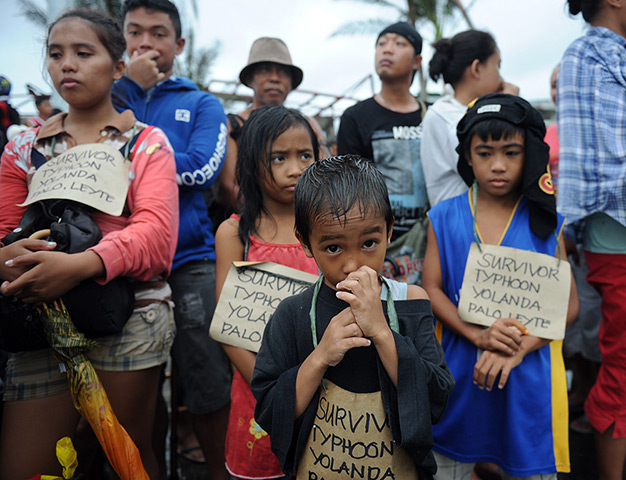
Survivors of the super Typhoon Haiyan, wait for a C-130 military plane at T
Image courtesy of Ted Aljibe/AFP/Getty images

You don’t need me to point out where this photo was taken, nor what messages sit behind the faces within it.

I only have admiration for those people who are on hand in the Philippines at the moment, helping, and only great sadness and hope for those whose lives have been altered forever.

For any long standing visitors to my blogs, it will hopefully have been made obvious by now that I have involved my organisation, CARE International, and the developmental issues we address around the world mainly as a platform from which to couch ideas and thoughts – mainly, in other words, as a lens through which I can write.

The world has collectively reacted to the images created by the Haiyan (Yolanda) typhoon, and we have all shared our thoughts with loved ones, friends, colleagues, people sat next to us on the bus.

Pointless as it typically is to try and immediately draw any conclusions as to what events like these ‘mean’, or what they reinforce to us all as fellow citizens on the planet, the one thing that remains tangible and easy for many of us to do, is support the work of those agencies who are, today, right now, saving lives.

It is not my intention to use this space again to promote CARE or the work of the other DEC (Disaster Emergency Committee) members, but today, and right now, that is what I am doing.

Here is a link through which you can lend your support:

http://www.careinternational.org.uk/news-and-press/latest-news-features/2459-typhoon-haiyan-this-will-haunt-me-for-a-long-time-

Engendering change

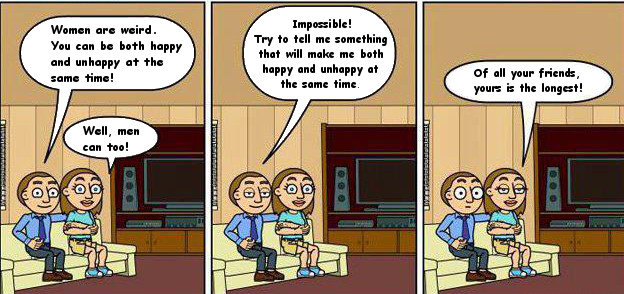
Looking beyond Mars and Venus
How do we move from the mundane of the Mars-Venus analogy?

I’ve just read this: http://blogs.cfr.org/development-channel/2013/10/16/emerging-voices-henriette-kolb-on-gender-equality-and-economic-growth/ which lays out some compelling evidence making the case for how gender equality and economic growth are linked.

Linked positively, that is.

I work for CARE International, and we have made the case ourselves, and continue to do so in the specific area of work that I have been attached to for the last seven years, namely that of engaging business and markets in our precious “development agenda”. Continue reading “Engendering change”

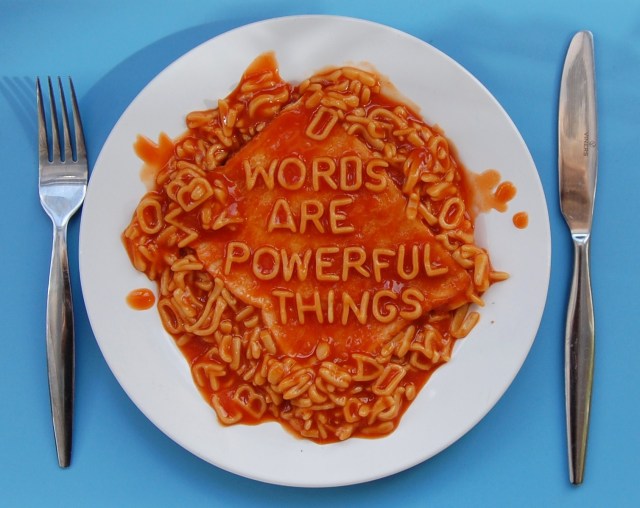
Linguistic spaghetti

imageAs someone who has clocked up seven years working in the “aid industry,” I am full to the brim with jargon that I continue to fear means nowt (this is Yorkshire jargon for ‘nothing’ – ‘nil’ – ‘zilch’ – ‘sweet FA’) to anyone not in the know.

For much of the time anyway, those of us in the know, aren’t.

Sure, every business sector has its own nuanced vernacular, too.  The “triple bottom line”.  A “bear” market.  Acronyms galore, whether you are a Wall Street trader, a civil servant, or a quantity surveyor (whatever it is that they do again.)  We all wallow in our respective, tribal refrains.

I have given my best shot over the years to understand what half my mates back in London do working in “the city”.  From memory there are definitely lots of ‘fund management’ types in there.  Maybe some stuff linked to Risk as well.  I keep trying anyway, politely asking fact seeking questions and crossing my fingers that I can remember what it is Ernst and Young do.  I know they are called “E&Y”.  This much I am certain.

And, yes, their eyes glaze over when I talk about sustainable development (in fact I don’t even tend to use these two words given, as continues to be broadcast on development sites these days, it is quite clear no one really knows what sustainable development actually means.)

Let’s assume that these semantic idiosyncrasies are set to stay.  I see no practical reason to deny them to any business, sector, industry, rugby team, local community, or even any NGO, such as CARE.  Just to clarify: an NGO is a Non-Governmental Organisation, although speaking as a CARE employee I can confirm we have also been described as a humanitarian organization, an international development organization, a non-profit, a not-for-profit, a charity, a social development organization…you see where I’m going with this…

So, the Secretary General of the United Nations, Mr Ban Ki-Moon, makes the Guardian development pages at the moment http://www.theguardian.com/global-development/2013/aug/16/ban-ki-moon-development-aid-decline promoting the case for increased ODA (Overseas Development Assistance.)

“Well, he would do that, wouldn’t he?” might be a valid retort to such a promotion…

However, in doing so, he lays out the cornerstone themes that will underpin successful (and sustainable) development for the world – “decent employment, inclusive growth, good wages” – each to be supported by “renewed global partnerships, grounded on the values of equity, solidarity and human rights.”

As someone promoting the role of business in the international development agenda, its encouraging to note the intrinsic links made between what the Sec Gen is proposing, and the helpful way in which a vast chunk of these are reliant on responsible business development – which makes me feel good that CARE is so focused on leveraging business.

However, the main voice in my head just wonders what a fund manager, a risk analyst, a teacher, a tinker, tailor, soldier, spy (you see where I’m going with this…) would make of such statements?

How can we break down some of the silos here?  And then, how to prioritise, in round terms, what comes first?  Where should all this ODA money go and how should it be spent for maximum impact?  Is it good enough to just create jobs, without addressing the ethnic diversity and conflict rife in a particular place?  Do we need: more schools; better trained teachers; more accessible medical services; more women “leaders”; better water and sanitation in urban slums; better mobile coverage in rural areas; environmentally friendly products?

Well, we need all these things.  Easy answer.  And “development” has come a long way in a short (ish) time period, and helped us understand the natural connections between the list above.  The need for a more holistic approach to tackle big problems.

So, to be clear, this is not a “does Aid work?” post.

But, if our baby steps over the past 60+ years have walked us down the front drive, then we still have a long way (at least to the service station on the corner, several blocks away) before equilibrium is reached – across all things.  And I think it is a level playing field concept I most warm to, as I continue to describe and (try to) articulate some of these themes and considerations.

It has to be about equity, and better access.  Access to money, to a livelihood.  Access to information, access to a voice in society that can be heard, and to which there will be a response.  All of such things help society push for accountable and compliant government, business, and the rest.  It is about closing the gap, between rich and poor, male and female – and so on – but also between each other.  Individuals.

And it starts with communication.  Finding the best way to communicate, and the better words to touch someone else’s thoughts and feelings and actions.

Equity, access, but also – intuitively and refreshingly – it has to be about love, tolerance, and understanding.  Whilst we might never become brilliant piano players, sporting greats, or Nobel Peace candidates, every one of us has each of these three characteristics sat waiting to be set free.

If you have found this site via Freshly Pressed, then thanks so much for making it this far down my musings on ‘jargon’ – for anyone interested in what life is like living in Saigon, Vietnam, and traveling around this wonderful region of the world, then check out my other blog www.saigonsays.wordpress.com and, in the meantime, good luck to all the fantastic writers out there.  It was great to connect with you.

Why I’m posting this heartbreaking photograph

April 25, 2013. Two victims amid the rubble of a garment factory building collapse in Savar, near Dhaka, Bangladesh. Read more: http://lightbox.time.com/2013/05/08/a-final-embrace-the-most-haunting-photograph-from-bangladesh/#ixzz2SlWRG3gY
April 25, 2013. Two victims amid the rubble of a garment factory building collapse in Savar, near Dhaka, Bangladesh.

Whilst the world’s media is abuzz with stories of lunatic kidnappers in America, and retiring football managers in the UK (both grabbing legitimate headline space) another Dhaka factory fire last night claimed 7 lives – http://www.guardian.co.uk/world/2013/may/09/deadly-clothing-factory-fire-bangladesh

Last week, I posted about the Rana Plaza factory collapse in Dhaka.  Rescuers are still pulling bodies out from under the two week old rubble.  Including those of the two workers embracing in the heart-wrenching photograph above.

Taslima Akhter, the photographer who took this picture, was interviewed (see link below) about her experience of being at the scene of this tragedy.  And about this particular photo.

Her statements are powerful.  The image she has captured stirs a million emotions for those who lay eyes on it.

All the questions being asked about accountability for the Rana Plaza collapse need answers.

But, given questions about accountability for how the global garment industry is governed and managed, were being asked more than twenty years ago, how many more years need to transpire before a stop is put to unnecessary lives – like those unnamed in the picture – are lost?

So much of what we read about in the news are “white noise” stories.  There will be replacement football club managers, and, depressingly, replacement lunatics.  Is that why, often, such stories don’t penetrate our consciences for very long, or in a way that makes us stop and think and wonder.

I cannot let this picture go.

Taslima Akhter interview: http://lightbox.time.com/2013/05/08/a-final-embrace-the-most-haunting-photograph-from-bangladesh/#ixzz2SlWktLCD

Brave new world (of uncertainty)

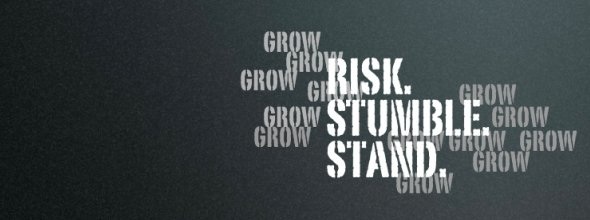
"Only by embracing uncertainty, will the way forward manifest itself" (Jo Confino)
“Only by embracing uncertainty, will the way forward manifest itself” (Jo Confino)

When I was last in Bangladesh, in November, a factory fire broke out in Ashulia, near the capital Dhaka, killing over 135 factory workers.

Like others at the time, this event prompted me to write – http://saigonsays.wordpress.com/category/travels/bangladesh/ – to raise awareness, to express sadness, and to describe CARE’s work in this particular arena.

It’s selfish writing in many ways.  Such an unnecessary event, needlessly taking lives, and a sense that you can respond in some capacity by simply writing a narrative.  Although, at the time, I don’t remember it making me feel any better about what had taken place in Ashulia.

And now it has happened all over again, once more in Bangladesh, this time just north of the capital, in Savar, after the total collapse of the Rana Plaza building, last Wednesday.  Rana Plaza was eight-storeys high, housed four garment factories, 6,000 workers, and should never have been open last week, after factory inspectors had ordered the building be evacuated having declared it unsafe. Continue reading “Brave new world (of uncertainty)”

Our defining moments

photo credit agreenobserver.wordpress.com

In terms of a public figure well practiced in the art of reinventing a good argument, the late, great Christopher Hitchens was second to none.

I’ve no doubt I would have enjoyed his inevitable column, following the recent news that the Vatican had elected a new Pope. Hitchens was a staunch atheist, and passionately outspoken about Catholicism. Who knows what his particular narrative on the appointment of Pope Francis would have been last week?

Having watched countless hours of him in action on youtube – Hitchens that is, not the new Pope – I used to find myself, for the first time, understanding the type of lure and addiction that those with strong religious faiths must experience when in front of their local preacher. The same, only with Hitchens’ flavour of persuasion being that of the anti-theist, promoting instead the vital role that the arts, science, and disciplines such as free-thinking play in society. Continue reading “Our defining moments”