Too Distracted Scrolling to Notice We’re Sinking

In 2025, the world feels perpetually distracted. Elections, wars, AI, celebrity scandals — global attention ricochets between urgency and noise. Today it’s one crisis, tomorrow another. And we all scroll on.

And yet, a slower, more existential threat escalates beneath it all: climate change.

Especially in Southeast Asia, the impacts are already reshaping daily life. I’m guilty of tuning out, and I know many others do the same head-in-the-sand routine when they skim stories about rising temperatures or shrinking icebergs.

If climate change is so serious then why aren’t we acting like it is?

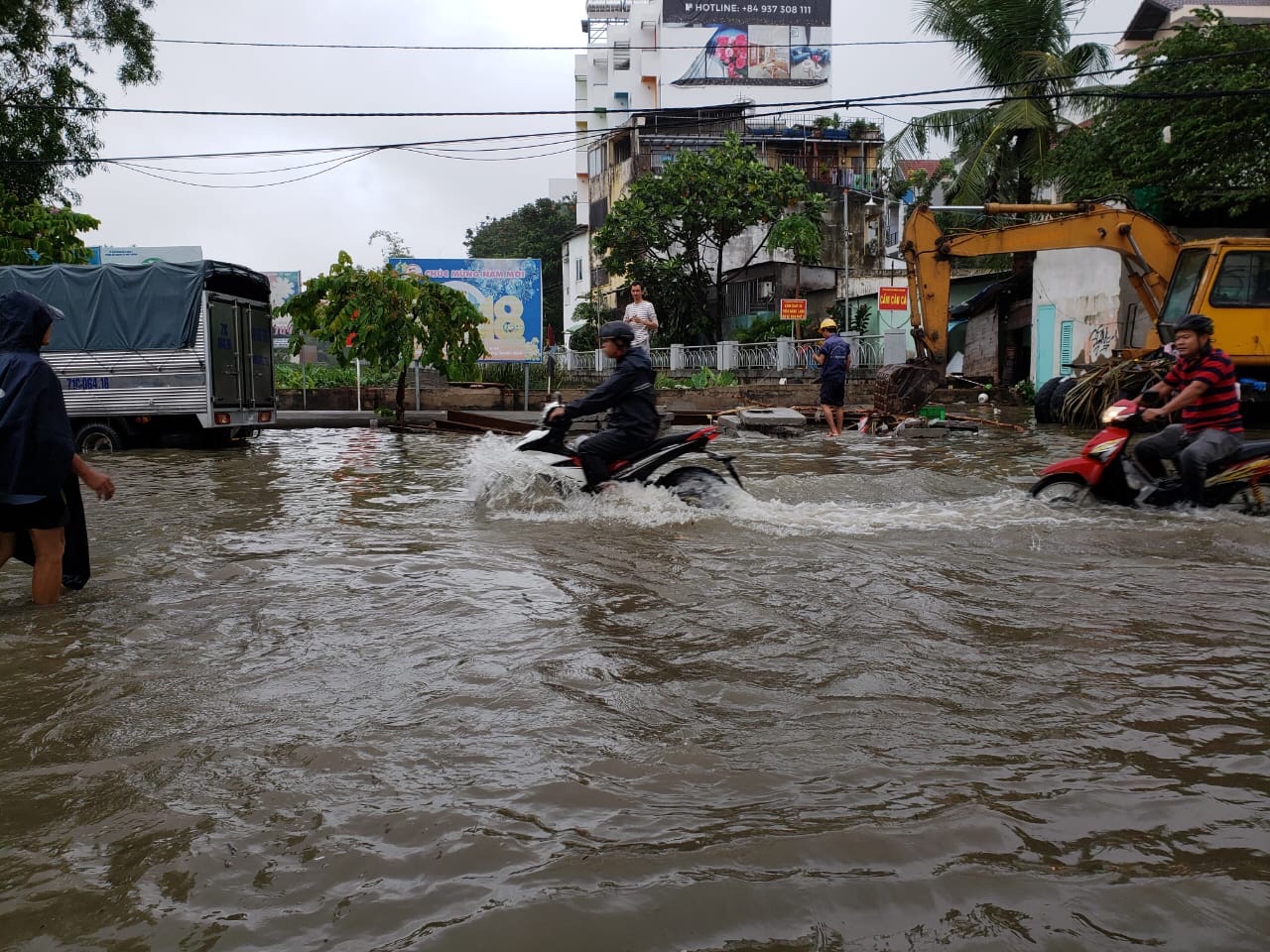
Southeast Asia is on the frontlines of climate risk. Jakarta is sinking by as much as 17 centimetres a year, one of the fastest rates in the world. In Vietnam, over 50% of the Mekong Delta’s land area is projected to face saltwater intrusion by 2050, threatening not just agriculture, but the food security of tens of millions.

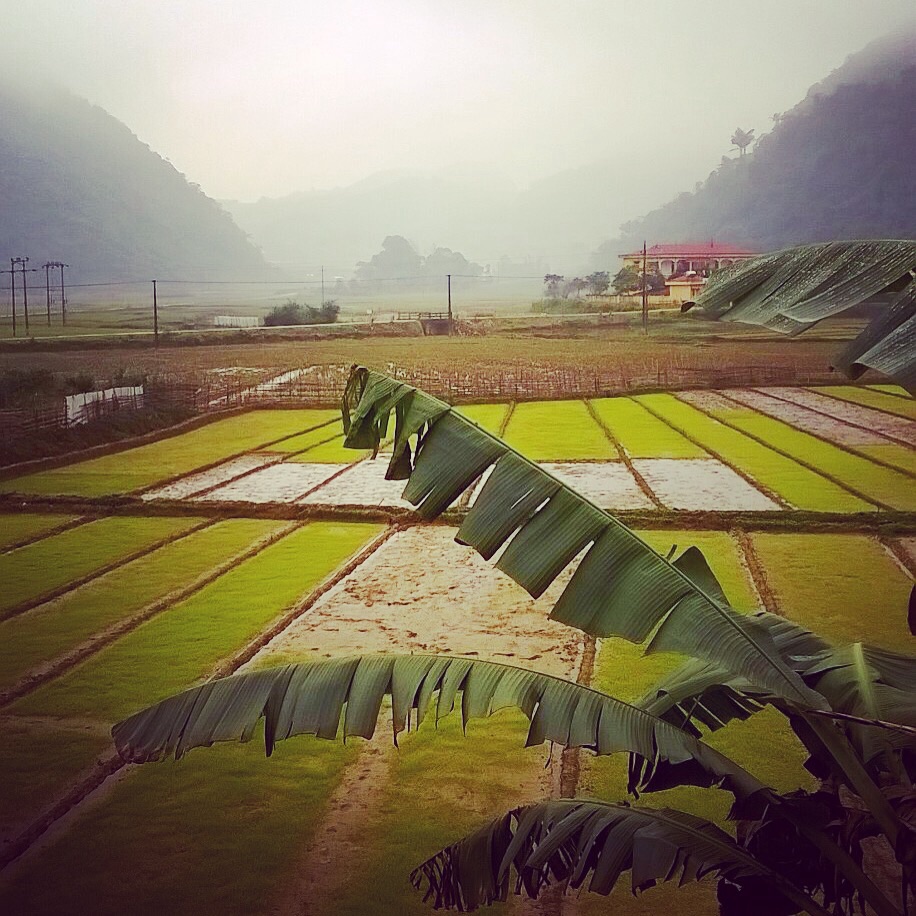
Saline intrusion is already choking rice production in the Delta, while intensifying heatwaves and droughts disrupt water supplies. When these come, droughts disrupt water supplies, and you don’t have to be studying GCSE geography like my daughter (who knows more about this than I) to appreciate what then transpires from a biodiversity perspective: that everything is gradually disappearing.

The IPCC (our collective authority on the matter) warns the window to avoid catastrophic change is ‘brief and rapidly closing.’ That’s not hyperbole — it’s scientific consensus. And, still, climate continues to feel like a background hum, rather than breaking news.

The private sector must play a more central role to Southeast Asia’s adaptation and resilience efforts. Governments alone can’t foot the bill or engineer every innovation. Yet, despite growing interest in green investments and carbon markets, engagement remains patchy.

Vietnam’s 2025 Carbon Market Forum and the P4G Summit were welcome steps. These meetings offered the usual fare: policy frameworks, optimistic keynotes, and lots of “roadmaps.” But translating these into real action remains a challenge.

I’ve worked for a long time promoting sustainability and, in particular, getting business to the table however, let’s be honest, when it comes to climate change, aside from a few regional giants and climate-conscious smaller businesses, most private sector entities are still unsure what climate action means for them, or how to act without sacrificing profitability.
So, I think my call to action on this would, ideally, be quite broad (the ownership of the issue should be everyone’s) however it is here is where I think international NGOs (like my former employer CARE) should step in — not as saviours, but as agencies that can help shape the systems that exist within the private sector, and which relate to climate change.

CARE doesn’t treat women’s empowerment and climate action as separate goals. Instead, they have developed programmes that integrate them through market-based, locally led interventions, tackling environmental threats and economic inequality at once.

In Vietnam, for example, HerGreenVenture supports women-led enterprises with training and green finance to adopt low-emission farming and scale sustainable technologies. In Cambodia, CARE also runs community recycling programmes that help women turn waste into income and reduce landfill pollution. And in Thailand, CARE’s eco-tourism projects led by women are creating jobs while preserving forests and coastlines.

What links these diverse initiatives is a belief that resilience is built from the bottom up.

CARE’s core strategy is clear: gender equality isn’t a side note, it’s central. Women, particularly in rural and informal economies, often bear the worst climate shocks while themselves holding the keys to adaptation. Give them access to green finance, leadership roles, and supply chains, and resilience becomes lasting.

We’ve been warned for years, but action has lagged far behind awareness. Climate experts might point to progress — but, from where I sit, I don’t see enough.

If you’re a business leader, why not starting by asking: how is your company contributing to climate adaptation today? Not just ESG compliance, but to real-world impact.

If you’re in government, how about checking the extent to which you are creating the right conditions for innovation, for inclusion, and ultimately for scale?

And, if you’re an INGO or donor, let’s have more discussion about whether you are building systems or simply just running programmes?

We may live in distracted times. I find myself fighting this day-on-day myself. But, distraction doesn’t make the climate crisis less real — if anything it just makes it less seen.

The question is no longer if it’s serious. It’s whether we’ll start acting like it.

What next after CSR?

Subscribe to continue reading

Subscribe to get access to the rest of this post and other subscriber-only content.

Placing the future of ‘Partnerships’ in the best hands

A new dawn for partnerships – Bangkok, March 2023

Last week I co-facilitated a training course for UNESCAP (the UN’s Economic and Social Commission for Asia and the Pacific) at the UN headquarters in Bangkok.

This is noteworthy (and the cause of my first post here since May last year) largely because it represents only the second overseas trip I’ve made for work, since I high tailed it out of Laos in March 2020, with hours to spare, before the Vietnamese border police would have had me detained for a fortnight.

Whilst narrowly avoiding being barred for tampering with UN tech equipment in our set up last week (as well as encountering a curious number of delegates who tried to infiltrate our course) the days spent with the 20 participants enrolled on the training was a real privilege, and a further reason for sharing some reflections here.

The course itself – The Partnering Initiative (TPI) Partnership Accelerator – was a distilled version of a longer set of modules that I’d been conducting online, during the pandemic, as an associate of TPI. In engaging previous teams in the content, from international NGOs, through to large corporations, and UN agencies themselves, I’ve come to acknowledge that TPI’s curriculum offers up a comprehensive and water-tight set of insights and tools, to equip most would-be partnership experts out there looking to forge, manage and scale up multi-stakeholder initiatives and collaborations.

Built into our sessions in Bangkok was more than a smattering of theory and frameworks, about how to get the best out of your partnerships, alongside practical exercises and role plays, designed to allow teams to practice such things as negotiation skills, trust building, and experiencing alternative power dynamics.

Last week’s participants had gone through a lengthy application process in order to participate and then, in most cases, had also gone through lengthy journeys from various SIDS (Small Island Development States) in order to physically show up in Thailand.

Fiji, Mauritius, Seychelles, Palau, Kiribati, New Caledonia, Solomon Islands, Papua New Guinea and Timor-Leste were all represented in some form, during our two days – a constellation of countries covering some of the planet’s most diverse and distributed societal eco-systems.

There are 58 SIDS in total, and one of the resounding pieces of encouragement, that I took away from those engaged in last week’s training, was the appetite and energies they told us their country’s young people felt about the array of sustainability issues that the UN, and others, have carved out across the existing SDGs (Sustainable Development Goals).

I was struck not just by the talent and inputs and experiences shared in the room during our course, but by how motivated each participant was to take their knowledge and learning from the course back to their home countries and to disseminate this wider.

Young people, it was made clear, either still studying, or launching their careers in SIDS, hold the key, in so many ways, to unlocking and unleashing the real power that true partnership-working possesses, when it comes to addressing the world’s most pertinent of social and environmental crises.

All too often, cultural and historical norms predominantly practiced by older generations, hold back progress in society. Progress, for example, towards enabling more girls to have access to education. Progress towards offering more inclusive opportunities for local communities to benefit from national and international supply chains. Towards a future where land rights are equally distributed and acknowledged, where political spaces incorporate more voices from those all too often marginalised, where the resources and the influence of the private sector are leveraged in a more equitable way, namely one which benefits the world’s informal economies.

These outcomes, and many more, were the talk of our sessions in Bangkok, and these issues deserve more airtime beyond a brief training course.

From our participants last week we heard that these are issues which should be built more rigorously into school curricula. Their importance is such that we cannot rely on those in current positions of power, set as they often are in their own ways, and blinkered to emerging societal trends, to be the “changemakers” or the “catalysts of change” that they so often label themselves.

It is young people, either of school or university age, or of working age, with whom these issues most resonate.

Tomorrow’s leaders will carry the can for many of the mistakes made since the concept of “partnership” was broadly incorporated into development jargon. Some people in development circles will say partnerships have always been around, but it was, perhaps, only really at the UN’s 1992 Rio Conference on Environment and Development that the concept of multi-stakeholder partnerships was first coined in a serious way.

In the 30 years since, we’ve seen some admirable attempts to model partnership working. However, we’re just skimming the surface of what I believe can be achieved.

TPI have been hard at it, consulting, designing, sharing and teaching thousands of practitioners since they took on this gauntlet almost 20 years ago. I admire them for that, and for what they have carved out in this space. They are leading the charge.

It is, however, in the hands of the younger generation, in my opinion, where we should be increasingly targeting investments, resources and opportunities to build even wider and deeper the ‘know-how’ about what partnering can achieve, and how it can be done even better. And, on a scale that we’ve never seen before.

2020 Vision

sunrise may 12
Sun up, Saigon, 12 May 2020.

Thanks to technology, we have all kinds of information at the click of a button. Whilst huge numbers of population groups can’t access the internet, not long from now everyone will be connected in some shape or form.

Technology is helping us make better sense of our impacts on the environment, and how to resolve the negative aspects of these. Technology has enabled block chain systems to evolve, challenging how existing global market transactions work, and providing alternative methods for citizens to cast votes in elections. Technology is enhancing the way we communicate with each other, how we forge and maintain relationships, both professional and personal.

I’ve been working with The Partnering Initiative (TPI) recently and we’re seeing how technology can also be a positive vehicle for partnership work. In particular, between organisations seeking to solve societal issues, such as poverty, injustice and now, during such comprehensively macabre times, a health pandemic.

The current implications of Covid-19 are reverberating through every country of the world. We rely on technology to support our response to this virus, as well as to develop its vaccine.

However, there is one damning chasm that technology has failed to fill in: inequality.

American author, William Gibson, once said: “the future is already here, it’s just unevenly distributed”. 

Inequality, on a global scale, rages on.

Recently, the stark extent to which our planet’s wealth is unevenly distributed has been shared wider and wider.

Oxfam’s Inequality Campaign helps put the data into perspective – 1% of the world’s population own more than the rest combined. Other agencies have provided tools to help us determine how our own wealth fares, when compared to global median levels. If you are curious about your ranking, then The Giving What We Can platform calculates this for you here: How Rich Are You?

Covid-19 has exposed the pervasive extent to which social inequalities direct so much of what and how societies function.

Capitalist market-based models and patriarchal and cultural norms clearly also contribute heavily. Too many men in positions of power. Too many assumed entitlements, personified daily by too many people used to getting what they want, when they want it.

Which is, of course, where the remedial qualities of partnership working can play a critical role.

As TPI and others have experienced, on the topic of partnership working, it is not sustainable to broker a meaningful partnership with another organization if both parties refuse to embrace new methods, new approaches and new behaviours. Partnerships also won’t sustain if individuals don’t cede elements of control and influence to which they might intuitively feel they are entitled.

Instead, long-term, impactful partnerships will only succeed in their objectives if any aspects of inequality within them are not re-balanced.

Covid-19 should be seen as an overdue warning shot across a country’s bows, but specifically the world’s wealthiest ones.

The US and the UK are floundering with their responses to the pandemic. Caught up in political points scoring, unwilling to learn from the experiences of other nations, blinkered in their pursuit of populist messages.

There was a time when these countries took pride in their international development investments, a time when being a “global citizen” was worn as a badge of some honour by political ambassadors.

A time when signing up to the doctrine of partnership, that the Sustainable Development Goals got close to evangelizing (as part of the United Nation’s second round of fifteen year commitments to the world’s most marginalized and vulnerable citizens) was taken ‘as a given’.

These times have changed. Those sentiments shelved.

And, one scenario perhaps, is that we won’t now see a return to that previous status quo. It’s plausible that the seismic nature of the shifts caused by Covid-19 are too severe to be fully repairable.

Gibson’s statement asks us to consider if our new normal will see more people living comfortably with wealth, or more people living uncomfortably with poverty?

Will our human condition – when so flagrantly put under the microscope and tested, as it could be argued is happening in 2020 – regenerate more altruistically as a result of Covid-19? Or, will the opposite scenario unfold, and a more self-centered and individualistic norm rise from the ashes of the pandemic?

That partnerships can solve complex social and environmental challenges is undisputed.

But partnerships, we also know concretely, won’t survive long, if those leading them choose not to believe in the power of the many, and in the spectacular innovation that comes from collaboration.

To hope for a future where collective action and shared goals are espoused by all (by organisations who traditionally function to benefit only their shareholders, or by governments who only crave election votes) is, of course, a version of a utopia state. And that hope itself carries with it many complications and flaws.

And yet, no amount of technological advances will ever truly make a difference in the pursuit of a more just and equal society.

Real change only ever comes from hearts and minds. Not from algorithms.

Put more women in charge

image
Photo credit: @Samuel Jeffrey http://www.nomadicsamuel.com

Last Thursday marked the 45th anniversary of the reunification of Vietnam. The day the “American war” officially ended. Evacuations from Saigon continued for some time after 30th April 1975, but Reunification Day is the day that residents here hoist up their flags and commemorate the end of one era, and the beginning of another.

I remember talking to a friend a few year’s back, she was born in Saigon, and her family fled later in the ’70s, bound for Melbourne, Australia. She recalls the memory of being in a boat, aged 5, and can picture still the anguish plastered across her parents’ brows, and their clipped, firm instructions to her.

The plight of a family on the run isn’t something anyone would choose to put themselves through.

Just as no parent would want their loved ones to be victims of war over peace, violent conflict over dialogue.

And, yet, war and conflict riddle our generation, as they have every other one before us, and peace and dialogue so often resolve far less than seems possible.

‘Change’ in our society, as required by the human condition, thrives off of a combination of war and peace, reinforced and shaped, as these forces are, by various forms of dialogue and iterations of conflict.

There is a predictability around the cycles of these dynamics and conditions, and humans seem stuck in the cadence and inevitability of the ebb and flow of these things.

But we needn’t be stuck, dear reader.

I put it to you that we’ve gathered plenty of recent and favourable lessons about how to tackle societal issues (including addressing conflict and war) and one thing is certain: we don’t have enough women in charge.

It’s not necessarily that a Head of State (there are currently 29 female Heads of State out of 195 countries) always single-handedly makes the key decisions. Nor every corporate CEO the same. It takes many voices and influences to ultimately persuade a country to go “to war” in the first place.

However, with power comes great responsibility, as the saying goes, and men simply don’t care enough about the impacts of their decisions, when compared to women.

Forgive the sweeping generalisations but, for too long – forever – men have sat smug and uncontested, their creativity and compassion rendered, more often than not, lethargic and complacent when compared, in the cold and searching light of day, to that of women.

The Mars vs. Venus analogies neatly document the critical differences between men and women. We have this data. Men don’t care as much as women do. They don’t care as much.

The alarm bells have been ringing loud and clear on this point for a long while now. But nothing changes.

Boris Johnson, Scott Morrison, Donald Trump, Jeff Bezos, Mark Zuckeberg, Rupert Murdoch, Vladimir Putin, Xi Jinping, Narendra Modi, Pope Francis. A plethora of male power brokers. Angela Merkel the one female counter-part over the last ten years whose influence is comparable.

More recently, New Zealand’s Jacinda Ardern has captured the attention of many. Because she cares. Because she is self-aware and because her ego, unlike the inflated zeppelins of her male peers, doesn’t take over how she makes decisions.

In the archives of these posts you will find attempts to describe CARE’s solutions to poverty and social injustice. The #1 proof of concept that CARE has? Put more women in charge. Put gender equality at the centre of all poverty programmes, of all campaigns to tackle social injustice. Done. It’s that simple.

Put more women in charge of balancing a low-income household budget and we know they will think more about healthcare and education, than they will about spending that budget on consumption. They will care more about the welfare of their children. There will be less violence and conflict.

BeyondMeToo_NOLogo_Square
Picture credit: http://www.wunc.org

Putting more women in charge of everything can only reap dividends for everyone in the longer term. The stock market, the military, the media, the respective governance structures of every country in the world, the political systems, which toxically cause pain and suffering for so many people. Hell, we’ve even the evidence now that investing more in girls’ education is one of the most important counters to the effects of climate change.

Women make up 51% of the world’s population and yet we are leaving seismic decision-making about the planet’s extractive industry, the planet’s nuclear capacities, the planet’s healthcare and financial systems, dis-proportionality to men. Who we know care less about issues of humanity and welfare than women do.

Patriarchal social norms, everywhere, dictate this status quo. Capitalism only worsens the effects of inequality, and of gender bias.

The world, we are told, is constantly changing. Covid-19 our latest gruesome illustration of this. And yet nothing has meaningfully changed in terms the gender inequality. It rages on.

The #MeToo movement, and the wave of awareness which followed about domestic violence, workplace harassment, and gender-based violence more generally, was long overdue.

But it didn’t stop the election of Donald Trump. It hasn’t resulted in root and branch changes to how some of the world’s most powerful nations staff their top tier of power holders. It hasn’t influenced the accepted norm, the world over, that men can use violence against women as a weapon.

In Vietnam, as this week’s commemorative anniversary of the end of a brutal and protracted war draws to a close, the government continues to flagrantly lead from the front in terms of the male-female ratios of its leaders. And they are not alone in doing that. It’s the same everywhere.

Everyday, unchallenged, predictable and disastrous decisions are made by men.

Put more women in charge of everything.

Economic Resilience: Lessons from a workshop in Kenya

market3
Local market in Westlands, Nairobi

Every day, we each make decisions about money. Weighing up hundreds of transaction options in a single week, our choices are based on quality, value, needs and desires. To do this, we require information and knowledge, and ultimately we crave the security of knowing that we can afford to buy things.

Cryptic introductions aside, this post is inspired by an illuminating week overseas with new people, and offers up some jet-lagged musings about money and about equity.

Last week I was in Nairobi, with colleagues from Save the Children who’d gathered to share their experiences on the topic of “Economic Resilience”.

In a game of ‘Non-Governmental Organisation [NGO]’ Bingo, now would be the time to mark a cross in your first box: Economic Resilience, what a buzz-word (or “fuzz-word” as someone in Nairobi suggested) indeed.

There were 14 country teams in attendance last week, each armed with definitions, approaches, ideas and stories to tell about their respective efforts at delivering projects with local communities that increase people’s Economic Resilience.    Continue reading “Economic Resilience: Lessons from a workshop in Kenya”

Innovations in Resilience


278245e2-28ca-42b6-b707-20250744f7b1
Monday commuters at the end of our street this morning. Photo credit: Stephanie Le @saigonsteph

Over the last 24 hours Saigon has been submerged by Typhoon Usagi – officially the “longest and heaviest rainfall ever recorded in Saigon history”. Earlier last night, me and the girls schlepped home from a friend’s house, up to our knees in water and, overnight, our downstairs bathroom and kitchen were mildly flooded.

Thousands of other city residents here were less fortunate – one man was killed by a falling tree not far from where we live, and stories were shared overnight of people abandoning their homes and finding refuge elsewhere.

I’ve written before about storms in Saigon, and the natural occurring disasters in South East Asia more generally, but this current season has been busier than normal.

Vietnam often escapes heavy storms, thanks to the Philippines, a country well versed in combating typhoons, hurricanes and tropical storms. I’ve visited the country twice this year, working with CARE team in Manila who manage the TUKLAS Innovation Labs – a initiative supported by UK Aid and The Start Network that seeks out new ideas and solutions from local communities, to help them better prepare for the typhoons and storms which routinely batter the country’s shores.     Continue reading “Innovations in Resilience”

Drawing Down

img_1685
Running in the forests of Siam Reap this weekend

Over the weekend I was in Siam Reap and, for whatever reason, found myself enchanted by the trees and the colours and the red earth. Not in any particular novel way, but in a way that connected to something I may have simply been ignoring for my entire adult life: that simple truth about the fragility of life and changing our own lives whilst we are fortunate enough to be here.

It’s not as if I haven’t been listening to the scientists and the campaigners. Even on these pages I’ve been known to write poetry about nature, have routinely made calls to action on various related themes, and posted pictures of me and my daughter 9 years ago taking part in a climate change march (the same daughter who now, aged 10, just returned from a school camp fully signed up as a pescatarian.)

So, you know, I talk a good game and encourage others to do lots (plus I now have one daughter doing her thing to contribute towards lowering the demand for meat) versus I fly 1,000s of miles every year, like a bit of air conditioning in the Saigon heat and probably, on most other climate friendly criteria, would likely score pretty poorly.

And yet, the science on climate change has been public for years now. As much as a decade ago, I remember seeing a campaign in the UK to highlight the effects of climate change on the poorest communities the world over. The strapline’s call to action being: “turn down the thermostat – it’s getting hot over here.” The accompanying picture was of a pastoralist with his herd of livestock, sweltering in the heat of an African savannah.

Wind forward to the most recent round of climate change headlines (momentarily competing on the front pages with the familiar and depressing daily churn and circus) and the news about our warming planet remains bleak.     Continue reading “Drawing Down”