
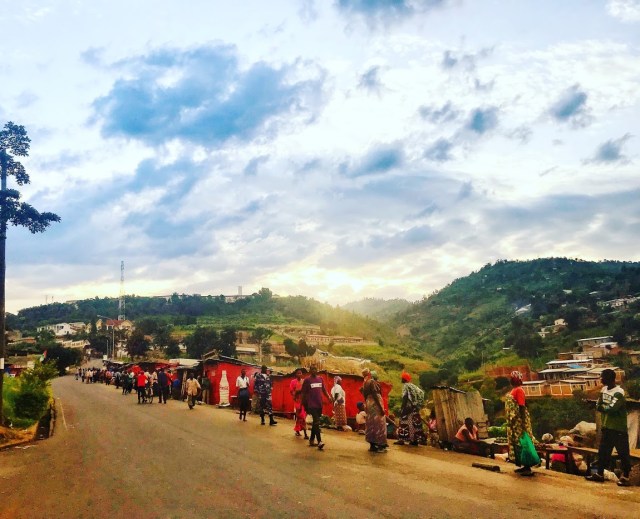
At 8am the CARE Burundi team meet on the lawn outside their office and stand in a circle for Monday’s daily briefing. Updates are shared, stories told, priorities for the day ahead clarified.
The team’s Country Director, Juvenal Afurika, closes out the meeting and comes over to my colleague, Dane, and me, “welcome to Bujumbara,” he smiles, “how are things going so far?”
‘Things’ were going well.
We’d landed into the country’s capital early Sunday, Dane from San Francisco via Europe, and me from Saigon, via the Middle East. Several months of preparatory team calls and re-worked excel sheets, carving out the various components to this assignment, were now gratifyingly behind us, and we were finally on African soil.
A few months prior to this visit we’d had to postpone coming over at the end of 2018, as CARE and the International Non Governmental Organisation (INGO) community went through a re-registration exercise with the Burundi Government.
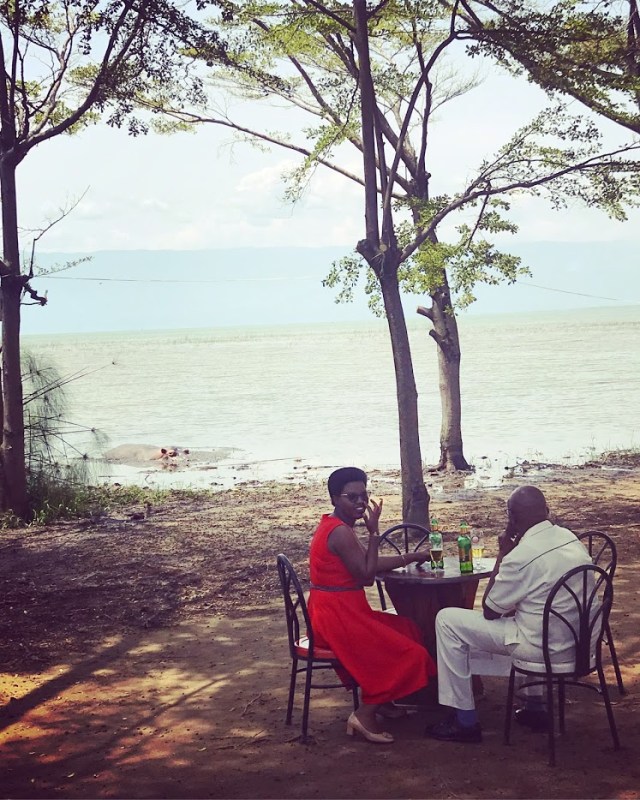
This time, all was going smoothly as Dane and I sought out an inaugural meal by a lake, which we took cautiously, dining just a few metres away from a sunbathing hippopotamus.
We had flown all these miles for the opportunity to engage face-to-face with our colleagues in Bujumbara. The aim was to share our ideas about programme design, and learn valuable insights from their team about the challenges they faced designing social programmes.
Inevitably, as I’ve seen in other contexts, teams who deliver social programmes in local communities are juggling a number of priorities. In addition to which they are tasked with creating an appropriate set of activities and engagements that will actually be of use to local beneficiaries in the long run.
As I am sure happens at other INGOs, once a funding contract has been won, the clock instantly starts its countdown to that work being completed and reported back on. Increasingly, and perfectly justifiably, donors and the wider world of thoughtful commentators, want to see tangible evidence of change being made on the ground.
So, with the days and weeks ticking by, local partners initially get signed up to deliver different pieces of the work, whilst community meetings are staged with beneficiary groups.
However, even in these early phases, there are many things that can get delayed and compromise an initiative. Obtaining local government licenses to operate, for example, upskilling partner NGOs, or facilitating successful dialogue with those communities who will ultimately stand to benefit from the programme – these are just some of the things that pose risks to the success of the intervention if they are not carried out in a timely way.
Midway through a programme all too often local CARE teams, like our colleagues in Bujumbara, find their diaries crammed full: donor meetings; project visits; liaising with the different internal CARE stakeholders; compiling progress reports; ensuring compliance and accounting for funds spent; and then the inevitable requirement of drafting up new proposals for the next round of funding.
During this conveyor-belt of tasks there is seldom time for project teams to conduct detailed research, nor to properly test out new ideas for future programmes, let alone then validate the different assumptions linked to these new ideas having an impact.
And so, it was in this realm of testing and validation that Dane and I were focused for the five days we spent with our colleagues.

Ostensibly, whilst seeking a world in which poverty and social injustice are overcome, CARE is also striving to render its services, at some point in the future, obsolete. Working itself out of being required by others, as opposed to the mandate of, say, a company which would be more akin to the opposite future state.
However, as a company would place emphasis and resources on conducting market research and product testing, so too must the likes of CARE follow suit, if we are to fulfil our ultimate mission anytime soon.
This was the message we were in town to share and to embed.
Afurika himself was sold on this approach. He and his leadership team had taken stock of CARE Burundi’s future portfolio and programme credentials, and decided on a “full makeover”. Their goal being to set the stage in Bujumbara for a new way of operating – one where design principles were going to sit higher up the list of priorities.
To help catalyse this shift, the team rented a building next to their office, and established it as an Innovation Hub – Hub Nawe Nuze. This was to be a new space to bring people together, to engage external stakeholders in, and to broadcast clearly the intentions of this team – Hub Nawe Nuze was to provide the impetus as well as the visual, practical structure in which CARE Burundi could begin its change process.
Yet, even with the excitement of launching the Hub, to actually evolve and to change a team’s approach is another matter. For CARE Burundi to discover, ideate, validate and then operationalise and scale new programme ideas in a way they’d not tried before was going to require new systems and processes, new roles and responsibilities for team members, and a new culture and mindset to absorb and adapt to all of this.
What transpired in our sessions during that week was one step in a longer exercise of accompaniment and learning to which both our teams had made commitments. Without these commitments, championed at the highest levels of the organisations, we’d simply not get off the starting blocks.
Design thinking comes in many descriptions and several INGOs are experimenting with it. At the core of a lot of what I have been exposed to, that has struck a chord for programme teams, is a commitment to organization and to rigour. Some of our colleagues in Bujumbara seemed to agree with this, too (click below to watch some sound-bites from our discussions with them…)
In practicing with our colleagues the craft of “validating a new idea” (which includes largely spending time consulting others and “sense checking” assumptions behind that idea, prior to spending decent money on rolling that idea out) we were merely facilitating the team’s own perspectives and sense of what may or may not work in their context.
In then following up our time in-country with regular team-to-team calls, and subsequently conducting a second in-person session at Hub Nawe Nuze in April, we were able to take our engagement on further.
Throughout these subsequent phases, the CARE Burundi team focused more on securing time and resources for their team to go on to share their new approach and processes with others (CARE and beyond) working in the Great Lakes region.
Not by a long shot does this ripple effect, in sharing out learning and experiences with others, stand out as new and innovative on its own. Nor should it represent the end of a blog post.
The implications of what CARE Burundi have begun to change in their organization will only take hold in the years to come, not the months and weeks between the next Hub event, or the next internal design team meeting.
What has been validated up until this point, however, are a number of previously rhetorical assumptions about organizational change. That change can be good, and that, indeed, you cannot address old problems without bringing in new solutions.
Still, how often do these beliefs and assumptions lie dormant and untested? How often, when it comes to working practices, can we truly say we’ve tried, tested, failed, iterated and tried again?
“Rendering CARE obsolete” will only be realized once we embrace, as CARE Burundi have begun to do, the inter-connected aspects of what that really looks like (new systems, processes, roles, responsibilities, culture, mindset, leadership and so on).
In this way, design thinking must remain a critical catalyst for CARE as we, along with our peers, accelerate towards making good on our ultimate goal.

 definitelymaybe