Innovations in Resilience


278245e2-28ca-42b6-b707-20250744f7b1
Monday commuters at the end of our street this morning. Photo credit: Stephanie Le @saigonsteph

Over the last 24 hours Saigon has been submerged by Typhoon Usagi – officially the “longest and heaviest rainfall ever recorded in Saigon history”. Earlier last night, me and the girls schlepped home from a friend’s house, up to our knees in water and, overnight, our downstairs bathroom and kitchen were mildly flooded.

Thousands of other city residents here were less fortunate – one man was killed by a falling tree not far from where we live, and stories were shared overnight of people abandoning their homes and finding refuge elsewhere.

I’ve written before about storms in Saigon, and the natural occurring disasters in South East Asia more generally, but this current season has been busier than normal.

Vietnam often escapes heavy storms, thanks to the Philippines, a country well versed in combating typhoons, hurricanes and tropical storms. I’ve visited the country twice this year, working with CARE team in Manila who manage the TUKLAS Innovation Labs – a initiative supported by UK Aid and The Start Network that seeks out new ideas and solutions from local communities, to help them better prepare for the typhoons and storms which routinely batter the country’s shores.     Continue reading “Innovations in Resilience”
A short story of self

uganda
Uganda.

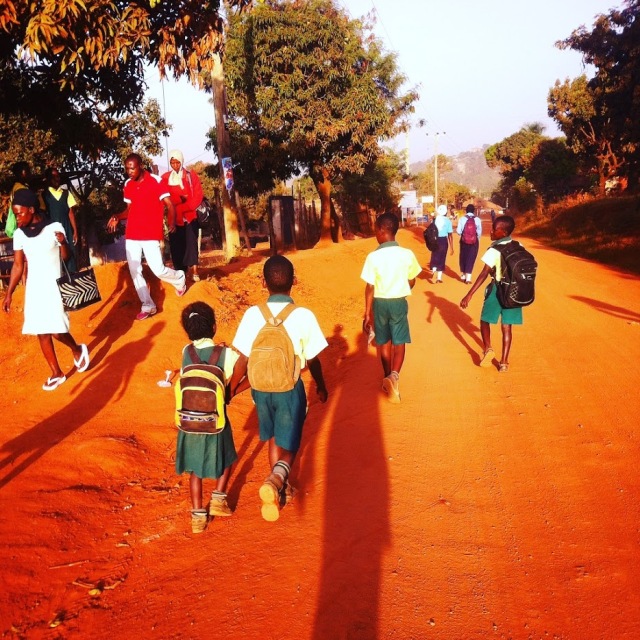
I remember the moment I started really thinking about inequality. I was 22 years old and part way through a year of teaching in Uganda. As cliched as that year has the potential to be (for the privileged expat that I am) and as eye-glazingly pathetic as this anecdote might come across, I’ve thought it through a fair few times over the two decades since, and it was out there, halfway down the main orange dustbowl of a road outside of the room I rented behind a local bar, that things changed for me.

It took only one minute – and it will forever raise the hairs on my arms.

It was Sunday, and I was walking into the local town – Kiboga – with Julius, the headmaster of one of the schools at which I was employed as an English (and football!) teacher.

As was customary, a walk into Kiboga, on any given day, would involve multiple greeting stops, and smiles and gestures to my neighbours. Students on bicycles might swing past me shouting “yes, Master!” or a group of half dressed toddlers would canter several metres towards me from out of their houses yelling “Mazungu! Mazungu! how are you Mazungu?”     Continue reading “A short story of self”

Drawing Down

img_1685
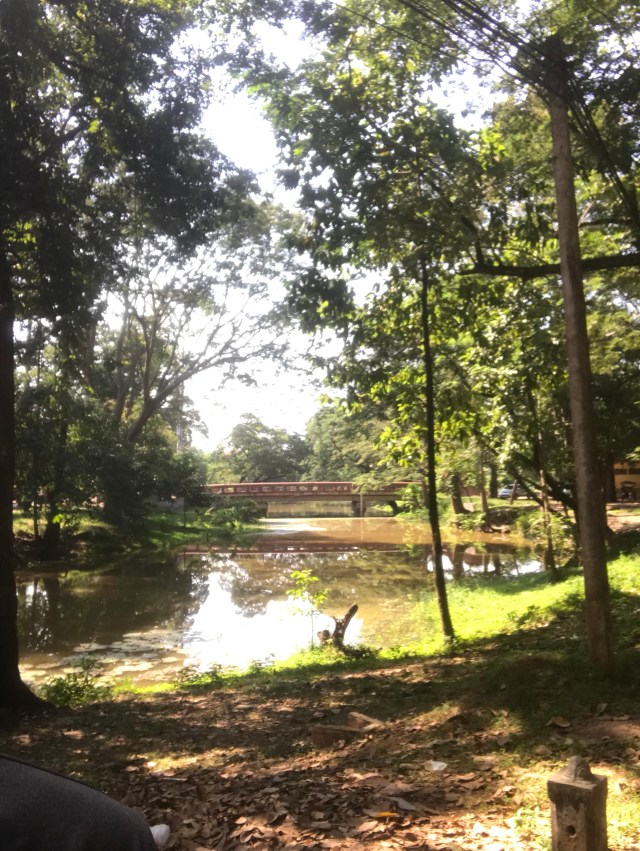
Running in the forests of Siam Reap this weekend

Over the weekend I was in Siam Reap and, for whatever reason, found myself enchanted by the trees and the colours and the red earth. Not in any particular novel way, but in a way that connected to something I may have simply been ignoring for my entire adult life: that simple truth about the fragility of life and changing our own lives whilst we are fortunate enough to be here.

It’s not as if I haven’t been listening to the scientists and the campaigners. Even on these pages I’ve been known to write poetry about nature, have routinely made calls to action on various related themes, and posted pictures of me and my daughter 9 years ago taking part in a climate change march (the same daughter who now, aged 10, just returned from a school camp fully signed up as a pescatarian.)

So, you know, I talk a good game and encourage others to do lots (plus I now have one daughter doing her thing to contribute towards lowering the demand for meat) versus I fly 1,000s of miles every year, like a bit of air conditioning in the Saigon heat and probably, on most other climate friendly criteria, would likely score pretty poorly.

And yet, the science on climate change has been public for years now. As much as a decade ago, I remember seeing a campaign in the UK to highlight the effects of climate change on the poorest communities the world over. The strapline’s call to action being: “turn down the thermostat – it’s getting hot over here.” The accompanying picture was of a pastoralist with his herd of livestock, sweltering in the heat of an African savannah.

Wind forward to the most recent round of climate change headlines (momentarily competing on the front pages with the familiar and depressing daily churn and circus) and the news about our warming planet remains bleak.     Continue reading “Drawing Down”