The Butterfly and the Hurricane

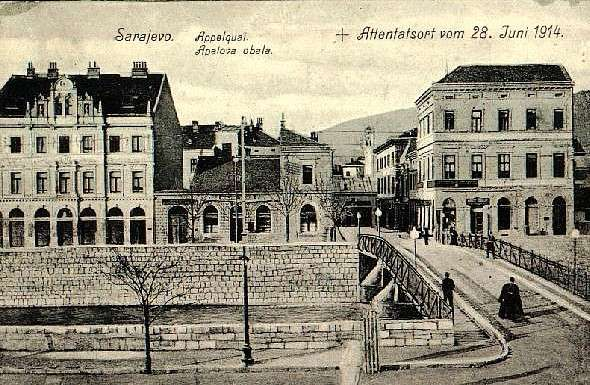
Sketch of the Latin Bridge in Sarajevo

I’ve been listening to The Rest Is History lately and, in particular, snippets from various episodes discussing the First World War.

Aside from the irony that it’s taken me thirty-two years since leaving school – and leaving behind two underwhelming history teachers in my wake – to finally get to grips with how WWI was staged, is not lost on me.

During the late nineties, the first time I encountered Franz Ferdinand was on the dancefloor of nightclubs around Clapham Junction, assuming they were simply a catchy, alliteratively named band who knew how to bang out a chord. I’m now suspecting their infamous chart-topper Take Me Out was penned with tongues firmly in cheeks (by their own admission they chose the name because it sounded like something that could “blow up the world.”)

In any case, there are two takeaways that stuck with me while listening to the podcast.

The first being that, if ever there was a story that presses home the old adage that “the flap of a butterfly’s wings can cause a hurricane,” it is the assassination in Sarajevo of Archduke Franz Ferdinand and his wife, Sophie, Duchess of Hohenberg, on 28 June 1914.

What began as a botched plot – a missed bomb, a wrong turn, a paused car – ended with two gunshots fired almost by accident on a street corner.

As the podcast hosts infer, Ferdinand was not even the most enthusiastic standard-bearer of empire, nor a particularly popular figure at court, yet his death proved enough to unpick a continent. Within weeks, Europe was at war.
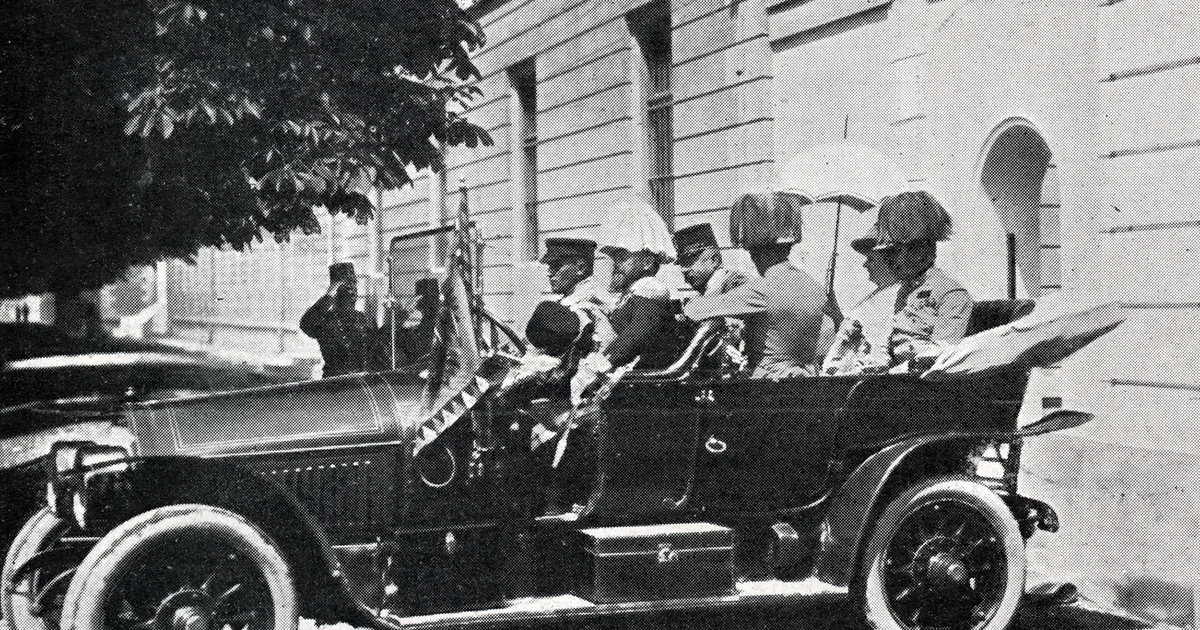
The archduke and duchess in the car, the morning they were killed. Sarajevo, June 28, 1914.

The First World War did not erupt solely because of one man’s death, of course, but without it the fuse might have burned far more slowly – or fizzled out altogether.

Sarajevo (also, up until now, a place about which I had very little intel) was a charged stage for such a moment to play out. It sat at the fault line of empires, religions, and identities. Austria-Hungary controlled Bosnia at the time, a symbol of occupation to many Slavic nationalists. The Archduke’s visit on 28 June was seen by some as provocation, by others as opportunity.

That the world’s twentieth-century catastrophe should hinge on a wrong turn beside the Miljacka River feels bizarre in its randomness.

And yet, listening to the story unravel while weaving through Saigon’s morning markets, it struck me how often history turns not on grand designs, but on small misjudgements and human impatience.

My second takeaway came via Stefan Zweig, also discussed and quoted on the podcast. Writing years later, with what can only be described as bitter clarity, Zweig reflected on how war momentarily dissolves the smallness of individual lives. He described people being “drawn into world history,” purified, if only briefly, “of all selfishness” – their private anxieties submerged beneath a sense of collective fate and shared urgency.

That sentiment stayed with me, perhaps because it is both unsettling and persuasive.
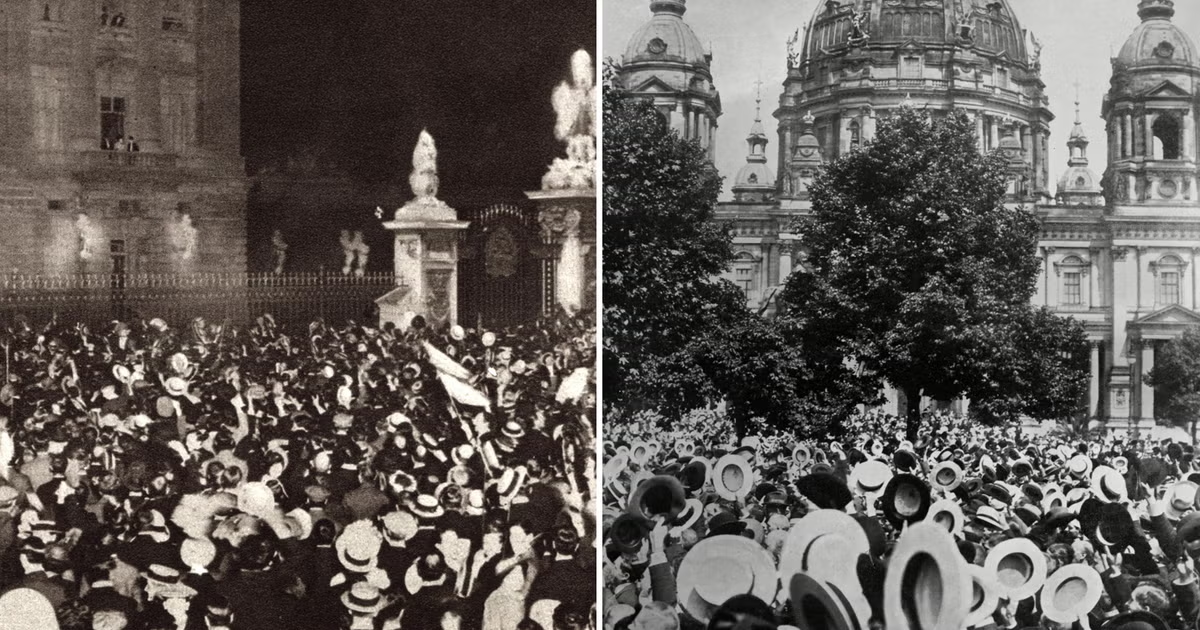
Crowds outside Buckingham Palace and Berlin Cathedral in August 1914 as war was declared.

I’ve read before about the apparent inevitability of conflict and, awful as it is, history suggests it has been one of the few forces powerful enough to collapse social divisions and align purpose. In doing so, it can be a reminder for people that they belong to something larger than themselves.

As conflicts around the world continue to grind on today, it seems we’re still not ready to invest in ways of creating that same level of solidarity – one I suspect most people would willingly sign up to – without first tearing something, or someone else, apart.

I finished the episode, and stepped back out of the Saigon heat, and I felt that thing (that I suspect I was supposed to feel back in the classroom when I wasn’t paying attention to my history teacher) where it’s so damn obvious that history is not some distant, sepia-toned abstraction, but something that unfolds in ordinary places, on ordinary mornings, through choices that feel inconsequential but which prove to be quite the opposite.

For a while now, commentators have been writing about history repeating itself. That is a chilling prospect, made more so by the idea that it so often feels familiar while it’s happening.

The hurricane always needs its butterfly. The unanswered question is whether we’ll ever learn to flap our wings more deliberately.

Post-Card from Sri Lanka | Lessons in facilitation

It was approaching midnight at the end Independence Day in Sri Lanka, earlier this week, and Issy and me were at Colombo airport watching the stream of incoming passengers make their way to immigration as we, in turn, waited for our departure back to Saigon.

As usual, our last twelve days gallivanting from Kandy to Colombo, and then down to Galle, were a time-warp of sorts.

Soon enough we were airborne and, as our plane arched it’s wings back over the island palms, the truth was, we weren’t really ready to leave…

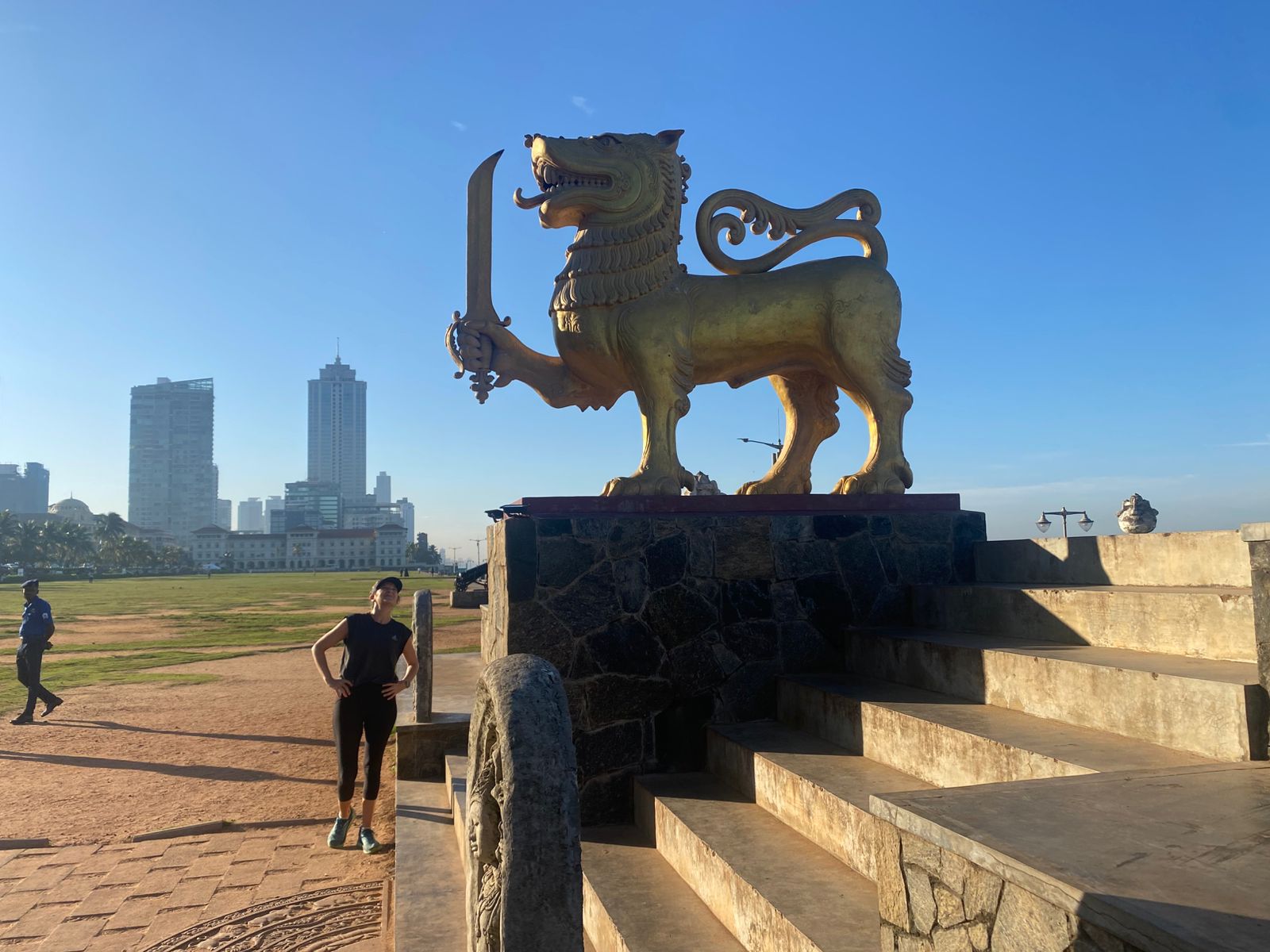
Galle itself is having quite the time of it at the moment.

Today, the 12th Galle Literary Festival kicked off, for one thing. And then there’s the Australia cricket team, who embarked on their second test match today, just down the road from Galle Fort.

The “Lit Fest” goers were easy enough to spot on Tuesday at the airport – silver surfers, in zip-off khaki trousers, alongside a myriad of middle-aged flowing pony-tails and pastel block-printed shirts. The visiting Aussie cricket fans meanwhile wore their gold and green livery tops, beaming at the prospect of the days to come.

Sri Lanka is a special place for us. As well as bringing my parents and daughters here for my 40th, and marrying Issy in Galle in 2020, I first visited back in 2010, not long after the official end to the civil war. I was then lucky enough, through my work with CARE, to return time and again.

I’ve written plenty about the country (https://saigonsays.com/?s=sri+lanka + https://definitelymaybe.me/?s=sri+lanka) and I hope to always retain a connection with Sri Lanka. Perhaps even one day staying for longer than a fortnight.

On this occasion, in between the calm and serenity of either being up-country surrounded by highlands, or nestled by the ocean sipping a drink, I learnt a few valuable lessons connected to my work as a facilitator:

Lesson #1: Trust the Process.

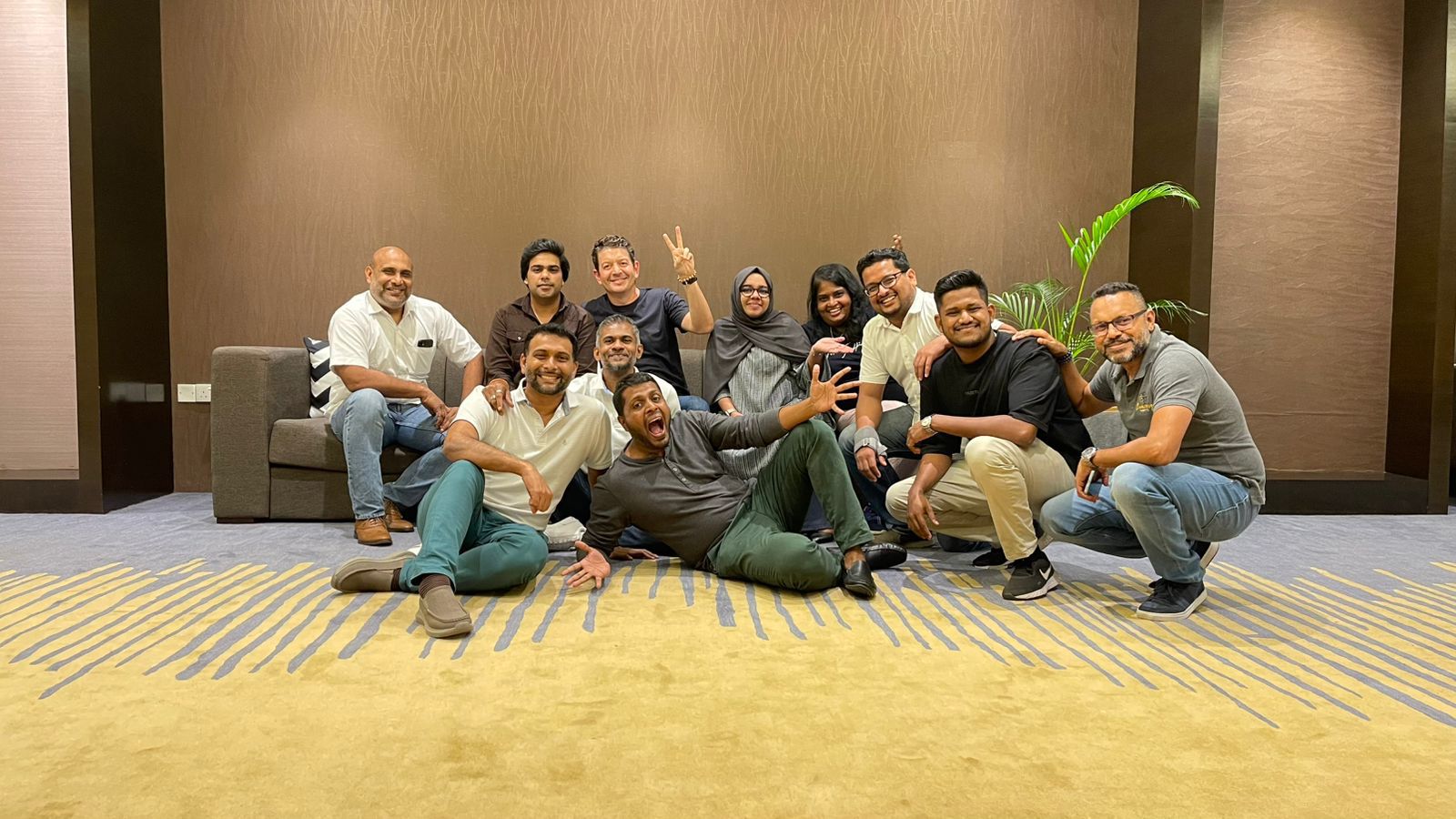
Whilst in Colombo, I supported a team from Luminary Solutions, a provider of training, consultancy and other services to the private sector, and currently charting an exciting new chapter in their company’s growth.

With all the digital tools we have today at our fingertips, I think it was the “in-person” time that the team and I spent over two days together that seemed to provide the right platform from which to align ideas, and build a set of actions and responsibilities.

‘In-person time’. Even the phrase sounds clunky these days.

Twenty five years ago I don’t recall using the phrase, no doubt because any time spent with other people was indeed spent in-person. It’s, perhaps, a daft sentimental point to make, but most of what was required with the team from Luminary last week, was helping create the rapport and the right enabling conditions from which to ideate.

We had fun together. We got to know one another. We listened to each other. The team had a shared purpose and took responsibility for future actions.

It sounds simple, and it was. In large part this was down to the readiness of the team for a change. It’s obviously a tougher challenge to find that groove with a team if their readiness isn’t there, but even without it, our sessions helped reinforce to me to “trust the process” – particularly when it comes to finding a group rapport first, and then worrying about the content and the ‘how’ part second.

With that in mind, we used the phrase of making “the first pancake” – the idea that, sometimes, you just need to get cooking, and see what you can produce. We all, intuitively, have a notion about how to make a pancake (what goes in it, how to heat the pan) even if the first one that we try to fold onto the plate often ends up in the bin.

So. Trust the process. And get cooking that first pancake.

Lesson #2: Storytelling Works.

I had the pleasure of meeting a new jumble of strangers on this trip, and spent time listening to their stories. Storytelling, it seems to me, can be a sacred past-time and offers a rich seam of connection to bind people together.

Last Sunday, as I alluded to earlier in the week, Issy and me were sat at midday, waiting to check in to our room on Dewatta Beach, a few clicks down the coast from Galle Fort. And then in walks Geoffrey Dobbs.

Geoffrey used to own the two houses in Galle that Issy and I married in, a little over five years ago now. https://saigonsays.com/2020/04/23/a-wedding-in-galle-part-1/

Arm and arm with the owner of ‘Stick No Bills’ (Liam, a long-term Sri Lankan resident, originally from Haversham in Kent) and, with some gentle assistance, Geoffrey plonked himself next to us, at our wooden picnic table.

A bottle of Prosecco emerged, and we were soon chasing this down with a flurry of beers, and eventually a rogue Bloody Mary, provided by one of the owners, known to Geoffrey and his pals as “Calamity John” – given the whirlwind of hopelessness that seemed to follow him around.

After five hours, and at least three rounds of “this is the last drink, and then we’re off”, we were left to check into our room while Liam organized a tuk to take Geoffrey further down the Galle Road, and onto his next social appointment.

Geoffrey arrived in Sri Lanka not long after leaving Hong Kong, just after the 1997 handover. He’s been a native to Sri Lanka since, and is credited with founding the very Literary Festival that is unfolding as I type this.

He has led quite the colourful life. A vivacious raconteur and socialite. A heavy drinker. I heard him referred to as “king” of the island by another long term expat the very next day. Whilst on Sunday he was a slowed down version of the host we met in 2020 on our big day, he remains a fascinating person to suddenly find sat next to you on a Sunday afternoon by the beach.

He only managed to spill one full glass of wine over me, and briefly flared up at the mention of a few bygone characters, but otherwise he listened to our stories, he cracked jokes, and he clearly has accumulated a group of friends who have his back, for the time he still has left.

Liam, in particular, merrily drew from a quarter of a century’s worth of anecdotes and banter shared with his friend, and we were laughing out loud at some of the memorable moments he described to us.

Much as with friends I have of similar vintage, these core connections run so deep that, all you ever need to do, is sit down next to one another and let the stories flow.

That afternoon with Liam and Geoffrey (and in end a third long-term islander with a thick London accent, and who we named ‘Avo Adam’ – I cannot remember why) we were in a happy bubble, allowed access to the realities of these strangers, to their reflections, to their learnings, as well as to some of the chaos of their past and present lives.

Stories and story-telling are powerful connectors.

Tomorrow, with Geoffrey no doubt centre stage somewhere at the Lit Fest, a fellow member of the Chrysalis Board, Vidusha Nathavitharana, and the Founder of Luminary, who brought me over for the work with his team, will also be speaking about leadership and the books he’s written on the topic (see link below).

I’ve no doubt that Vidusha will also use stories to get his ideas across, and to connect with his audience.

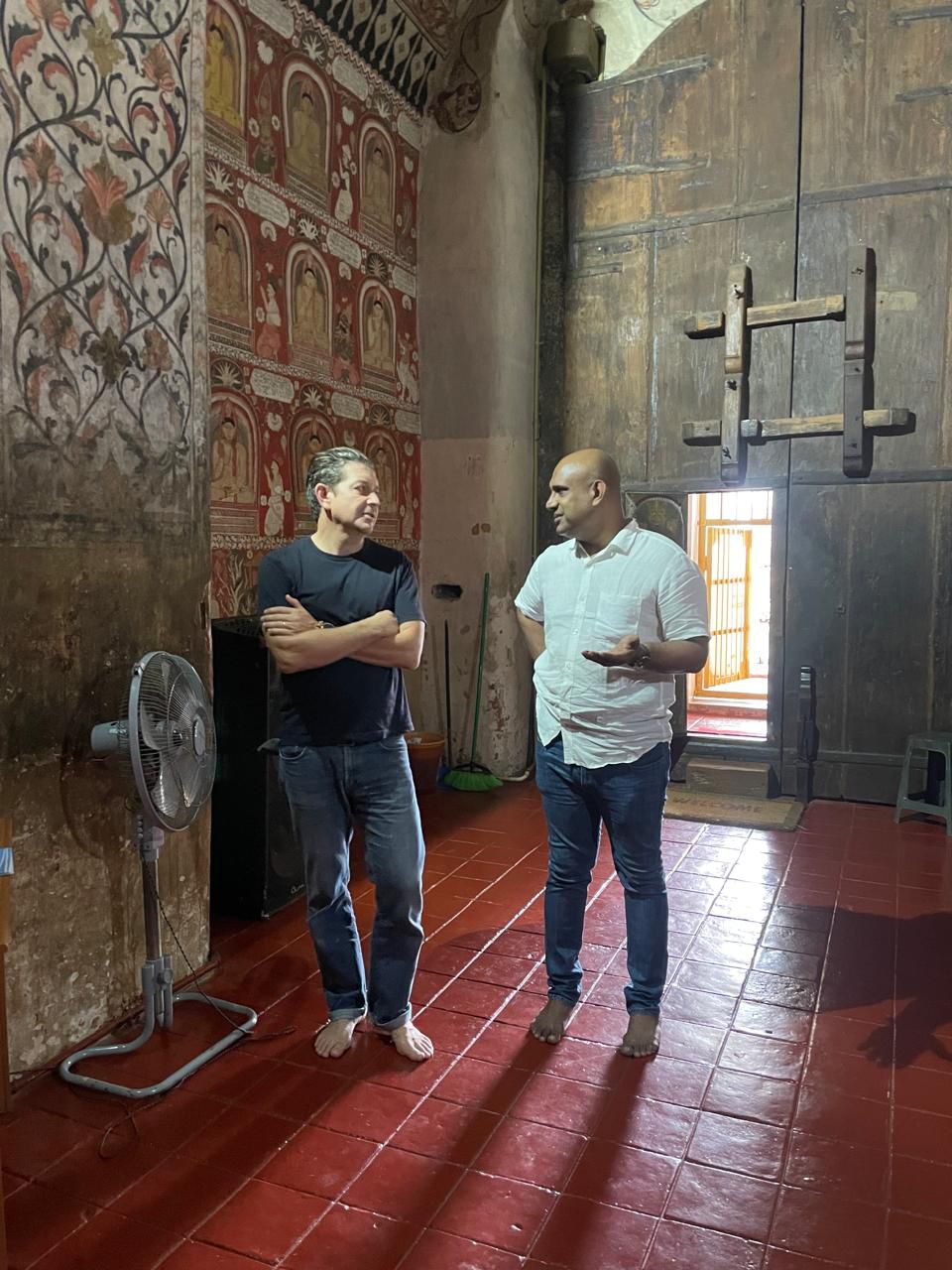
I know this too well, as our first night in Sri Lanka on this trip was spent at his house, some miles up into the forests of Kandy. A stunning space that he and his wife, Rowena built, and which set us up, from the very moment we stepped off the plane, on the right footing and into a world of new stories and insights.

If you’re in Galle this weekend, go see him and have a listen yourself – I assure you you’ll not regret it!

https://www.linkedin.com/embed/feed/update/urn:li:share:7293106083777191936