Too Distracted Scrolling to Notice We’re Sinking

In 2025, the world feels perpetually distracted. Elections, wars, AI, celebrity scandals — global attention ricochets between urgency and noise. Today it’s one crisis, tomorrow another. And we all scroll on.

And yet, a slower, more existential threat escalates beneath it all: climate change.

Especially in Southeast Asia, the impacts are already reshaping daily life. I’m guilty of tuning out, and I know many others do the same head-in-the-sand routine when they skim stories about rising temperatures or shrinking icebergs.

If climate change is so serious then why aren’t we acting like it is?

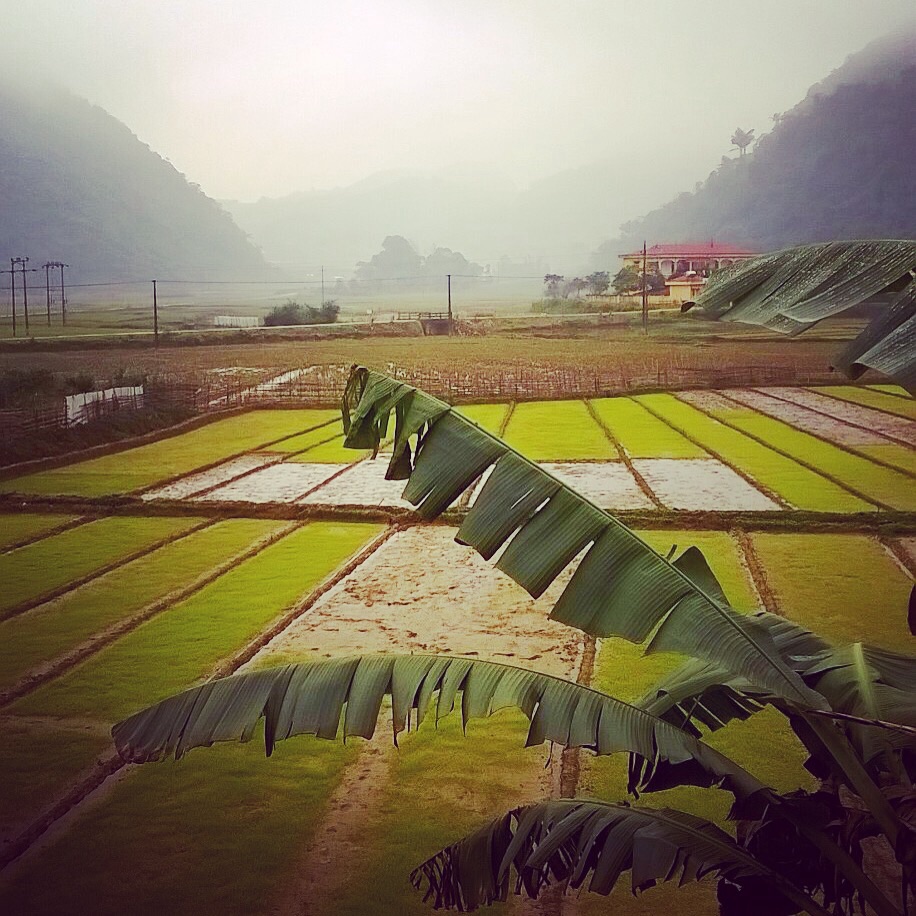
Southeast Asia is on the frontlines of climate risk. Jakarta is sinking by as much as 17 centimetres a year, one of the fastest rates in the world. In Vietnam, over 50% of the Mekong Delta’s land area is projected to face saltwater intrusion by 2050, threatening not just agriculture, but the food security of tens of millions.

Saline intrusion is already choking rice production in the Delta, while intensifying heatwaves and droughts disrupt water supplies. When these come, droughts disrupt water supplies, and you don’t have to be studying GCSE geography like my daughter (who knows more about this than I) to appreciate what then transpires from a biodiversity perspective: that everything is gradually disappearing.

The IPCC (our collective authority on the matter) warns the window to avoid catastrophic change is ‘brief and rapidly closing.’ That’s not hyperbole — it’s scientific consensus. And, still, climate continues to feel like a background hum, rather than breaking news.

The private sector must play a more central role to Southeast Asia’s adaptation and resilience efforts. Governments alone can’t foot the bill or engineer every innovation. Yet, despite growing interest in green investments and carbon markets, engagement remains patchy.

Vietnam’s 2025 Carbon Market Forum and the P4G Summit were welcome steps. These meetings offered the usual fare: policy frameworks, optimistic keynotes, and lots of “roadmaps.” But translating these into real action remains a challenge.

I’ve worked for a long time promoting sustainability and, in particular, getting business to the table however, let’s be honest, when it comes to climate change, aside from a few regional giants and climate-conscious smaller businesses, most private sector entities are still unsure what climate action means for them, or how to act without sacrificing profitability.
So, I think my call to action on this would, ideally, be quite broad (the ownership of the issue should be everyone’s) however it is here is where I think international NGOs (like my former employer CARE) should step in — not as saviours, but as agencies that can help shape the systems that exist within the private sector, and which relate to climate change.

CARE doesn’t treat women’s empowerment and climate action as separate goals. Instead, they have developed programmes that integrate them through market-based, locally led interventions, tackling environmental threats and economic inequality at once.

In Vietnam, for example, HerGreenVenture supports women-led enterprises with training and green finance to adopt low-emission farming and scale sustainable technologies. In Cambodia, CARE also runs community recycling programmes that help women turn waste into income and reduce landfill pollution. And in Thailand, CARE’s eco-tourism projects led by women are creating jobs while preserving forests and coastlines.

What links these diverse initiatives is a belief that resilience is built from the bottom up.

CARE’s core strategy is clear: gender equality isn’t a side note, it’s central. Women, particularly in rural and informal economies, often bear the worst climate shocks while themselves holding the keys to adaptation. Give them access to green finance, leadership roles, and supply chains, and resilience becomes lasting.

We’ve been warned for years, but action has lagged far behind awareness. Climate experts might point to progress — but, from where I sit, I don’t see enough.

If you’re a business leader, why not starting by asking: how is your company contributing to climate adaptation today? Not just ESG compliance, but to real-world impact.

If you’re in government, how about checking the extent to which you are creating the right conditions for innovation, for inclusion, and ultimately for scale?

And, if you’re an INGO or donor, let’s have more discussion about whether you are building systems or simply just running programmes?

We may live in distracted times. I find myself fighting this day-on-day myself. But, distraction doesn’t make the climate crisis less real — if anything it just makes it less seen.

The question is no longer if it’s serious. It’s whether we’ll start acting like it.

“Scale, impact and partnerships” – seeing through the buzz factor

conference
Cartoon credit – http://www.stillwaterhistorians.com

I’m back on the regional conference circuit at the moment, and it’s awash with talk about “scale” and “impact”.

Sound-bite central, indeed, with events I’ve attended recently also still obsessing with how to achieve scale and impact by working in “partnerships”. As suggested in my last post we need to look beyond semantics in the sustainability arena, and instead get real about what some of these terms actually mean as, all too often, our preoccupation with the vernacular distracts us from action.

The UN’s new Sustainable Development Goals (SDGs) have included “global partnerships” as their 17th Goal. The proof of authenticity around what the UN thinks can be achieved with this Goal will be revealed over time. However, right now, it seems to me that if you are not talking about “scaling your programmes”, or “measuring the impact” of your efforts (in terms of playing a positive role in society) then you are not “on message” – and that, for many, is a public relations cardinal sin.      Continue reading ““Scale, impact and partnerships” – seeing through the buzz factor”

Linguistic spaghetti

imageAs someone who has clocked up seven years working in the “aid industry,” I am full to the brim with jargon that I continue to fear means nowt (this is Yorkshire jargon for ‘nothing’ – ‘nil’ – ‘zilch’ – ‘sweet FA’) to anyone not in the know.

For much of the time anyway, those of us in the know, aren’t.

Sure, every business sector has its own nuanced vernacular, too.  The “triple bottom line”.  A “bear” market.  Acronyms galore, whether you are a Wall Street trader, a civil servant, or a quantity surveyor (whatever it is that they do again.)  We all wallow in our respective, tribal refrains.

I have given my best shot over the years to understand what half my mates back in London do working in “the city”.  From memory there are definitely lots of ‘fund management’ types in there.  Maybe some stuff linked to Risk as well.  I keep trying anyway, politely asking fact seeking questions and crossing my fingers that I can remember what it is Ernst and Young do.  I know they are called “E&Y”.  This much I am certain.

And, yes, their eyes glaze over when I talk about sustainable development (in fact I don’t even tend to use these two words given, as continues to be broadcast on development sites these days, it is quite clear no one really knows what sustainable development actually means.)

Let’s assume that these semantic idiosyncrasies are set to stay.  I see no practical reason to deny them to any business, sector, industry, rugby team, local community, or even any NGO, such as CARE.  Just to clarify: an NGO is a Non-Governmental Organisation, although speaking as a CARE employee I can confirm we have also been described as a humanitarian organization, an international development organization, a non-profit, a not-for-profit, a charity, a social development organization…you see where I’m going with this…

So, the Secretary General of the United Nations, Mr Ban Ki-Moon, makes the Guardian development pages at the moment http://www.theguardian.com/global-development/2013/aug/16/ban-ki-moon-development-aid-decline promoting the case for increased ODA (Overseas Development Assistance.)

“Well, he would do that, wouldn’t he?” might be a valid retort to such a promotion…

However, in doing so, he lays out the cornerstone themes that will underpin successful (and sustainable) development for the world – “decent employment, inclusive growth, good wages” – each to be supported by “renewed global partnerships, grounded on the values of equity, solidarity and human rights.”

As someone promoting the role of business in the international development agenda, its encouraging to note the intrinsic links made between what the Sec Gen is proposing, and the helpful way in which a vast chunk of these are reliant on responsible business development – which makes me feel good that CARE is so focused on leveraging business.

However, the main voice in my head just wonders what a fund manager, a risk analyst, a teacher, a tinker, tailor, soldier, spy (you see where I’m going with this…) would make of such statements?

How can we break down some of the silos here?  And then, how to prioritise, in round terms, what comes first?  Where should all this ODA money go and how should it be spent for maximum impact?  Is it good enough to just create jobs, without addressing the ethnic diversity and conflict rife in a particular place?  Do we need: more schools; better trained teachers; more accessible medical services; more women “leaders”; better water and sanitation in urban slums; better mobile coverage in rural areas; environmentally friendly products?

Well, we need all these things.  Easy answer.  And “development” has come a long way in a short (ish) time period, and helped us understand the natural connections between the list above.  The need for a more holistic approach to tackle big problems.

So, to be clear, this is not a “does Aid work?” post.

But, if our baby steps over the past 60+ years have walked us down the front drive, then we still have a long way (at least to the service station on the corner, several blocks away) before equilibrium is reached – across all things.  And I think it is a level playing field concept I most warm to, as I continue to describe and (try to) articulate some of these themes and considerations.

It has to be about equity, and better access.  Access to money, to a livelihood.  Access to information, access to a voice in society that can be heard, and to which there will be a response.  All of such things help society push for accountable and compliant government, business, and the rest.  It is about closing the gap, between rich and poor, male and female – and so on – but also between each other.  Individuals.

And it starts with communication.  Finding the best way to communicate, and the better words to touch someone else’s thoughts and feelings and actions.

Equity, access, but also – intuitively and refreshingly – it has to be about love, tolerance, and understanding.  Whilst we might never become brilliant piano players, sporting greats, or Nobel Peace candidates, every one of us has each of these three characteristics sat waiting to be set free.

If you have found this site via Freshly Pressed, then thanks so much for making it this far down my musings on ‘jargon’ – for anyone interested in what life is like living in Saigon, Vietnam, and traveling around this wonderful region of the world, then check out my other blog www.saigonsays.wordpress.com and, in the meantime, good luck to all the fantastic writers out there.  It was great to connect with you.