Turn Debt into Hope

https://walletgenius.com/loans/why-debt-relief-plans-might-be-better-than-debt-consolidation/

Do you remember much about what you were doing twenty five years ago? Maybe you can recall how you spent that final New Year’s Eve of the 20th century?

Fun fact, that specific NYE, with only an hour left until midnight, I found myself responsible for introducing an old school friend to the woman who turned out to become the love of his life.

Anyway, while some of us were downing drinks and match-making at a bar in South West London, others were galvanizing global attention about world debt, and its impacts on least developed nations. The Jubilee 2000 movement led that charge at the time, their efforts leading to the cancellation of over $130 billion in debt for 36 countries.

A monumental effort which enabled nations to redirect funds toward critical sectors like health and education, offering millions a pathway out of poverty. But, fast forward to 2025, and the call for debt justice still resonates, only things have got worse.

I’ve been working recently with Caritas International, and have come to know about the launch of their “Turn Debt into Hope” campaign, urging the cancellation of unjust and unsustainable debts that, to quote from their website, “hinder nations from investing in their futures.”

From some quick research it seems that, back in 2000, the total external debt for the world’s Least Developed Countries (LDCs) was approximately $150.4 billion. External debt today, for the 31 poorest, high-risk countries, has now topped $200 billion. We’re seeing the highest burden of debt in 30 years.

​This increase means that even more substantial chunks of money from the world’s poorest governments are being diverted away from public sector needs and, instead, allocated to repaying these debts.

When you then consider other ‘crises’ that encroach upon a country’s economy – be it the slow onset ramifications of conflict, or the rapid emergency of an earthquake (much like the one Myanmar experienced a week ago) – it becomes impossible to see how these debts will ever be repaid.

In the aftermath of a crisis, economies dive, job losses occur, inflation prices scupper spending, and a whole myriad of other economic outcomes conspire to spiral a country out of all control.

Waking up this morning to the news of Donald Trump’s sweeping tariffs (which includes a 10% baseline on all imports, and higher rates on key trading partners such as China (34%), the EU (20%) and a whopping 46% here in Vietnam) it is obvious these escalating trade tensions will only lead to market volatility, to fears of a global economic slowdown, and the inevitably unequal impacts of that on so many of the world’s developing countries.

It’s a brutal, cruel economic conundrum, because it is the most vulnerable communities who face the highest threats.

As I’ve been prone to highlight here many times before now, I believe the role of the private sector to be key in these debates. And yet, too often, these conversations happen without the private sector in the room.

That needs to change. Companies are increasingly recognizing that their long-term success is intertwined with the well-being of the communities in which they operate. Engaging with initiatives that promote economic justice, such as “Turn Debt into Hope”, aligns with corporate commitments to Diversity, Equity, and Inclusion (DEI).

By advocating for, and participating in, debt cancellation measures, businesses can play a role in contributing to the creation of more stable and equitable global markets. All of which, ultimately, benefits everyone.

Twenty five years ago, the Millennium Development Goals (MDGs) set out a charter, with a fifteen year timeframe. The MDGs sewed into their narrative this inference about partnership and the role of the private sector, however it’s been a slow process to bring business to the table.

Genuine collaboration takes time, and today we need to keep banging this same drum, hoist up this same flag, and loudly promote why multi-stakeholder collaboration, that includes business, can be instrumental in addressing both immediate financial injustices, while also laying the groundwork for sustainable development.​

The principles that the 2000 Jubilee Campaign champion are more pertinent than ever. We’re experiencing an era marked by economic uncertainty, by geopolitical tensions, and by ongoing climate crises. Debt cancellation is a crucial lever for promoting stability and prosperity, and we cannot wait another quarter of a decade for action in this space.

The children of my old school friend, who met his future wife on New Year’s Eve in 2000, are already in their twenties. Theirs is the generation now grappling with the implications of a world that procrastinated over its responsibilities.

Do please consider donating to any of the organisations currently providing humanitarian assistance to communities in Myanmar affected by the earthquake – here is one.
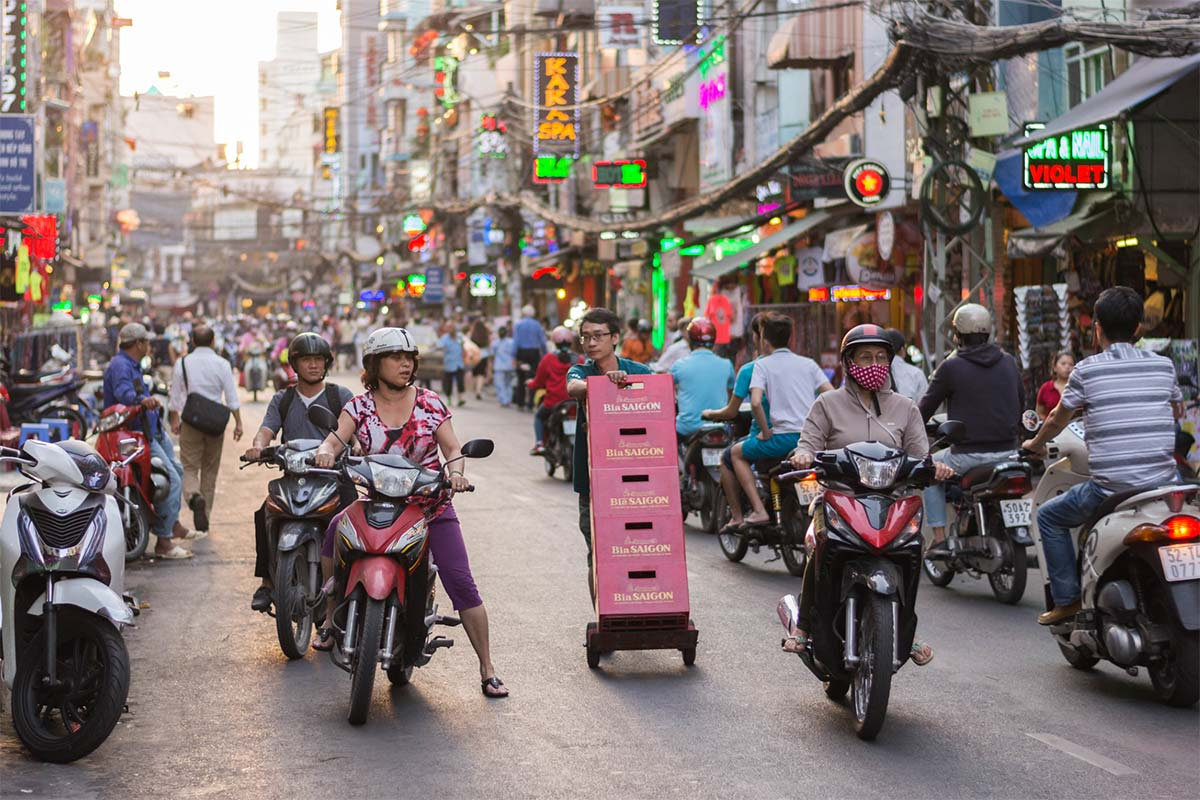
Private Sector Engagement in Southeast Asia: The Moment for Bold Action

For fourteen years, as long as I’ve lived in Saigon, I’ve been blogging about ‘Private Sector Engagement’ – its evolution, its setbacks, and its vast potential to drive social and economic change. Time and again, I’ve emphasized one thing: alliances with business are not just beneficial, they are essential.

Yet, at a time when global companies are facing political pressure to roll back Diversity, Equity, and Inclusion (DEI) programs, there’s a real risk that corporate commitments to broader social impact (including sustainability, worker rights, and responsible business practices) could be deprioritized or abandoned altogether.

With government funding for aid shrinking fast, the question is no longer whether the private sector should play a role in sustainable development – but how fast we can make that happen? Companies must resist the temptation to step away from ESG (Environmental, Social and Governance) commitments, or drop impact-driven business models. Instead, they must double down on sustainable, long-term strategies that create both profit and positive change.

Rather than dwelling on the alarming consequences of these funding cuts (which many commentators are documenting well), I want to underscore why this moment demands a shift.

From my work in sustainability consulting, business partnerships, and initiatives with CARE, I’ve identified the following key trends shaping this transformation.

The Rise of Impact-Driven Partnerships

Corporate Social Responsibility (CSR) in Southeast Asia has long been philanthropy-driven, with companies donating to social causes without embedding impact into their core business. That’s shifting.

While there’s still a place for sponsorships, more businesses now see the value in long-term, strategic partnerships with NGOs and social enterprises. CARE has always been my “go-to” on this, for examples of the innovations used to secure “win-win” partnerships with corporations – I’ve listed their collaborations over the years with the likes of Barclays, Allianz and GSK as just a few examples.

In Southeast Asia, many other organisations have worked collaboratively with companies. World Vision & Procter & Gamble in the Philippines, for example, ran a Hope in Garbage project, which collected 3.2 million plastic sachets and 870,000 plastic bottles, upcycling them into 1,040 chairs for schools – a great model for sustainability and education impact.

Here in Vietnam, The East Meets West Foundation, also known as ‘Thrive Networks’, partnered with GE Healthcare to enhance healthcare infrastructure leading to the development of medical institutions, and the provision of custom-designed equipment to hospitals, aimed at improving neonatal care and reducing infant mortality rates. ​

Even in industries like apparel, where brands once relied on short-term worker welfare programs, we now see the co-development of ethical supply chains with sustainability organizations. CARE and the ILO’s early 2000s work laid a lot of the foundations for this, and entities now, such as RISE, are pushing ethical supply chain development even further as result.

Where to from here? To me, the answer is clear. Organizations – NGOs, especially – engaging with the private sector need to move beyond sponsorship requests and, instead, position themselves as strategic partners that bring business value, through such things as innovation, market access, or risk mitigation.

The Shift from Compliance to ESG-Driven Business Models

ESG factors are becoming a competitive advantage, rather than a regulatory burden. Investors, consumers, and governments are increasingly pressuring businesses to embed sustainability into their operations. The result of which is that large corporations are developing ESG frameworks, not just to comply with regulations, but to attract investors and gain consumer trust.

And with this trend, we are seeing multinationals now pushing sustainability requirements down their supply chains, impacting SMEs and local businesses.

Governments in our region are also starting to integrate ESG into investment policies and corporate reporting frameworks. Both Vietnam and Indonesia, for example, highlight ESG in financial reporting, investment strategies, and regulatory frameworks.

Vietnam even has a “report or explain” framework and Corporate Governance Code which both promote transparency, while Indonesia’s OJK Regulation No. 51/2017 mandates ESG disclosure for listed companies.

As ESG gains traction, the non-profit world can play a more prominent role in ensuring businesses go beyond compliance to create real social and environmental impact. NGOs can add value by training smaller companies on ESG compliance, reporting, and sustainable business models, and also facilitating partnerships that ensure corporate ESG aligns with local needs. There is also room for NGOs to play a role in accountability, monitoring ESG commitments, preventing greenwashing, and pushing for stronger corporate governance.

The Growth of Market-Based Solutions & Inclusive Business Models

Lastly, one of the most exciting trends I think Southeast Asia is experiencing, is the rise of businesses integrating social impact into their core revenue models. Rather than treating sustainability as a cost center, companies are developing commercially viable solutions that also drive impact.

As such “circular economy” models are emerging, particularly in sectors like textiles, packaging, and agriculture. Whilst social enterprises are scaling through corporate partnerships, blending business growth with community impact.

I saw this firsthand as early as 2007, when I worked on CARE’s rural sales initiative in Bangladesh – a project that later spun off as JITA, itself a stand-alone social enterprise in 2012. Since then, the region has only expanded its approach, with more companies exploring inclusive business models that drive both profit and impact.

These ventures, requiring businesses to engage with underserved communities, need cross-sector expertise, opening up opportunities for collaboration between the private sector, NGOs, and impact investors. Organizations that can align their business goals with market-based impact solutions will, in my opinion, have a stronger case for funding and growth partnerships.

Where to Next?

Private sector engagement in Southeast Asia is no longer an option in my view – it’s a necessity. With aid funding brutally slashed, ESG becoming mainstream, and political pressure mounting against corporate social commitments, businesses and impact organizations must collaborate in smarter, more strategic ways.

In the face of backlash against DEI, we must recognize that ESG, sustainability, and inclusive business aren’t just about good optics – they are about long-term business resilience, risk management, and innovation.

Businesses should move beyond compliance and integrate ESG and impact into their core strategy, rather than retreating from it. Whilst NGOs must stop just chasing sponsorships and become strategic partners that offer value.

The opportunity is there for the taking. The question is: who’s ready to lead, and who will fall behind?