I’ve been listening to The Rest Is History lately and, in particular, snippets from various episodes discussing the First World War.
Aside from the irony that it’s taken me thirty-two years since leaving school – and leaving behind two underwhelming history teachers in my wake – to finally get to grips with how WWI was staged, is not lost on me.
During the late nineties, the first time I encountered Franz Ferdinand was on the dancefloor of nightclubs around Clapham Junction, assuming they were simply a catchy, alliteratively named band who knew how to bang out a chord. I’m now suspecting their infamous chart-topper Take Me Out was penned with tongues firmly in cheeks (by their own admission they chose the name because it sounded like something that could “blow up the world.”)
In any case, there are two takeaways that stuck with me while listening to the podcast.
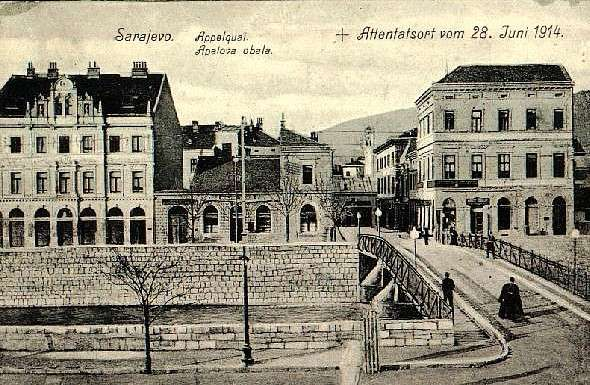
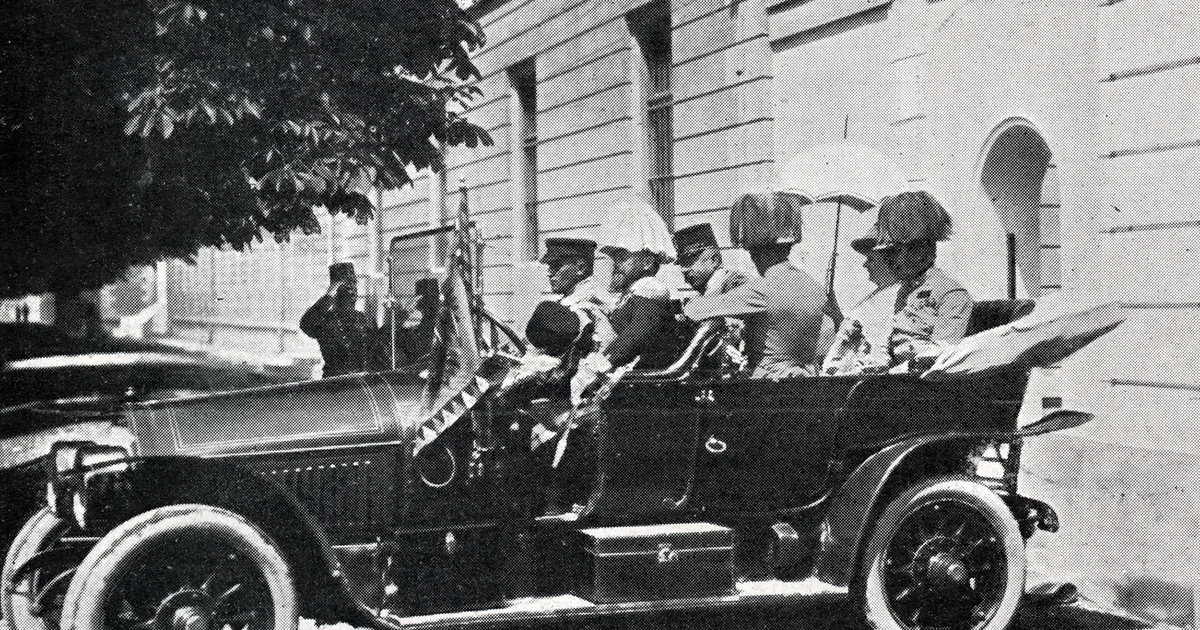
The first being that, if ever there was a story that presses home the old adage that “the flap of a butterfly’s wings can cause a hurricane,” it is the assassination in Sarajevo of Archduke Franz Ferdinand and his wife, Sophie, Duchess of Hohenberg, on 28 June 1914.
What began as a botched plot – a missed bomb, a wrong turn, a paused car – ended with two gunshots fired almost by accident on a street corner.
As the podcast hosts infer, Ferdinand was not even the most enthusiastic standard-bearer of empire, nor a particularly popular figure at court, yet his death proved enough to unpick a continent. Within weeks, Europe was at war.
The First World War did not erupt solely because of one man’s death, of course, but without it the fuse might have burned far more slowly – or fizzled out altogether.
Sarajevo (also, up until now, a place about which I had very little intel) was a charged stage for such a moment to play out. It sat at the fault line of empires, religions, and identities. Austria-Hungary controlled Bosnia at the time, a symbol of occupation to many Slavic nationalists. The Archduke’s visit on 28 June was seen by some as provocation, by others as opportunity.
That the world’s twentieth-century catastrophe should hinge on a wrong turn beside the Miljacka River feels bizarre in its randomness.
And yet, listening to the story unravel while weaving through Saigon’s morning markets, it struck me how often history turns not on grand designs, but on small misjudgements and human impatience.
My second takeaway came via Stefan Zweig, also discussed and quoted on the podcast. Writing years later, with what can only be described as bitter clarity, Zweig reflected on how war momentarily dissolves the smallness of individual lives. He described people being “drawn into world history,” purified, if only briefly, “of all selfishness” – their private anxieties submerged beneath a sense of collective fate and shared urgency.
That sentiment stayed with me, perhaps because it is both unsettling and persuasive.
I’ve read before about the apparent inevitability of conflict and, awful as it is, history suggests it has been one of the few forces powerful enough to collapse social divisions and align purpose. In doing so, it can be a reminder for people that they belong to something larger than themselves.
As conflicts around the world continue to grind on today, it seems we’re still not ready to invest in ways of creating that same level of solidarity – one I suspect most people would willingly sign up to – without first tearing something, or someone else, apart.
I finished the episode, and stepped back out of the Saigon heat, and I felt that thing (that I suspect I was supposed to feel back in the classroom when I wasn’t paying attention to my history teacher) where it’s so damn obvious that history is not some distant, sepia-toned abstraction, but something that unfolds in ordinary places, on ordinary mornings, through choices that feel inconsequential but which prove to be quite the opposite.
For a while now, commentators have been writing about history repeating itself. That is a chilling prospect, made more so by the idea that it so often feels familiar while it’s happening.
The hurricane always needs its butterfly. The unanswered question is whether we’ll ever learn to flap our wings more deliberately.
Those of you familiar with my writing will know I love the chance to hat-tip an anniversary.
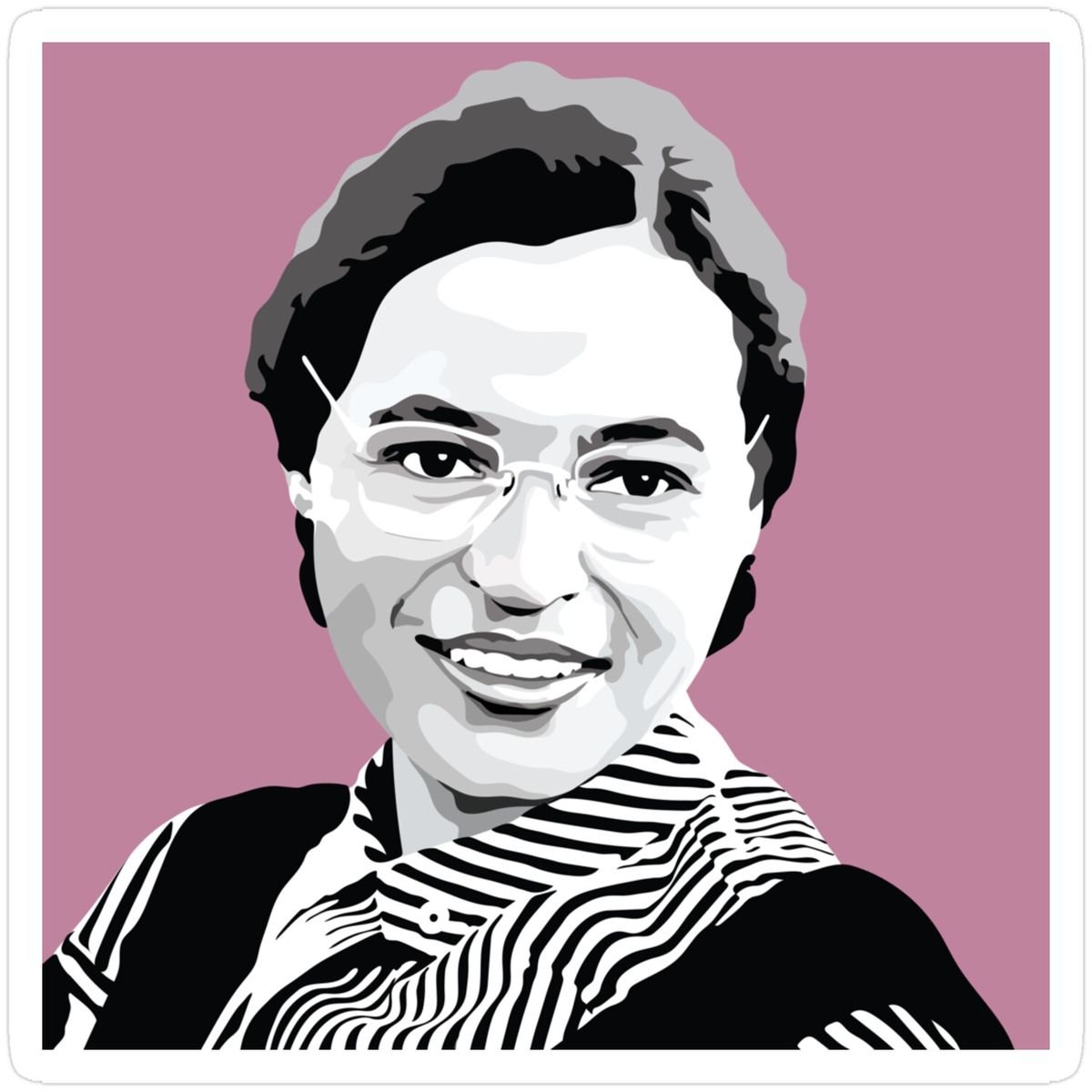
As well as today being the first day of the last month of the year, it is also 70 years to the day since Rosa Parks refused to give up her seat on a bus in Montgomery, Alabama – and was arrested for it.
Martin Luther King Jr. and Rosa Parks – both arrested in 1955, both changed history.
Back in 2018, I spent time in the United States for work, travelling through the South, visiting museums, memorials, and sites of the Civil Rights Movement. It was one of the most affecting trips of my life.
I wrote about it at the time, and re-reading that text over the weekend reminded me how fortunate I was, back then, to have a job that enabled me to make that trip in the first place.
It dawned on me too that, since leaving CARE International in late 2019, some of my focus has – perhaps inadvertently – shifted.
While with CARE, I was afforded daily access to issues of social rights, well-being, injustice, gender inequity – a myriad of interwoven concerns that constantly reminded me of my own privileges.
Since becoming a freelancer, it feels like I’ve turned much more inward: to the work at hand, to the immediate need to secure the next contract, the next rent payment. And this has often been at the expense of expanding my understanding of those deeper issues I knew so well, only a few years ago.
On that 2018 excursion I met some incredible people – one of whose work was introduced to us when we visited the Equal Justice Initiative in Montgomery, which he founded. His name is Bryan Stevenson, and he’s an American lawyer and social-justice activist, who has spent decades challenging racial bias in the criminal-justice system.
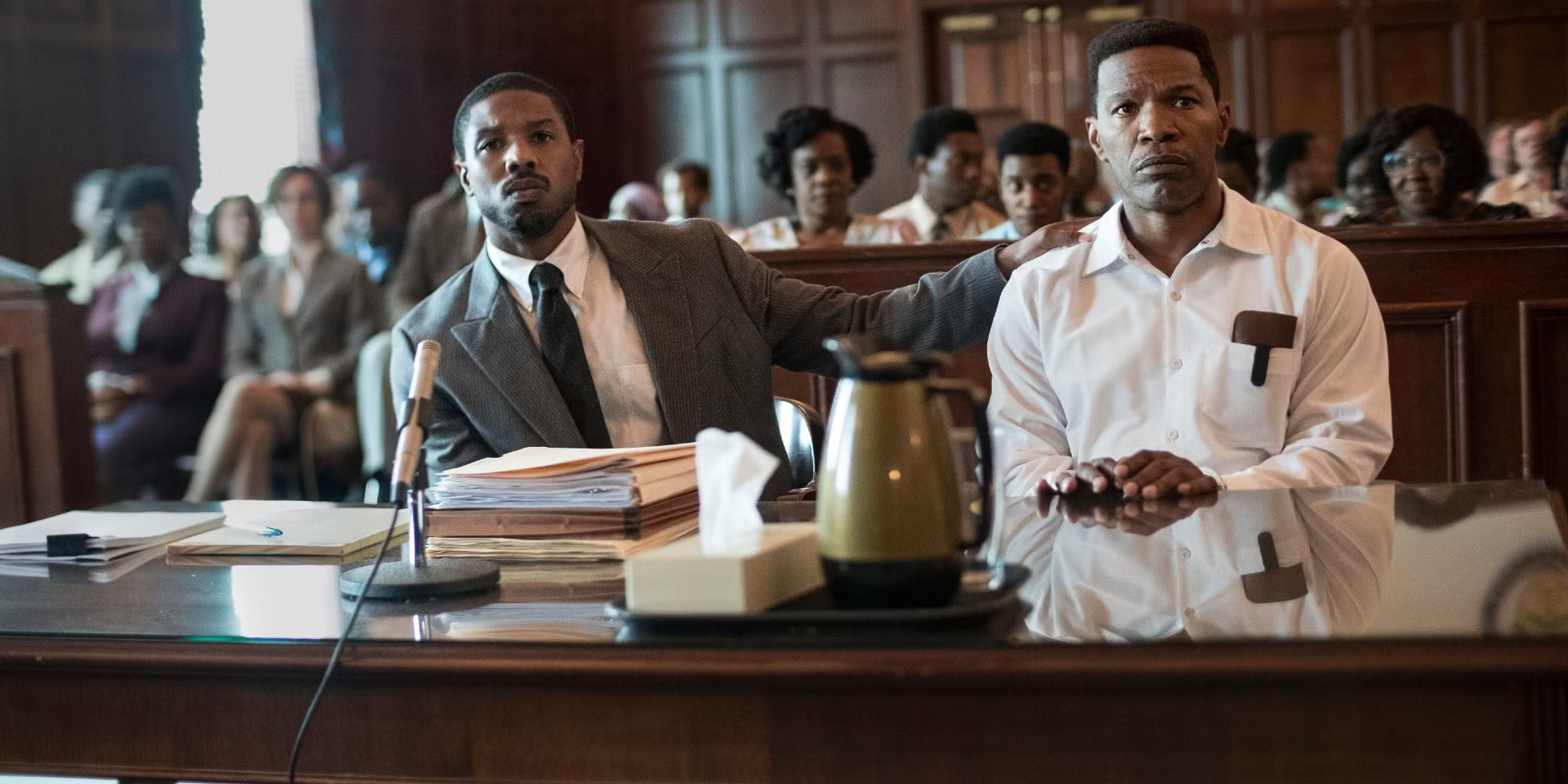
Michael B. Jordan and Jamie Foxx in the movie adaptation of Just Mercy, 2019.
In his book Just Mercy, Stevenson writes about the many hundreds of young Black men he has defended. I remember his staff showing us around the Institute, and wearing T-shirts with a quote from Stevenson emblazoned on the back:
The opposite of poverty isn’t wealth. The opposite of poverty is justice.
When Rosa Parks refused to give up her seat that day in 1955, she lit a fuse for a year long boycott that ultimately overturned segregation on public transport in Montgomery.
Her defiance is remembered as iconic. Hers, like Luther King’s, was a moment that changed history.
Rosa Parks’s story and legacy suggests to me that bringing about change is rarely born from comfort. It comes instead from friction, from disruption, from relentless organizing. Sometimes, as in her case, from all of the above combined.
Revisiting this, I’ve read more about how, at the time, many mainstream newspapers and officials framed Rosa Parks as tired, weak, and elderly: a harmless “grandmother figure” whose feet simply hurt.
That narrative was constructed deliberately to make her protest easier for the wider public to digest. In doing so, the narrative then became easier to sanitize, and easier to depoliticize.
But the truth is more powerful. Rosa Parks was 42 years old – not frail or dithering. And, as she later said:
The only tired I was, was tired of giving in.
Long before that bus ride she was already a seasoned activist. She was trained in non-violent resistance, she was connected to organizers, and she was committed to racial justice.
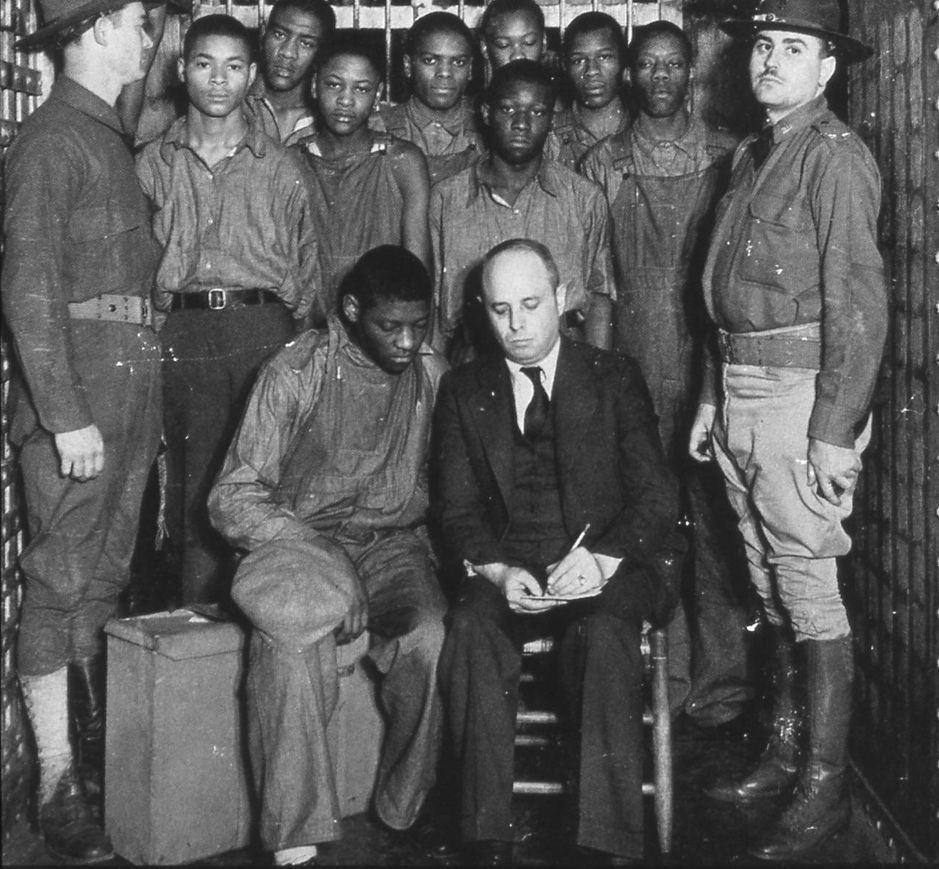
By 1955 she had been deeply involved in civil-rights work and had supported earlier landmark cases of injustice – including the defense of the Scottsboro Boys, a group of nine Black teenagers wrongfully accused of rape in 1931.
Their rushed trials at the time – complete with all-white juries – and their near-execution, exposed the brutal racial injustice of the legal system, and very likely shaped Parks’s understanding of what it meant to fight for justice.
Her refusal on that bus was not a spontaneous act born of fatigue. It was a strategic, courageous choice by someone who understood exactly what was at stake – as well as how much work still remained.
I don’t know how much Rosa Parks, or any of her peers at the time, believed there was an alternative route to justice than the one they took. What seems more truthful is that their actions were born out of necessity and fierce conviction. They acted not because it was safe, or convenient, but because it was right.
Today, at the beginning of the end of another year, I’m struck by how easy it is, in our everyday lives, to drift toward comfort. We focus on earning, and planning, and surviving – this is what we do, these are the things we use for structure, and for our milestones.
And, while I don’t see how to get around some of these inevitably important components in one’s life, I do wish personally I’d spent more time of late listening and learning from those others out there, who have leant hard into the practice of intentional solidarity.
I’ve found myself proactively turning away from reading more about some of the ongoing turbulence in the world. And in doing so, missed opportunities to be inspired by all the many other “Rosa Parks figures” in the world: individuals, often far away from our lives, bravely doing things differently, guided by resolve, endurance, and principle.
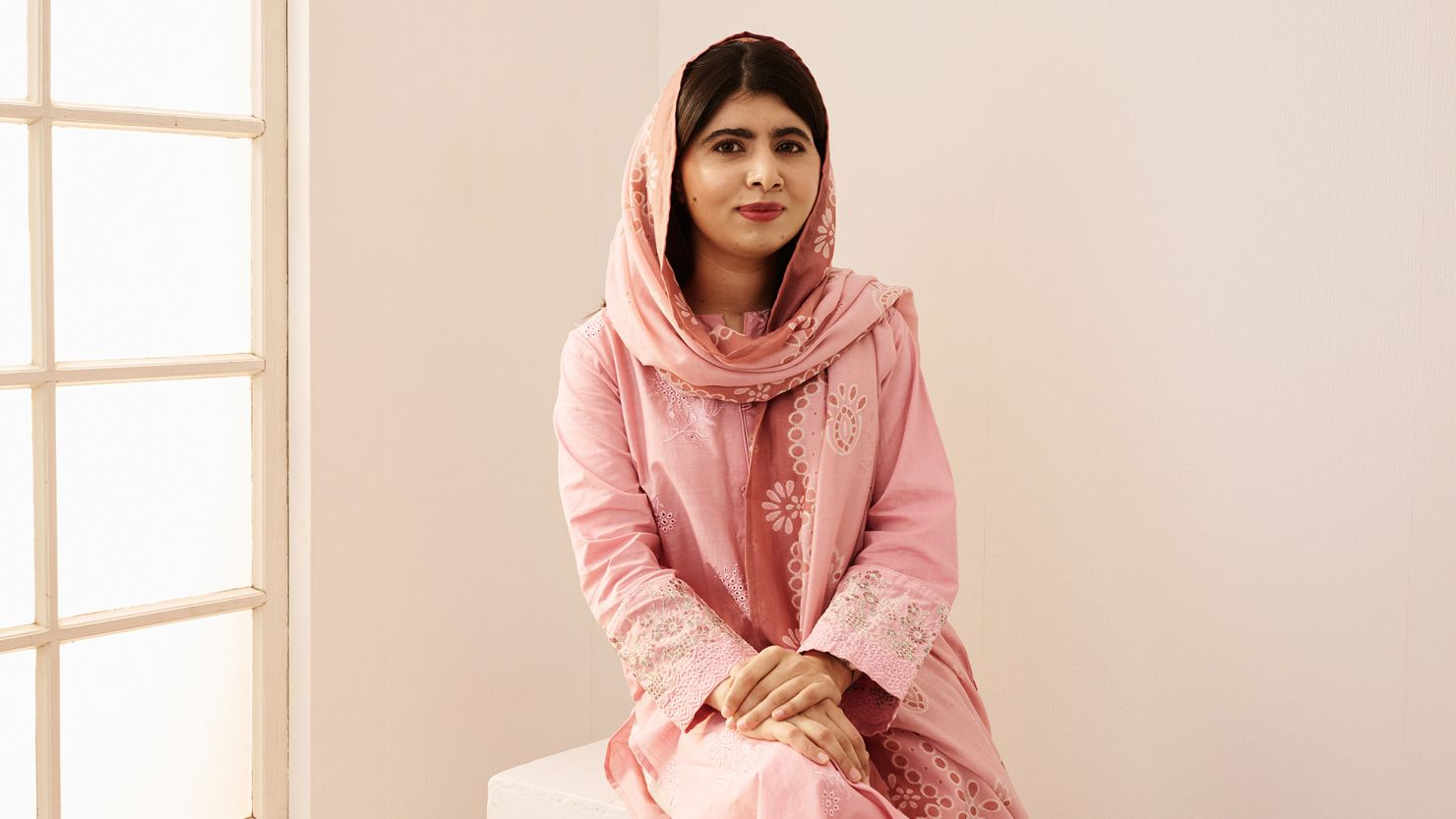
One of them is Malala Yousafzai. Even now – years after surviving a brutal attempt on her life, and years after winning the Nobel Peace Prize – she continues to remind the world why education is not a privilege, but a right. When I first learnt about her story she immediately inspired me to write about some of the issues she stood up for.
Looking her up now, it’s thrilling to read that through her ‘Malala Fund’ she continues to supports girls, particularly those in conflict zones or under oppressive regimes. She is helping them complete their secondary schooling, stand up for their rights, and ultimately claim the futures that too often are denied to them.
Although she has repeatedly spoken out about the dire situation facing Afghan girls, this year she went to Tanzania to convene activists around a range of similar issues – from girls’ education and child marriage to digital inclusion and climate justice.
To me, Malala is another history changing icon. In some ways, she stands as a bridge between the legacy of 1950s civil-rights movements and the contemporary realities that my work with CARE also brought to life for me: global inequality, gender injustice, and the woeful disenfranchisement of entire generations of girls.
I’m very grateful for the chance to regurgitate some of the lessons I took from that US trip seven years ago, and to commit more in my life to reach beyond convenience, to pause, to read, and to listen much more to voices I don’t normally hear.
Just because we’ve got used to the media peppering us with images and stories of characters who couldn’t behave LESS like those I’ve written about here today, it doesn’t mean we have to take any lead from them, or from what they represent. If, instead, we have to go back in time to find better role models and more worthy solutions to social inequalities, then so be it.
Rosa Parks, Martin Luther King Jr., Malala Yousafzai: these should be the trend-setters of today, the influencers in our lives.
I will always applaud them, and all the many others out there like them – people who refuse to accept easy comfort, when it comes at the cost of justice.
It doesn’t surprise me. AI’s galloping pace is unmistakable, and its technologies are now running wild through the day-to-day interactions and transactions of businesses and organisations. Supply chains, customer service, drug discovery, industrial design, logistics – AI is under the bonnet of so many things we rely on.
Perhaps more striking is the shift and uptake of AI not by organisations, but by individuals. An ever-growing majority of the world’s population now uses AI in some form. To keep things in perspective, here’s the rough scale (pulled up using ChatGPT, naturally): there are 5.5-6 billion people online; roughly the same number using smartphones; and close to a billion already interacting with AI tools – often without even knowing it.
Whatever definitions countries choose when reporting AI usage, it’s getting harder to maintain the fantasy that AI is niche or peripheral. It’s mainstream.
And, although we talk about AI as if it has “just arrived,” it’s been with us for far longer.
The field traces back to the 1940s, when Alan Turing first imagined machines that could think. I re-watched The Imitation Game (the movie about him) on a flight this summer, and was far more absorbed in the storyline than I remembered being when I first watched it ten years ago. Back then, AI felt like a curiosity, whereas now it feels like the backdrop of our lives.
From Turing’s wartime code-breaking machines, the formal study of AI began in 1956, then wandered along for decades before suddenly accelerating in the 2010s with deep learning and the rise of powerful computing. What looks like a “sudden revolution” today is really just the latest chapter in an 80-year experiment.
ChatGPT arrived only three years ago. Its exponential uptake (1 million users in five days, 100 million in two months) made it one of the fastest-adopted technologies in human history. Generative AI went mainstream so quickly that many formed opinions on it only after it was already shaping our routines.
I use AI a lot in my work, and try to treat it as something that expands my thinking rather than replaces it. It’s easy, though, to feel the seduction of outsourcing increasing amounts of the boring brain stuff we deal with to a machine.
When I heard friends first using it to write emails and text messages, I remember thinking: this surely won’t last. And yet here we are. AI now writes, translates, analyses, drafts, refines, designs, and increasingly does it frighteningly well.
If everything we have to do becomes effortless, what happens to the mental muscle we use when things are hard? What happens to reasoning and curiosity? What about our memories and about our accountability?
Earlier this month, the New York Times posted an article called How A.I. and Social Media Contribute to ‘Brain Rot’. The Harvard Gazette ran a similar piece last week, and The Guardian and MSN picked up coverage of Nataliya Kosmyna, an MIT Media Lab scientist whose recent study of Chat GPT made waves.
All raise similar worries – some calling it “brain rot,” others “cognitive atrophy.” Kosmyna and her fellow researchers found that users who leaned on AI for writing tasks remembered less of what they had written, and showed diminished activity in brain networks tied to attention and reasoning. One educator interviewed described AI as “a brilliant assistant, but a terrible replacement for struggle.”
This feels about right.
And yet, the same research argues that, used reflectively, AI can make us more creative, more productive, and even more curious. The key distinction is, perhaps, intention: it’s not the presence of AI that dulls us, it’s the absence of our own engagement.
I’d noticed my own habits shifting in that direction, and so took a step back. In doing so I felt myself pushed in the opposite direction: towards more reading, more handwriting, and more analogue time.
I wrote about this over on Substack earlier this year, Rewinding With a Bic Pen, because I felt that slowing down into the older rhythms of writing was helping me stretch my attention, rather than scatter it.
However, at the same time, I’d say that AI has made me much more efficient in my work – researching, planning, synthesising ideas, prepping workshops, threading insights into reports. Using AI has meant I can carve out more time, not less, for other things that matter. It’s a perfect conundrum if you ask me: not classically good or bad.
My daughter’s school is, understandably, trying to protect students from AI – or at least slow it down – and I don’t feel nervous about their classroom experiences being compromised. But the truth is unavoidable: their world will be steeped in AI whether we delay it or not. The question isn’t how long we can hold it back – it’s how well we can teach them to use it with care and curiosity.
I definitely crave simpler times, simpler tools, simpler choices. I find myself saying this more and more. Although nothing in the rulebook says we can’t keep hold of the simple things while still letting technology widen the possibilities around us. The analogue and the digital can coexist.
In the end, I’m personally on board with AI. I see its risks, and I also see the enormous potential for good (plus the way it has already nudged me back into more deliberate, thoughtful habits.)
It’s hard to sum things up. Particularly when I’m nowhere near understanding or predicting AI’s evolution, nor the financial ripples a company like Nvidia is casting across global markets. The numbers are too big for me to take seriously. When I see speculation about Elon Musk edging closer to “trillionaire” status, or Jensen Huang’s net worth doing somersaults, I tend to scroll past it and simply go off to make myself a strong cup of tea.
In the end, AI is a mirror that reflects our cravings as much as our creativity. It shows our hunger for ease, our impatience, and our distractibility – in those moments, we look like one vast Pavlov’s-dog experiment, staring up, waiting for the next treat. But it also reflects our imagination and our ability to build astonishing things.
It holds both truths at once.
And so, arguably, the real question isn’t whether AI will be good or bad, but who we choose to become while using it.
In 2025, the world feels perpetually distracted. Elections, wars, AI, celebrity scandals — global attention ricochets between urgency and noise. Today it’s one crisis, tomorrow another. And we all scroll on.
And yet, a slower, more existential threat escalates beneath it all: climate change.
Especially in Southeast Asia, the impacts are already reshaping daily life. I’m guilty of tuning out, and I know many others do the same head-in-the-sand routine when they skim stories about rising temperatures or shrinking icebergs.
If climate change is so serious then why aren’t we acting like it is?
Southeast Asia is on the frontlines of climate risk. Jakarta is sinking by as much as 17 centimetres a year, one of the fastest rates in the world. In Vietnam, over 50% of the Mekong Delta’s land area is projected to face saltwater intrusion by 2050, threatening not just agriculture, but the food security of tens of millions.
Saline intrusion is already choking rice production in the Delta, while intensifying heatwaves and droughts disrupt water supplies. When these come, droughts disrupt water supplies, and you don’t have to be studying GCSE geography like my daughter (who knows more about this than I) to appreciate what then transpires from a biodiversity perspective: that everything is gradually disappearing.
The IPCC (our collective authority on the matter) warns the window to avoid catastrophic change is ‘brief and rapidly closing.’ That’s not hyperbole — it’s scientific consensus. And, still, climate continues to feel like a background hum, rather than breaking news.
The private sector must play a more central role to Southeast Asia’s adaptation and resilience efforts. Governments alone can’t foot the bill or engineer every innovation. Yet, despite growing interest in green investments and carbon markets, engagement remains patchy.
Vietnam’s 2025 Carbon Market Forum and the P4G Summit were welcome steps. These meetings offered the usual fare: policy frameworks, optimistic keynotes, and lots of “roadmaps.” But translating these into real action remains a challenge.
I’ve worked for a long time promoting sustainability and, in particular, getting business to the table however, let’s be honest, when it comes to climate change, aside from a few regional giants and climate-conscious smaller businesses, most private sector entities are still unsure what climate action means for them, or how to act without sacrificing profitability.
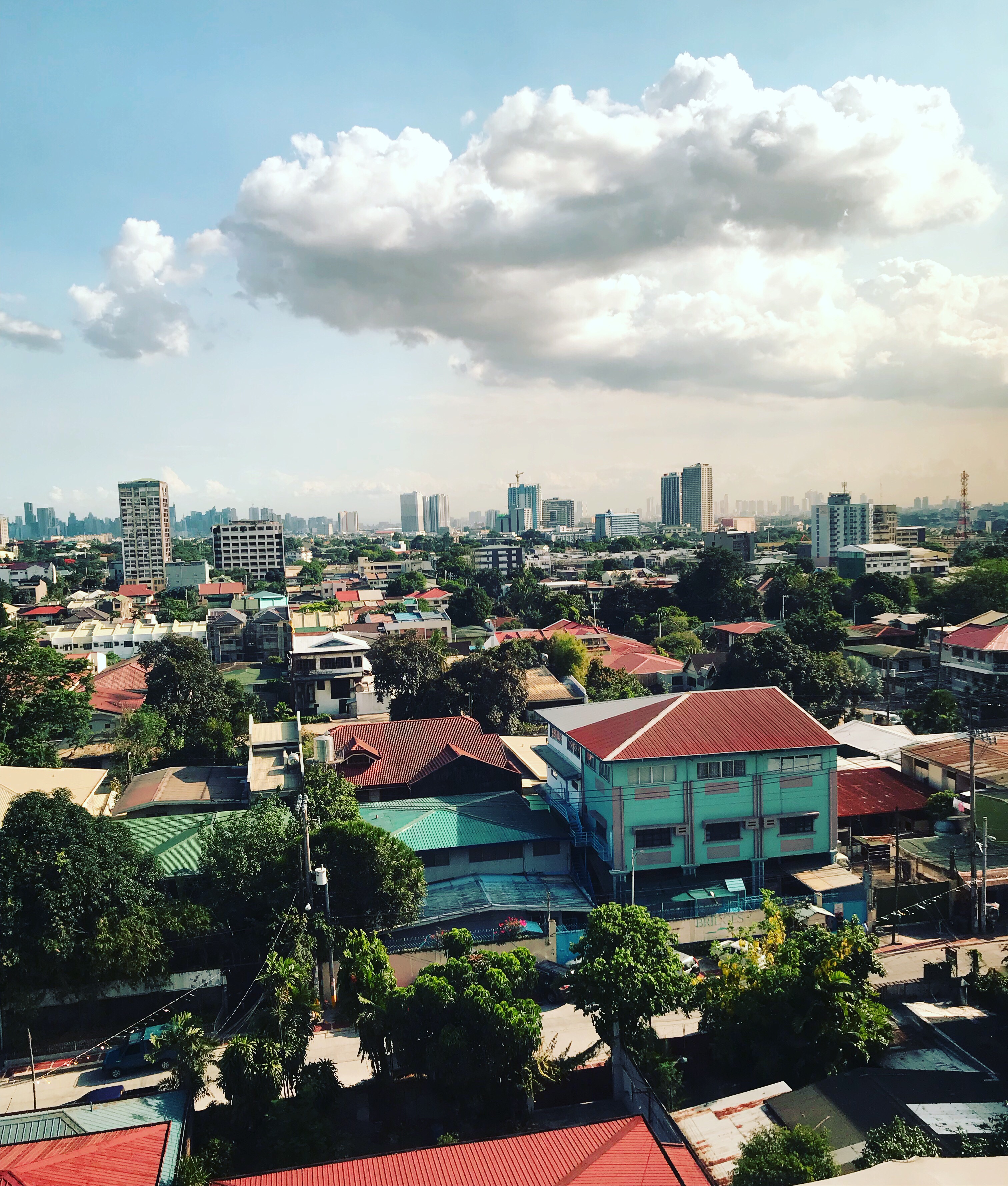
The colourful urban skyline of Quezon City, Metro Manila. Photo credit: Tim Bishop.
So, I think my call to action on this would, ideally, be quite broad (the ownership of the issue should be everyone’s) however it is here is where I think international NGOs (like my former employer CARE) should step in — not as saviours, but as agencies that can help shape the systems that exist within the private sector, and which relate to climate change.
CARE doesn’t treat women’s empowerment and climate action as separate goals. Instead, they have developed programmes that integrate them through market-based, locally led interventions, tackling environmental threats and economic inequality at once.
In Vietnam, for example, HerGreenVenture supports women-led enterprises with training and green finance to adopt low-emission farming and scale sustainable technologies. In Cambodia, CARE also runs community recycling programmes that help women turn waste into income and reduce landfill pollution. And in Thailand, CARE’s eco-tourism projects led by women are creating jobs while preserving forests and coastlines.
What links these diverse initiatives is a belief that resilience is built from the bottom up.
CARE’s core strategy is clear: gender equality isn’t a side note, it’s central. Women, particularly in rural and informal economies, often bear the worst climate shocks while themselves holding the keys to adaptation. Give them access to green finance, leadership roles, and supply chains, and resilience becomes lasting.
We’ve been warned for years, but action has lagged far behind awareness. Climate experts might point to progress — but, from where I sit, I don’t see enough.
If you’re a business leader, why not starting by asking: how is your company contributing to climate adaptation today? Not just ESG compliance, but to real-world impact.
If you’re in government, how about checking the extent to which you are creating the right conditions for innovation, for inclusion, and ultimately for scale?
And, if you’re an INGO or donor, let’s have more discussion about whether you are building systems or simply just running programmes?
We may live in distracted times. I find myself fighting this day-on-day myself. But, distraction doesn’t make the climate crisis less real — if anything it just makes it less seen.
The question is no longer if it’s serious. It’s whether we’ll start acting like it.
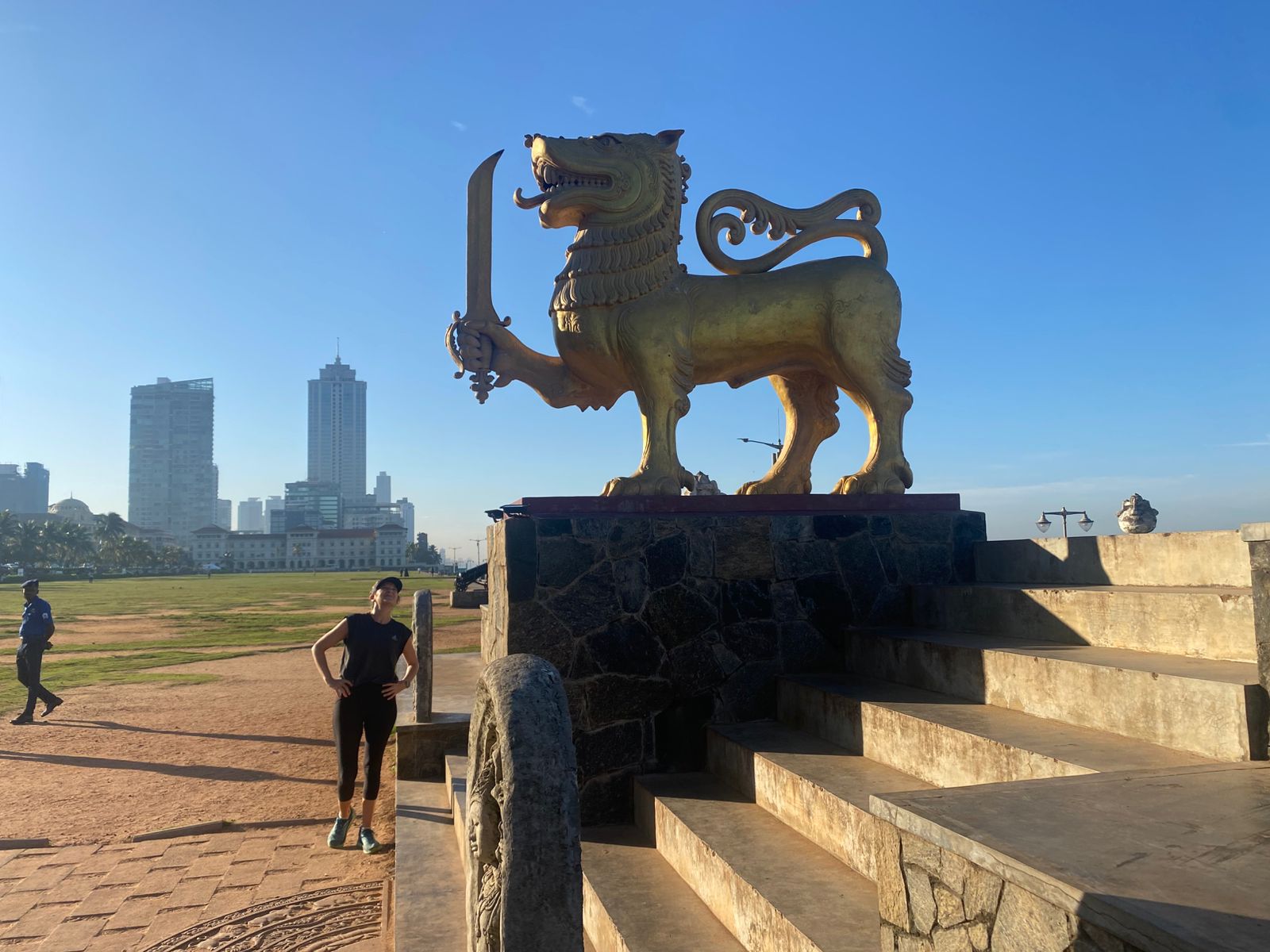
Independence Day rehersals in Colombo, Jan 30th 2025
It was approaching midnight at the end Independence Day in Sri Lanka, earlier this week, and Issy and me were at Colombo airport watching the stream of incoming passengers make their way to immigration as we, in turn, waited for our departure back to Saigon.
As usual, our last twelve days gallivanting from Kandy to Colombo, and then down to Galle, were a time-warp of sorts.
Soon enough we were airborne and, as our plane arched it’s wings back over the island palms, the truth was, we weren’t really ready to leave…
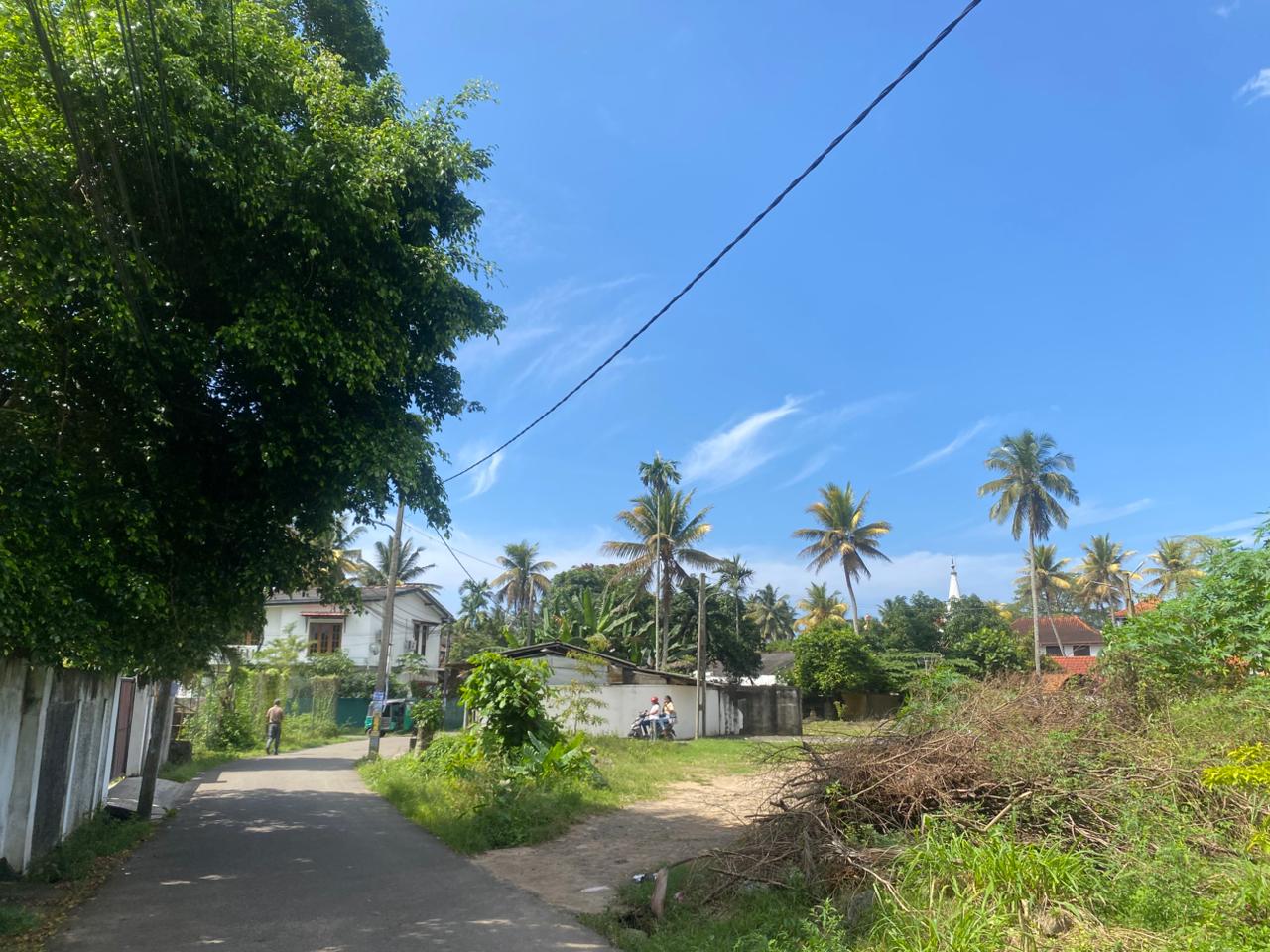
Last day in Galle breathing in the palm trees and blue skies
Galle itself is having quite the time of it at the moment.
Today, the 12th Galle Literary Festival kicked off, for one thing. And then there’s the Australia cricket team, who embarked on their second test match today, just down the road from Galle Fort.
The “Lit Fest” goers were easy enough to spot on Tuesday at the airport – silver surfers, in zip-off khaki trousers, alongside a myriad of middle-aged flowing pony-tails and pastel block-printed shirts. The visiting Aussie cricket fans meanwhile wore their gold and green livery tops, beaming at the prospect of the days to come.
Sri Lanka is a special place for us. As well as bringing my parents and daughters here for my 40th, and marrying Issy in Galle in 2020, I first visited back in 2010, not long after the official end to the civil war. I was then lucky enough, through my work with CARE, to return time and again.
On this occasion, in between the calm and serenity of either being up-country surrounded by highlands, or nestled by the ocean sipping a drink, I learnt a few valuable lessons connected to my work as a facilitator:
Lesson #1: Trust the Process.
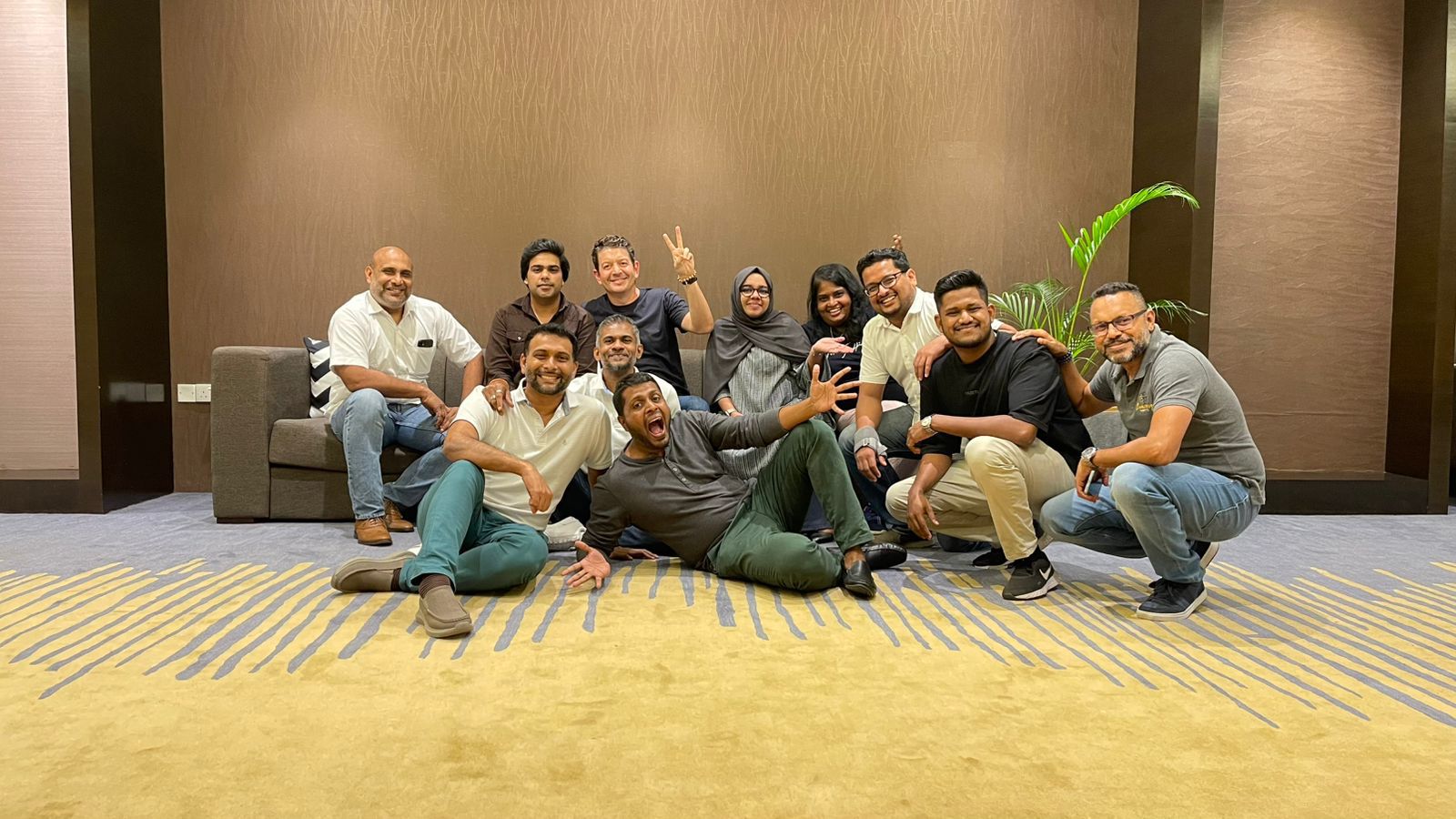
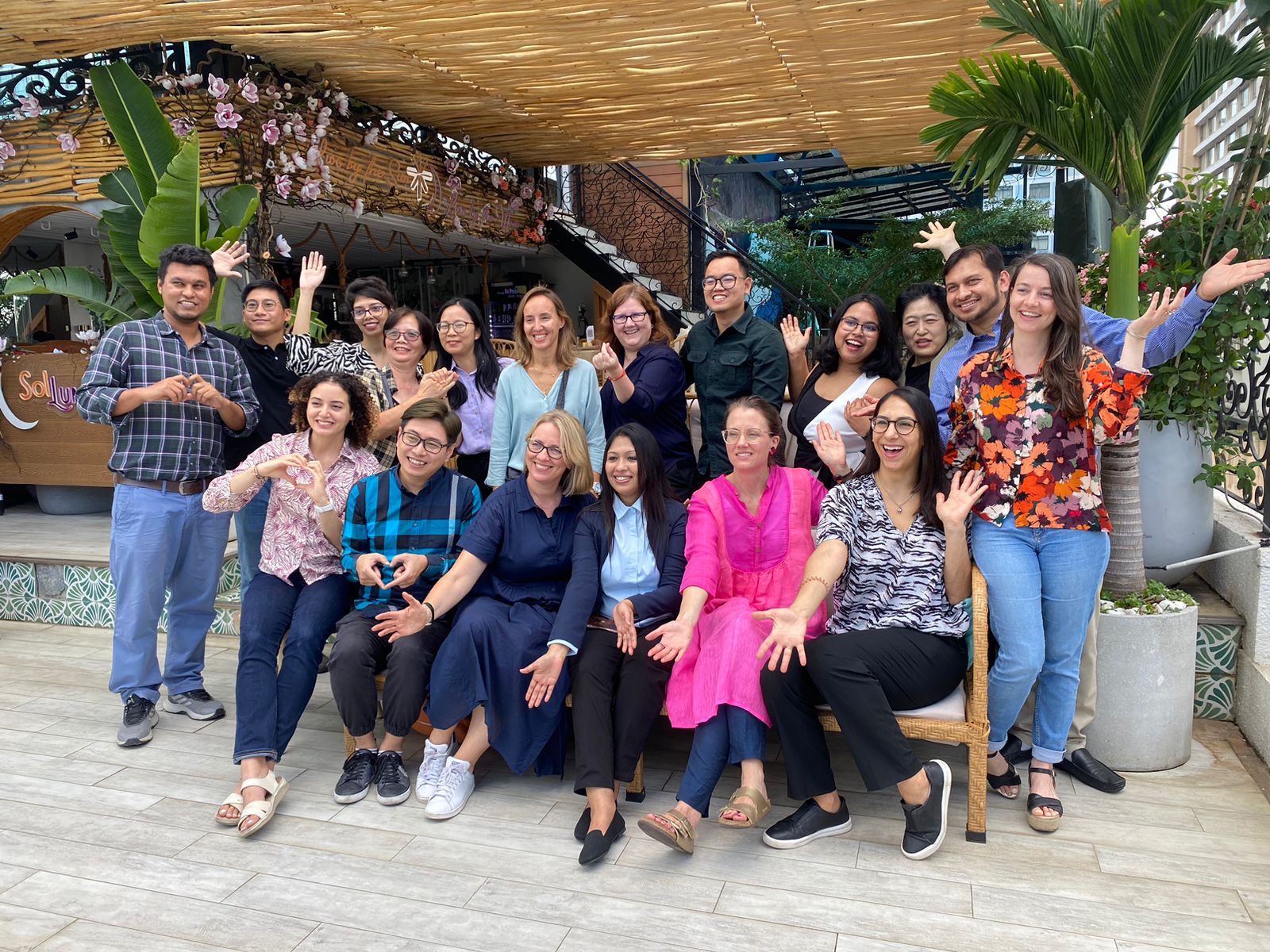
Some of the Luminary Solutions Team, Colombo Feb 1st 2025
Whilst in Colombo, I supported a team from Luminary Solutions, a provider of training, consultancy and other services to the private sector, and currently charting an exciting new chapter in their company’s growth.
With all the digital tools we have today at our fingertips, I think it was the “in-person” time that the team and I spent over two days together that seemed to provide the right platform from which to align ideas, and build a set of actions and responsibilities.
‘In-person time’. Even the phrase sounds clunky these days.
Twenty five years ago I don’t recall using the phrase, no doubt because any time spent with other people was indeed spent in-person. It’s, perhaps, a daft sentimental point to make, but most of what was required with the team from Luminary last week, was helping create the rapport and the right enabling conditions from which to ideate.
We had fun together. We got to know one another. We listened to each other. The team had a shared purpose and took responsibility for future actions.
It sounds simple, and it was. In large part this was down to the readiness of the team for a change. It’s obviously a tougher challenge to find that groove with a team if their readiness isn’t there, but even without it, our sessions helped reinforce to me to “trust the process” – particularly when it comes to finding a group rapport first, and then worrying about the content and the ‘how’ part second.
With that in mind, we used the phrase of making “the first pancake” – the idea that, sometimes, you just need to get cooking, and see what you can produce. We all, intuitively, have a notion about how to make a pancake (what goes in it, how to heat the pan) even if the first one that we try to fold onto the plate often ends up in the bin.
So. Trust the process. And get cooking that first pancake.
Lesson #2: Storytelling Works.
I had the pleasure of meeting a new jumble of strangers on this trip, and spent time listening to their stories. Storytelling, it seems to me, can be a sacred past-time and offers a rich seam of connection to bind people together.
Storytelling at the Shack Beach Bar with Geoffrey Dobbs, Feb 2nd 2025
Last Sunday, as I alluded to earlier in the week, Issy and me were sat at midday, waiting to check in to our room on Dewatta Beach, a few clicks down the coast from Galle Fort. And then in walks Geoffrey Dobbs.
Arm and arm with the owner of ‘Stick No Bills’ (Liam, a long-term Sri Lankan resident, originally from Haversham in Kent) and, with some gentle assistance, Geoffrey plonked himself next to us, at our wooden picnic table.
A bottle of Prosecco emerged, and we were soon chasing this down with a flurry of beers, and eventually a rogue Bloody Mary, provided by one of the owners, known to Geoffrey and his pals as “Calamity John” – given the whirlwind of hopelessness that seemed to follow him around.
After five hours, and at least three rounds of “this is the last drink, and then we’re off”, we were left to check into our room while Liam organized a tuk to take Geoffrey further down the Galle Road, and onto his next social appointment.
Sundowners, Dewatta Beach, Galle
Geoffrey arrived in Sri Lanka not long after leaving Hong Kong, just after the 1997 handover. He’s been a native to Sri Lanka since, and is credited with founding the very Literary Festival that is unfolding as I type this.
He has led quite the colourful life. A vivacious raconteur and socialite. A heavy drinker. I heard him referred to as “king” of the island by another long term expat the very next day. Whilst on Sunday he was a slowed down version of the host we met in 2020 on our big day, he remains a fascinating person to suddenly find sat next to you on a Sunday afternoon by the beach.
He only managed to spill one full glass of wine over me, and briefly flared up at the mention of a few bygone characters, but otherwise he listened to our stories, he cracked jokes, and he clearly has accumulated a group of friends who have his back, for the time he still has left.
Liam, in particular, merrily drew from a quarter of a century’s worth of anecdotes and banter shared with his friend, and we were laughing out loud at some of the memorable moments he described to us.
Much as with friends I have of similar vintage, these core connections run so deep that, all you ever need to do, is sit down next to one another and let the stories flow.
That afternoon with Liam and Geoffrey (and in end a third long-term islander with a thick London accent, and who we named ‘Avo Adam’ – I cannot remember why) we were in a happy bubble, allowed access to the realities of these strangers, to their reflections, to their learnings, as well as to some of the chaos of their past and present lives.
Stories and story-telling are powerful connectors.
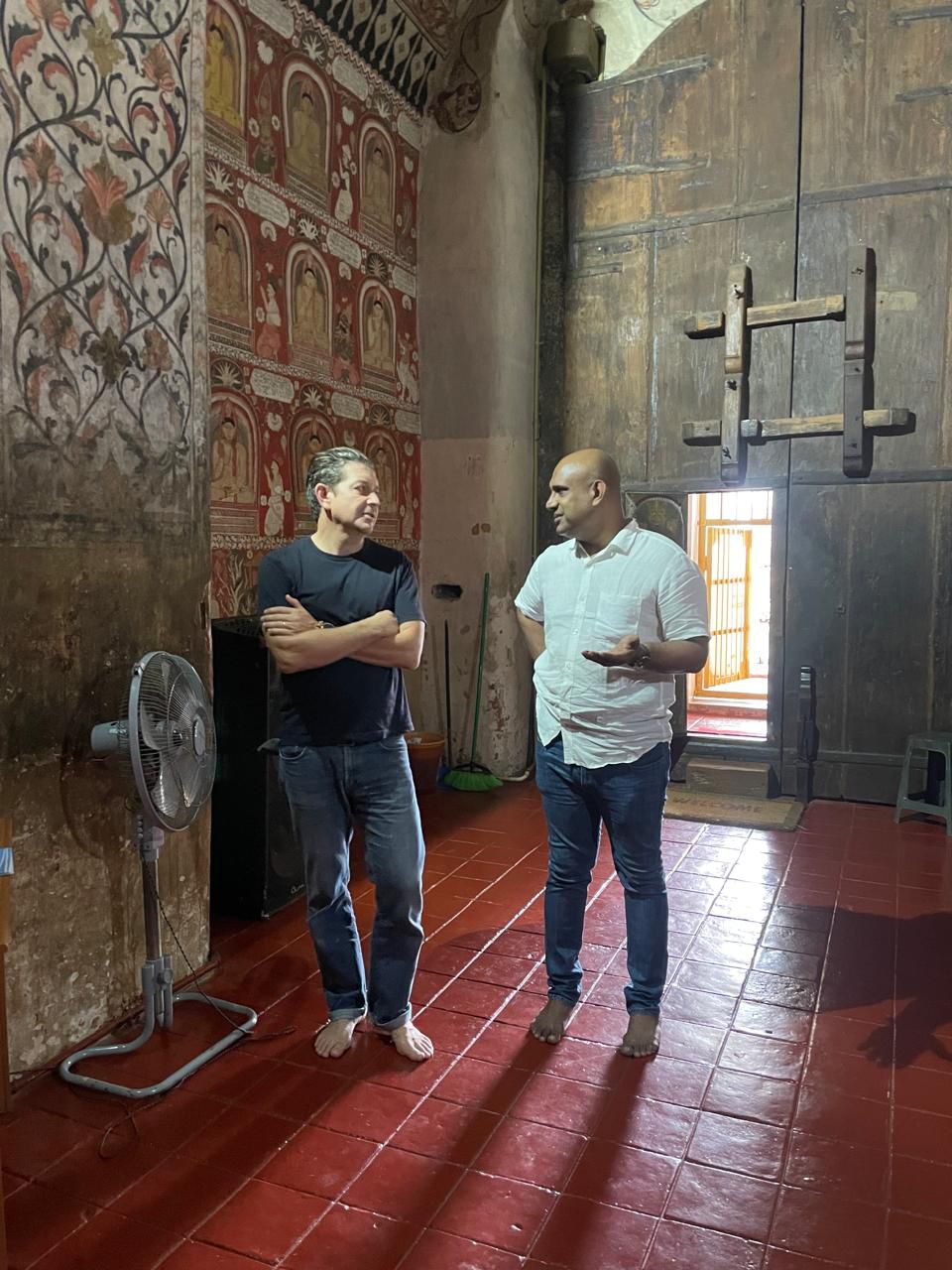
Vidusha showing us round ancient temples in Kandy – always with a story up his sleeve
Tomorrow, with Geoffrey no doubt centre stage somewhere at the Lit Fest, a fellow member of the Chrysalis Board, Vidusha Nathavitharana, and the Founder of Luminary, who brought me over for the work with his team, will also be speaking about leadership and the books he’s written on the topic (see link below).
I’ve no doubt that Vidusha will also use stories to get his ideas across, and to connect with his audience.
I know this too well, as our first night in Sri Lanka on this trip was spent at his house, some miles up into the forests of Kandy. A stunning space that he and his wife, Rowena built, and which set us up, from the very moment we stepped off the plane, on the right footing and into a world of new stories and insights.
If you’re in Galle this weekend, go see him and have a listen yourself – I assure you you’ll not regret it!
Several high-profile shadow ministers, from the British Labour party, including Jess Philips, resigned this week.
Philips told news outlets: “I have to use my voice to try and wherever possible, move a dial. And look, I think this dial will move. I think that it won’t be too long before the US and the UK feel that the military action is achieving nothing.”
Honorable as resignations may be, in circumstances such as these (the issue in question was that Philips disagrees on Labour not backing a proposed ceasefire in Gaza) it’s gut-wrenching that 7 weeks have now past since the conflict of October 7th snowballed into the humanitarian crisis that we’ve woken up to each morning since, and yet many UK politicians are still not formally supporting a ceasefire.
Philips thinks “it won’t be too long” before that could change. How long is too long though, under the current circumstances in which those in Gaza find themselves today?
How is it possible or feasible, how is it acceptable or justifiable, that some of the world’s most powerful political figures are still towing a line that is allowing for the daily slaying of innocent people in Gaza?
What is the figure of deaths that will finally tip the scales here? Over 1,200 Israelis and over 11,200 Gazans have been killed since Oct 7th.
So, over 12,000 people, who were alive 42 days ago, have so far been killed in this conflict. In Gaza, those killed are leaving behind extended family members, too scared and under threat themselves to mourn lost ones, let alone preside over their burial.
12,000 lives. 12,000 lives, in 7 weeks. And UK politicians are justifying things to continue. Further bloodshed. I’m ashamed, as a British citizen. I cannot find any other words to describe the rancid loathing I feel for those currently in charge.
I’ve read a lot over the past weeks. I spent a lot of time in Israel some years ago and have worked in Gaza and the West Bank more recently. Like many commentators since October 7th, I don’t want to try and unpack and debate historical arguments. I want innocent people to stop fearing for their lives.
Perhaps the Israelis knew the attack was coming, and allowed it, in order to fuel their response – I have heard this said. Perhaps Hamas knew that, too, and were therefore further inspired in their mission, knowing that much of the region would then oppose Israel’s military intervention – I have also heard this said.
Whether both of these things could be true, or are true, neither side deserves the benefit of the doubt when it comes to killing innocent people. Both sides would be culpable of slaughter under cross-examination.
Today, in Gaza, the UN is talking of the very real scenario of mass starvation. We have known about the lack of usable unsalinated water in Gaza, for over a decade. We have been told about the frequent electricity shedding. About the border controls. The constant surveillance of Gazans. We are all familiar with the moniker of Gaza being “the world’s largest open-air prison”. And, we’ve sat back, and allowed it to continue that way.
These past weeks we’ve read about the cutting off of all water, all electricity, and all mobile networks to Gaza. Politicians continue to pontificate but are unable to force a ceasefire. Still now.
“This is not the carpet bombing, this is a different thing,” he mumbles, with all the gravitas of a gross waxwork, “they’re also bringing in incubators, they’re bringing in other means to help people in the hospital…this is a different story than I believe was occurring before with indiscriminate bombing. The IDF [Israeli Defense Force] acknowledges they have an obligation to use as much caution as they can going after targets.”
Acknowledging one’s “obligation to use as much caution as they can,” having already killed over 11,200 people in 7 weeks, is one of the most ludicrous statements I’ve heard Biden offer during his current tenure as Leader of the Free World. His playlist is a strong one, too, so this is going down on his Greatest Hits List.
Biden has refuted the 11,200 killed figure, also. He doesn’t trust the source. Like, that’s where we should be spending time, debating specifically how many innocent people have been killed.
Numbers, games, pompous, political, egotistical point scoring. When does it stop? When will people in power attribute equal value to the lives of everyone? Who decides who is more or less valuable to society?
What does ‘acknowledging an obligation’ even mean, Joe Biden?
It means nothing. It changes nothing. If anything, the more asinine waffle that drips out of Biden’s quivering lips, the more Hamas will be incentivized to continue their cause, the more the Israelis will feel emboldened to retaliate, and the more today’s ‘12,000 killed’ figure will grow and grow.
What a piece of work these “leaders” are. The fetid egos of so many of those in power, and their cowardice, stinks. They are not serious people.
I hope the public marches continue, I hope people keep writing, campaigning, and speaking out.
This week I’ve been working with a global organisation, RISE, that is seeking an end to the oppressive conditions faced by female workers in the garment industry. In the very same week we have seen Iceland, which consistently ranks as one of the world’s most progressive nations, convene a nationwide strike (that included their own Prime Minister) demanding equal pay for women.
This, in itself, should speak volumes to the task in hand for the RISE team.
RISE is a newly established start-up of just twenty people but representing the experience and learning of over a quarter of a century’s worth of engagement in the readymade garment sector, by RISE’s founding partners, to improve the conditions for workers. RISE launched on International Women’s Day, in March 2023, the culmination of several years of planning and investment by Business for Social Responsibility, CARE International, the International Labour Organisation, and Gap Inc.
As a collection of very large and diverse organisations, all offering resources and technical support to addressing gender inequities in an industry that employs 60 million female workers, these founding partners have coalesced around the need not only to collaborate, but to go one step further, and to actually join forces and handover the reins of this colossal objective to a single entity.
In taking on that mantel, RISE has a head start on most start-ups, given the vast intellectual property and knowledge it is able to draw on from each of its founding partners.
The twist, of course, is that the journey ahead, in achieving any sort of equity for female garment workers (given the disparities which exist in a country such as Iceland) is a long one. As so many of the RISE team themselves already know from their own experiences, the path ahead will also be fraught with many complex challenges. Not least is the issue of garnering attention from all of the necessary stakeholders – brands, suppliers, factory owners, governments, consumers, the media and so on – who hold sway over worker conditions, on a topic that no single country of the world has managed, yet, to resolve.
What I saw in Saigon over the past three days, however, in terms of the commitment RISE is making through its incredibly dedicated and specialist team, was inspiring.
In just 7 months, this team has already achieved the goals set by its Board – on programme design, fund raising, communications, and on the overall operations challenge of fusing four different organisation’s strategies into one. In this same span of time the team has grown fast – 37% of them joined over the past few months, and many of the longer term BSR staff involved over the past 4-5 years during the set-up phase for RISE, were meeting in-person for the first time in Vietnam this week.
RISE is already delivering programmes for factory workers in multiple countries, here in Asia, but also in the Middle East and East Africa. They are led by inspiring colleagues, who have dedicated large parts of their own lives and careers to the cause, from North America and Europe across to North Africa, South and Southeast Asia, as well as from China’s mainland.
And I commend whole-heartedly, to anyone interested in this agenda, the spirit and passion I saw in the values, behaviours and actions of the team, both as they set about discussing strategic plans, but also as they spent time forming and learning more about one another.
As the American Anthropologist, Margaret Mead, famously said: “Never believe that a few caring people can’t change the world. For, indeed, that’s all who ever have.”
I look forward to following the successes of RISE in the years to come.
I read two things last week, coincidentally connected.
The first was a report from CARE International, offering insights about the impact COVID-19 has had on the local community groups that CARE has been seeking to support for decades.
I commend this report to anyone with an interest in the topic of international development. The analysis is rigorous, yet the recommendations are simple. The tone is calm, but unsettling, given the evidence being shared, which points not to the successes of the international development community, but instead underscores its failures.
It cites how impactful the pandemic has been, in terms of increasing, rather than decreasing, gender inequalities.
It also proposes that far too much potential progress in development is “held back by the deeply colonial approaches” still adopted by global development organisations, including CARE themselves.
Sifting through social media feeds, I then stumbled upon this quote from the novelist and cultural critic, James Baldwin:
“The entire purpose of society is to create a bulwark against the inner and the outer chaos, in order to make life bearable and to keep the human race alive. And it is absolutely inevitable that when a tradition has been evolved, whatever the tradition is, the people, in general, will suppose it to have existed from before the beginning of time and will be most unwilling and indeed unable to conceive of any changes in it. They do not know how they will live without those traditions that have given them their identity. Their reaction, when it is suggested that they can or that they must, is panic… And a higher level of consciousness among the people is the only hope we have, now or in the future, of minimizing human damage.”
Drawing these two “things” together (CARE’s report and Baldwin’s musings) doesn’t take a considerable amount of effort: the traditions to which Baldwin refers, are part of the very reason that international development has failed. The traditions that dictate the colonial influences over how aid has been invested, coupled with the traditions which set the social and cultural constructs that exist on the side of the recipients of that aid, create a perfect storm of incompatibility.
For sure, there are examples of success, and I have spent time on these pages promoting them.
Unfortunately, these are overshadowed by examples of failure, and worse: examples of repeatedly making the same mistakes over and again.
In 1948, the United States committed to the rehabilitation of Western Europe, kicking off the “Marshall Plan” as an investment to help countries after the War.
Many of the recipient countries of the Marshall Plan – Britain, France, Netherlands, Belgium, West Germany and Norway – had, themselves, previous experience of providing aid to countries years before.
Foreign assistance, as a concept, had been around since the 18th century. However, since that time, the majority of the assistance given was from countries such as Britain and France, and predominantly to their respective colonies.
To recap, hastily, on how development has evolved since 1948, organisations (such as CARE International) have invested significant time and energy trying to understand how to most appropriately and effectively assist those “living in poverty”.
Those last three words are in speech marks, because defining who beneficiaries actually are has, itself, been a 75-year exercise.
The World Bank annually grade country demographics and, historically, many aid organisations and government donors use this guidance to allocate funds. Which is why more recently South American countries and now South East Asian ones, are receiving less “aid” due to how they have slowly climbed the World Bank rankings, moving from “low income” to “medium income” economies.
Using economic indicators such as these, some development agencies have prioritised the “extreme poor” as a target group for receiving aid.
Whilst others have nuanced their criteria for “poverty” and zoomed in on defining groups of people based on how “vulnerable” or “marginalised” they might be, which then takes into account criteria beyond income.
Over time, and as the international development industry has expanded, more types of people in need are included, in some way, by some organisation, or movement.
In any case, whilst they have been undertaking their deep dive analyses, and designing their ever-complex programmes, these organisations have encountered a slew of cultural and social normative behaviours (again, Baldwin’s ‘traditions’ – to which each community they are assisting is bound and, from which each community is so heavily defined.
For CARE, the gendered aspects of such cultural traditions – whereby men typically dominate decision making and hold the majority of power over women (at home, in the workplace, and in public spaces) – has become the lynchpin around which all of CARE’s efforts have been inspired.
For others, UNICEF or Plan International, for example, their research and development has anchored itself to the challenges that children or young people, respectively, face in society.
Uganda, 2016. Photo credit: Tim Bishop
As many commentators have cited, the evolution of “aid” over the last 200 years has charted a meandering course, undergoing regular modifications.
Take the topic of financing, for example.
Many nations, and large development organisations, have explored what might be the most efficient financial instruments they can deploy: Government-to-Government loans; microfinance programmes; economic stimulus packages; public-private funded initiatives, designed to strengthen economies and improve societal issues.
Each of these examples, come with their own success stories however, without exception, each encountered this same obstacle of tradition on both sides of the equation: the traditional norms set by those investing funds and resources into development, and the traditional norms played out by those receiving the financial “help”.
Given these constraints, it is simply not clear, even today, what types of interventions are best and how these should be delivered.
Is it more appropriate, for example, to stimulate economic growth for a country or, instead, better to understand upfront what is needed by those in that country who are struggling financially and who are excluded from formal systems (ie they lack access to bank accounts, internet, markets, education, etc) and to design an intervention that addresses that need?
Both of these approaches have been tried and tested and, in some cases, combined. However, again, traditional norms create obstacles along the way.
For example, direct budgetary support (a financial transaction between Governments) was, for a while, a popular choice of many richer nations to financially support poorer ones. Yet, this type of support could be all too often undermined by recipient Governments not properly distributing the funds through public services. Instead, many would funnel disproportionate amounts into other areas, such as to the bank accounts of Government officials.
And, when it comes to implementing the second approach (ie answering the “needs” question) this, too, can be compromised by the nature of who makes decisions in society, writ large.
Not exclusively, but typically, all such development-based transactions, and development-based relationships in the past were led by men.
The result of which is that less consideration, over seven decades of international development, has categorically been attributed to those societal issues that would have been selected by women. Women simply haven’t had the opportunity to have an equal voice in conversations about international development in that time. Not in the initial orchestration of The Marshall Plan, nor in the decisions with, and within, communities in terms of where and how the resources should be utilised.
A Village Savings and Loans Association meeting in Tigray, Ethiopia, 2016. Photo credit: Tim Bishop
It was CARE who established the first ever Village Savings and Loans Association (VSLA) in Niger in 1991, a mechanism for women to save and loan money with one another.
This, in turn, inspired the scale up of VSLA platforms around the world, adopted by other organisations too, encouraging women to have a voice inside of communities, and ultimately enabling women to speak out and influence local structures and systems.
VSLAs are one example of how this acutely gendered dynamic and imbalance is shifting. Unfortunately, the pace of change is slow.
Take the issue of unpaid care. This remains a pertinent topic even in the most “progressive” of societies. In the world of business, equal pay and worker benefits are also not yet level for all employees. For many nations, their politicians and leaders have been, and in many cases remain to be, male dominated. As of 2021, only 1 in 5 ministerial positions globally were held by women and, even today, just 17 countries have a woman Head of State, and 19 countries have a woman Head of Government.
These stark ratios are reflected, too, at the local level of the majority of countries – in the political and public spaces of local authorities and community leaders, in small to medium enterprises and local businesses. The patterns are similar, the outcomes the same.
And, whilst today’s inter-connected world has increasingly called out these gender imbalances, in a way that simply wasn’t viable even 20 years ago, Baldwin’s intuition when he writes “They do not know how they will live without those traditions that have given them their identity” rings true.
Just as traditional norms hold back gender equality, so too do they stifle advancements made around other forms of inequality.
More than ever, we have been made aware of the economic inequalities of the world – the “1%” phenomenon.
Every country maintains its own version of this and, globally, it would seem that the ratios of the ‘haves’ and the ‘have nots’ become ever more extreme with each annual set of data released.
According to last year’s World Inequality Report, “Global wealth inequalities are even more pronounced than income inequalities. The poorest half of the global population barely owns any wealth at all, possessing just 2% of the total. In contrast, the richest 10% of the global population own 76% of all wealth.”
Armed with such data, it is hard not to side with those campaigning for change. Be that from an accountability perspective, lobbying for more responsible policies and practices adopted by business and by government institutions. Or be it from a more ethical perspective, targeting individual behaviours.
Both make sense, yet both have their limitations when it comes to just how much ground individuals, corporations, or governments, are prepared to concede at their own expense.
With power comes responsibility, and all too often that responsibility lies in the shadow of a tradition that is extremely hard to change.
Whether you set your sights on tackling inequality, poverty, vulnerability, marginalisation, gender equity, disability, child rights, or other such societal issues, I would argue that Baldwin’s plea for a “higher level of consciousness” remains, simultaneously, a sobering as well as a viable salvation, when redressing some sort of balance in the world.
Although I was tempted to end this post conceding that Baldwin’s call to action might never be fulfilled, instead I would suggest that the subject of ‘consciousness’ gains more traction with each generation.
What if we kept a higher level of consciousness close to heart, and nurtured that sense of what it can mean each day? What if we tried to imbue Baldwin’s words and sentiment into as many interactions, thoughts, exchanges and relationships that we could accommodate?
Do this, and perhaps there may yet come a time where our connectivity with one another sets in train a new sense of what tradition is, what it stands for, and what new outcomes it might reveal.
Last week I co-facilitated a training course for UNESCAP (the UN’s Economic and Social Commission for Asia and the Pacific) at the UN headquarters in Bangkok.
This is noteworthy (and the cause of my first post here since May last year) largely because it represents only the second overseas trip I’ve made for work, since I high tailed it out of Laos in March 2020, with hours to spare, before the Vietnamese border police would have had me detained for a fortnight.
Whilst narrowly avoiding being barred for tampering with UN tech equipment in our set up last week (as well as encountering a curious number of delegates who tried to infiltrate our course) the days spent with the 20 participants enrolled on the training was a real privilege, and a further reason for sharing some reflections here.
The course itself – The Partnering Initiative (TPI) Partnership Accelerator – was a distilled version of a longer set of modules that I’d been conducting online, during the pandemic, as an associate of TPI. In engaging previous teams in the content, from international NGOs, through to large corporations, and UN agencies themselves, I’ve come to acknowledge that TPI’s curriculum offers up a comprehensive and water-tight set of insights and tools, to equip most would-be partnership experts out there looking to forge, manage and scale up multi-stakeholder initiatives and collaborations.
Built into our sessions in Bangkok was more than a smattering of theory and frameworks, about how to get the best out of your partnerships, alongside practical exercises and role plays, designed to allow teams to practice such things as negotiation skills, trust building, and experiencing alternative power dynamics.
Last week’s participants had gone through a lengthy application process in order to participate and then, in most cases, had also gone through lengthy journeys from various SIDS (Small Island Development States) in order to physically show up in Thailand.
Fiji, Mauritius, Seychelles, Palau, Kiribati, New Caledonia, Solomon Islands, Papua New Guinea and Timor-Leste were all represented in some form, during our two days – a constellation of countries covering some of the planet’s most diverse and distributed societal eco-systems.
There are 58 SIDS in total, and one of the resounding pieces of encouragement, that I took away from those engaged in last week’s training, was the appetite and energies they told us their country’s young people felt about the array of sustainability issues that the UN, and others, have carved out across the existing SDGs (Sustainable Development Goals).
I was struck not just by the talent and inputs and experiences shared in the room during our course, but by how motivated each participant was to take their knowledge and learning from the course back to their home countries and to disseminate this wider.
Young people, it was made clear, either still studying, or launching their careers in SIDS, hold the key, in so many ways, to unlocking and unleashing the real power that true partnership-working possesses, when it comes to addressing the world’s most pertinent of social and environmental crises.
All too often, cultural and historical norms predominantly practiced by older generations, hold back progress in society. Progress, for example, towards enabling more girls to have access to education. Progress towards offering more inclusive opportunities for local communities to benefit from national and international supply chains. Towards a future where land rights are equally distributed and acknowledged, where political spaces incorporate more voices from those all too often marginalised, where the resources and the influence of the private sector are leveraged in a more equitable way, namely one which benefits the world’s informal economies.
These outcomes, and many more, were the talk of our sessions in Bangkok, and these issues deserve more airtime beyond a brief training course.
From our participants last week we heard that these are issues which should be built more rigorously into school curricula. Their importance is such that we cannot rely on those in current positions of power, set as they often are in their own ways, and blinkered to emerging societal trends, to be the “changemakers” or the “catalysts of change” that they so often label themselves.
It is young people, either of school or university age, or of working age, with whom these issues most resonate.
Tomorrow’s leaders will carry the can for many of the mistakes made since the concept of “partnership” was broadly incorporated into development jargon. Some people in development circles will say partnerships have always been around, but it was, perhaps, only really at the UN’s 1992 Rio Conference on Environment and Development that the concept of multi-stakeholder partnerships was first coined in a serious way.
In the 30 years since, we’ve seen some admirable attempts to model partnership working. However, we’re just skimming the surface of what I believe can be achieved.
TPI have been hard at it, consulting, designing, sharing and teaching thousands of practitioners since they took on this gauntlet almost 20 years ago. I admire them for that, and for what they have carved out in this space. They are leading the charge.
It is, however, in the hands of the younger generation, in my opinion, where we should be increasingly targeting investments, resources and opportunities to build even wider and deeper the ‘know-how’ about what partnering can achieve, and how it can be done even better. And, on a scale that we’ve never seen before.
In the international development sector, it’s commonplace to read about “systems change”. This is a broad objective. There are many different types of systems in the world, and many ways to change them. There’s a system for how banks distribute money, and how utility companies manage the flow of clean water to households. A system for how to hold your government to account on social welfare measures. A system, more culturally nuanced, for how families inherit assets. A system for addressing global health pandemics. And so on. Millions of systems and ways to both disrupt them and to improve them.
Typically, the INGO industry champions those citizens directly facing marginalisation, vulnerability and injustice. At CARE International, where I spent thirteen years, the target group supported are women and girls. One particular area of focus that I worked on was how to bring the potential of businesses and markets to bear, for the women and girls CARE sought to assist. Many of you have been subjected to years of my posting here, on related experiences from this starting objective. For which I am most grateful.
Having recently completed a consulting assignment with a very special CARE team, based in Palestine, we’ve published a ‘Compendium‘ for those practitioners in the sector who are looking at systems change in the context of fragility and crisis. Better still, for practitioners who are also advancing their engagement with the private sector and their women’s economic development efforts.
The Compendium is titled “Resilient Market Systems” because its goal is to influence not just the economic opportunities for women and girls (enhancing their resilience to economic fluctuations) who are faced with crisis situations, but to improve the resiliency of the wider market systems, themselves impacted by the same crisis.
2020 has also produced Covid-19, a merciless ‘crisis’ that has touched the lives of everyone, and which calls for organisations to pull together. Enabling more ‘resilient market systems’ is clearly not an overnight project, nor something that CARE can do without collaborating with others. However, as a global confederation with a strong cadre of practitioners working in some of the world’s most complex crisis contexts, just aligning CARE’s own teams can be a challenge in itself.
In many ways, this Compendium is a call to action to us all to think about our own role in the market systems within which we operate.
What is a market system? Well, at the heart a market system (captured in the schematic below) exists goods and services value chains, running from production to consumption, and linking up national, regional and global markets. From essential services (eg banking or health) to the production of a range of consumable goods, the roles of the many stakeholders that participate in this chain, who are affected by each of the various external environmental, political and societal influences, are all inter-related.
CARE’s work sets out to trigger a range of improvements that make crisis affected market systems more resilient, inclusive, and profitable in such a way that addresses the previous inequalities which prevented women from benefiting from markets on the same footing as men.
The Compendium aims to help practitioners think through how to do this. From the type of analysis at the beginning of planning the work, through to considerations of how the work will transform gender dynamics favourably for women, to the ways in which the private sector can be engaged, through to how to test people’s resiliency to dynamic economic change.
I commend the concepts behind this publication, and the range of experiences and case studies (ten of which are featured in the Annexes) contained inside. Not just for the more technical components to the document, but because of the nature of how the contents and the spirit behind the work was conceived. Drawing from across the Middle East and North Africa region – countries including Palestine, Turkey and the Caucasus featuring prominently – but also wider, this Compendium walks the talk of how a large confederation such as CARE should be working collegiality across its teams, diversifying its thought leadership in the pursuit of the right solutions, for those most in need of them.













 definitelymaybe
